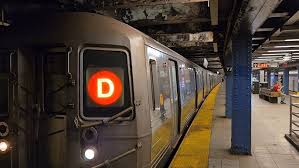
Riding the NYC Metro subway system every weekday for three hours a day to and from college was tiring. It’s especially exhausting on that last leg home on the “D” train at night.
It was not uncommon for me to fall asleep in the subway as it jostled down the rails. The NYC Metro trains are not quiet like the Paris subway; they rattle and jar, jerk and screech. When the subway car was full, I would be standing near the doors. Nevertheless, on more than one occasion, I fell asleep standing up. Yup! I dropped my books and briefcase. A quick recovery couldn’t save the embarrassment.
Okay, so I tried to be clever and leaned against the doors one time so I wouldn’t get woken up. The doors usually opened on the other side since it was an express train. My plan usually worked, but not this time. The train pulled into a station and, BAM! The doors on my side opened. I was SO shocked! I ended up stumbling out of the train backwards onto the platform. Ugh, no luck.
Sometimes I would return home very late after drill practice and drinking games. The train would be empty, and I’d stretch out, super comfy. Too comfy, actually, because I’d miss my stop at Kingsbridge Road. I’d end up going a couple of stops further north to the end of the line at 205th Street. I’d wake up, stumble across the platform for the next train going south. Only two stops left, and guess what? I’d fall asleep again and miss my stop. Then I’d get off, cross the platform, and head north again. I totally lost count of how many times I missed Kingsbridge Road.
I should have stood up against the doors.
The last subway story is when they were not runny.
The NYC Metro was planning a system-wide strike on January 1, 1966. Since I didn’t want to miss classes, I made plans to stay with friends at school. I think my Mom and Dad brought me to Brooklyn after the holidays. I stayed in the dorms which were across the street from Pratt Institute in a 17-story apartment building. The strike lasted 12 days.
I only have 3 vivid memories of my stay at the dorms:
The Batman TV program premiered on January 12, 1966. The world stopped and our dorm mates congregated at the only TV on the floor. POW! BANG! Ka-POW!
I had to cram for a test.
I lied about living at the dorm so I could eat at the cafeteria for free.
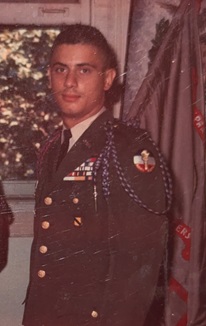
Looking back, my military service is a collection of fond memories, unexpected detours, and one very specific silver-plated tray. It technically started in college at the Pratt Institute. I joined the ROTC for four years, and during the last two, the Army enlisted us and even gave us a small monthly stipend.
After my junior year, I was shipped off to a summer camp for 2 weeks with cadets from all over the country. It wasn’t quite as rigorous as enlisted Basic Training, but the Army instructors certainly enjoyed their hobby of pushing future officers to their absolute physical limits.
I survived, and at our final formation, I was actually called out of ranks to receive the Superior Cadet Award for my company. The prize? An engraved silver-plated tray that sits in my house to this day.
ROTC Cadet Di Santis
The Fork in the Road
Before graduation, the Army offered me a commission as a Second Lieutenant in the Regular Army. This was the serious career track with an indefinite commitment. I wasn’t sure I wanted to be a “lifer,” so I politely declined and took a Reserve Army commission instead, which only required a four-year commitment.
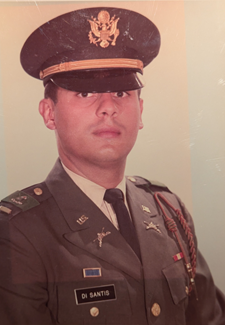
There was a slight hiccup at the end of my senior year involving being short two credits for graduation (a long story for another time), but I received an Honorable Discharge from ROTC on September 15, 1969, and officially pinned on my “butter bars” as a Second Lieutenant in the U.S. Army Armor Branch.
Next stop: Fort Knox, Kentucky.
The 52-Ton Portable Radio
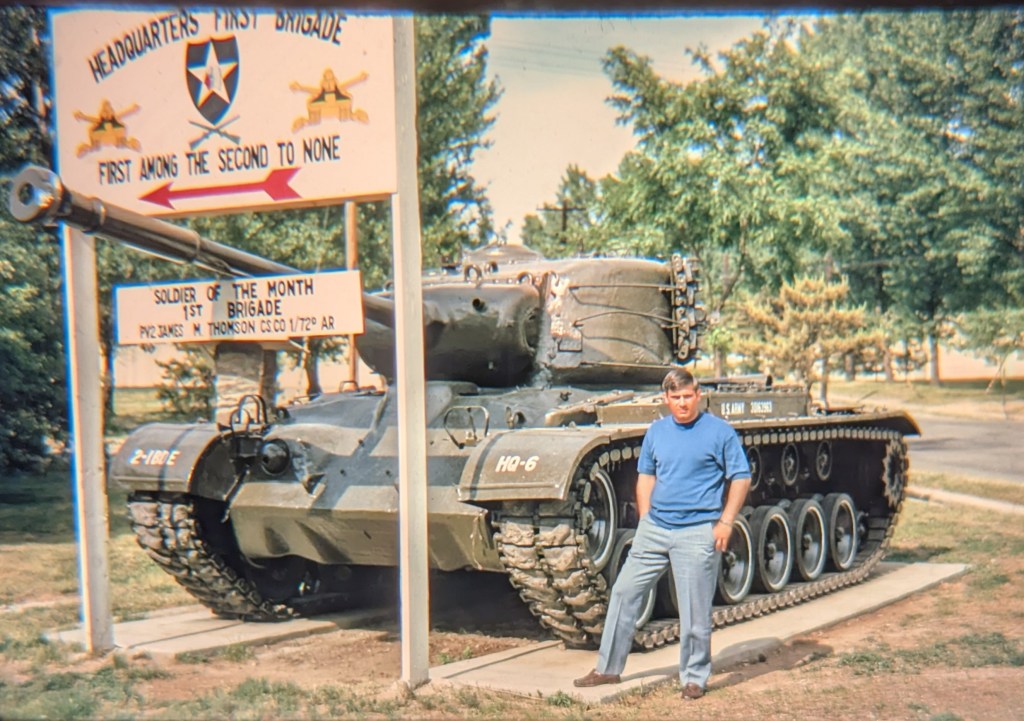
I reported to the U.S. Army Armor School in October 1969. The nine-week training on M60 tanks is a bit of a blur, but I remember the “Big Three” courses: Communications, Automotive, and Gunnery.
Every instructor claimed their subject was the most critical. But let’s be honest—the Gunnery instructors won that argument. As they liked to remind us: “Without gunnery, you are just driving a 52-ton portable radio.” Ha ha.
I must have paid attention because I graduated on the Commandant’s List, placing me among the top officers in the class. I was even selected for an additional course on the latest high-speed light armored vehicle. I was on a roll.
The “Deal” of a Lifetime
It was 1969. The Vietnam War was ongoing. Just before graduation, the Army offered us fresh officers a deal: Sign a “Vol-Indef” (Voluntary Indefinite) contract, and you can pick your first duty assignment for 18 months.
The choice was essentially: Vietnam or… literally anywhere else?
I’ve never made a decision faster. I chose Germany.
Deutschland and the Mortar Surprise
I arrived in Erlangen, Germany, in February 1970, reporting to the 1st Battalion, 35th Armored Regiment, 4th Armored Division. I walked in expecting to command a tank platoon. Instead, they handed me the Mortar Platoon.
So, I did what any good leader does: I let my subordinates teach me. My “tutor” was a buck Sergeant (my forward observer). It was a crash course in humility. I was the “leader,” but they were the experts. It taught me a massive lesson: The best leaders are the ones willing to learn from the people they lead.
(Note: Amidst all this military shuffling, life happened. In March 1971, my eldest son, Peter, was born in Nuremberg Army Hospital!)
The “Second Scariest Thing”
By 1971, the Army was reorganizing. The 4th and 1st Armored Divisions were combined. My mortar platoon was mothballed, and I was moved to a cushy desk job as an assistant to the Brigade Commander. That lasted until the division decided, “Hey, let’s bring the mortars back!”
They assigned a new Lieutenant to the reactivated platoon, but tragedy struck when his father fell ill, and he had to return to the U.S. suddenly. The platoon was leaderless and scheduled for a massive Army Proficiency Test.
The Army looked at me—the guy at the desk who used to run mortars—and said, “You’re up.”
We loaded Jeeps and five modified armored personnel carriers, including one FDC (Fire Control Center) and four motorized mortars onto flatbed rail cars and took a train to the test grounds. (Best sleep I ever got was on that train). Since I had an authorized copy of the test, I gathered the platoon in a barracks room and we… let’s call it “aggressively reviewed” every single question.
The test included night firing, which is undeniably cool. One gun fires an illumination round (a giant flare) over the target area, and the other three fire for effect.
The Scariest Thing on a range is an uncontrolled explosion.
The Second Scariest Thing is a misfire.
We place a 25-pound mortar round in the muzzle, and it slides down the tube. It’s supposed to hit the firing pin and fly out at 800 feet per second.
Thunk.
Silence.
The round was stuck. 25 pounds of high explosives, just hanging out in the tube. As the leader, it was my job to fix it. The procedure? Kick the tube as hard as you can to jar it loose.
I made the sign of the cross. I kicked it. Nothing. I kicked it again. I started sweating bullets. Still nothing.
The next theoretical step was much more dangerous. With the help of my team, we had to gently lift the bottom of the mortar tube—which weighs about 100 pounds—high enough so gravity would slide the explosive round back out the top.
You can imagine the sound of metal-on-metal scraping as we lifted the tube. I was sweating profusely, my hands hovering over the muzzle, preparing to “collar” the live round as it peeked out. I successfully snatched the baby out of the tube, and the drama was over.
I remember silently cursing the Safety Officer, thinking, “That idiot didn’t check the round properly!”
Decades later, I realized the truth: The misfire was part of the test. The Safety Officer wasn’t an idiot; I was the one being tested. (We passed, by the way).
You Can’t Win Them All
We passed the mortar test, but my luck ran out later. I was assigned as Executive Officer (XO) of Company C. At the annual Tank Commanders’ Qualifying Course, a Commander was unavailable, and I had to step in.
I hadn’t been in Armor School for two years. I hadn’t trained with this crew. I was dropped into the tank cold, and frankly, we failed. I felt terrible for the team, but it was a reminder that you can’t fake proficiency in a 52-ton machine.
Tanks, Planes, and Broken Toes
I eventually made Captain and braced myself for my next assignment. I assumed I’d go stateside. Instead, the Army said: “Surprise! You’re going to Korea.”
Getting there was an odyssey. There were no direct military flights. I flew from New Jersey to California… zig-zagging across the US on a hospital air transport. From California, we stopped in Hawaii and Guam before finally landing in Seoul.
I was assigned to Camp Casey as the S1 (Personnel) Officer for the 1st Brigade, 2nd Infantry Division. It was familiar territory—paperwork and correspondence. But I did get out a bit.
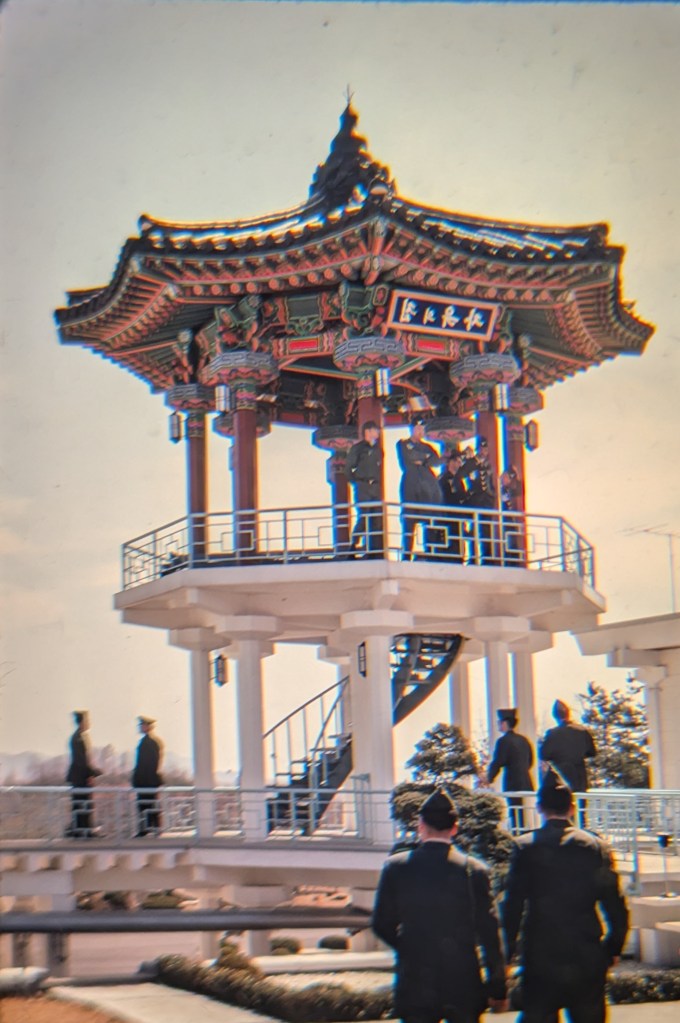
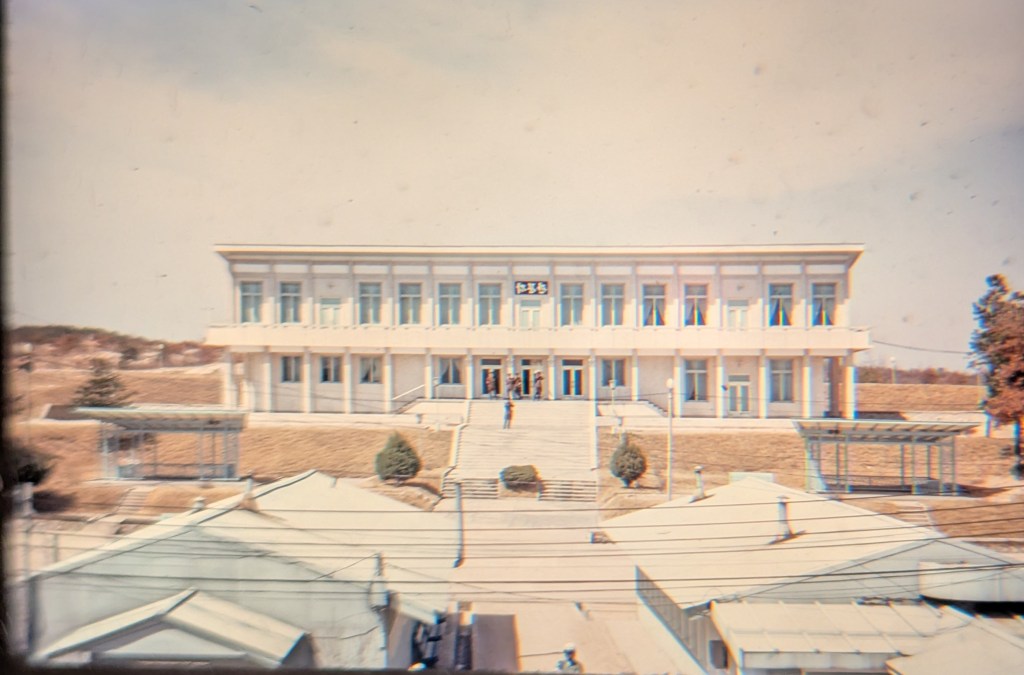
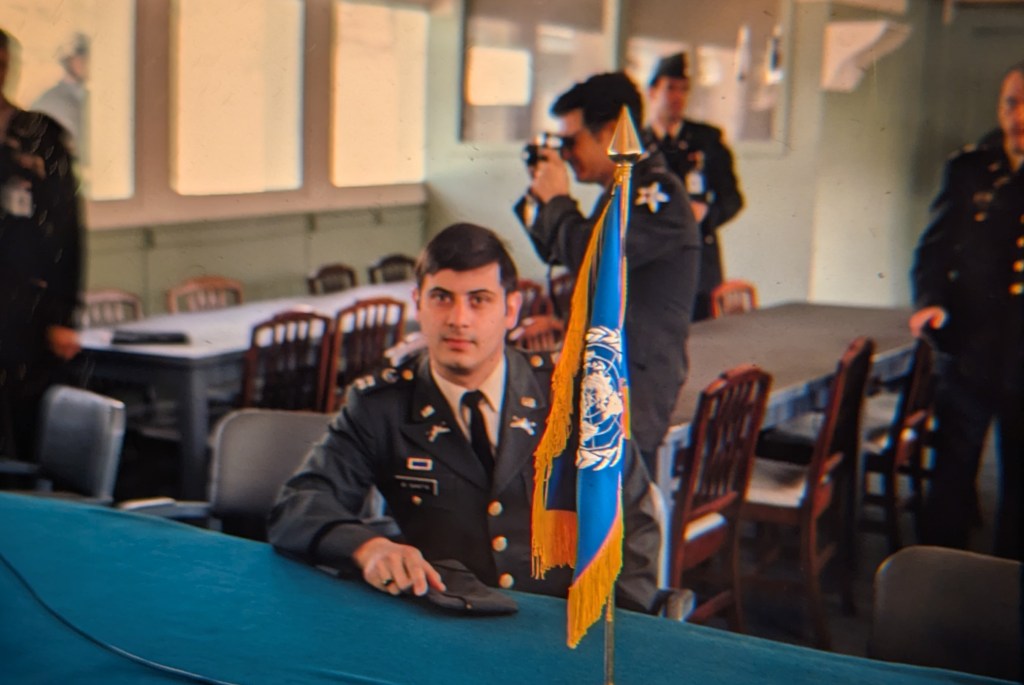
The DMZ: I toured the border and visited the peace talk Quonset hut. I even stepped to the North side of the table for a photo op. Technically, I was in North Korea for about 15 seconds.
Tae Kwon Do: I trained three times a day. This ended after two incidents. First, my master kicked me in the chest, knocking me out cold. (When I woke up, I politely agreed he had scored the points). Second, he blocked my kick and broke my big toe. That was the end of my fighting career, but I did retire as a Green Belt.
Cards: When I wasn’t breaking bones, I was playing Pinochle or Bridge from Saturday noon until Sunday night.
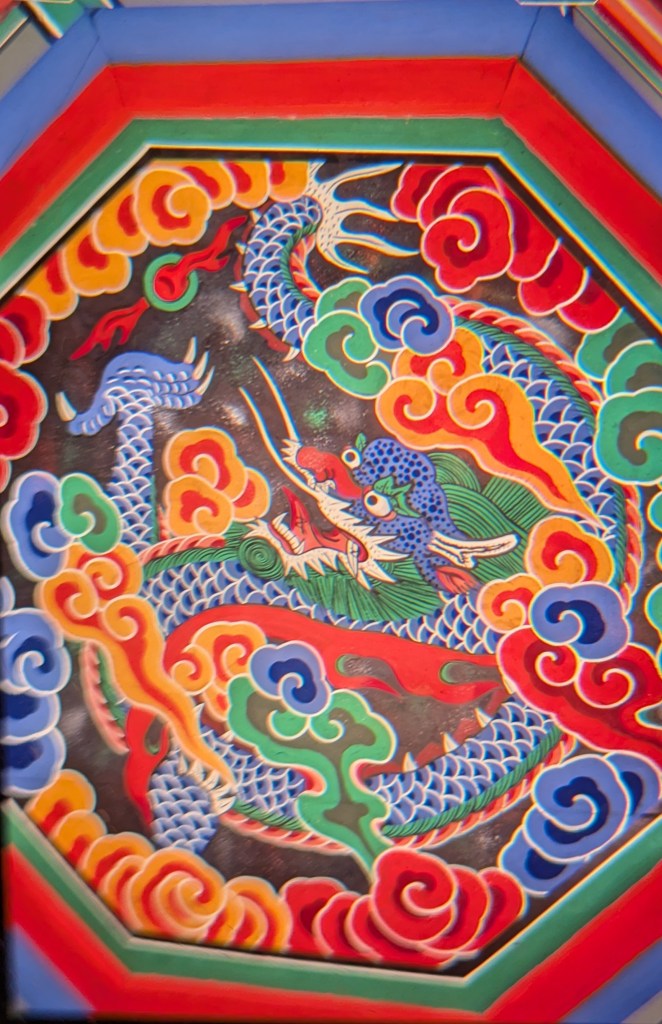
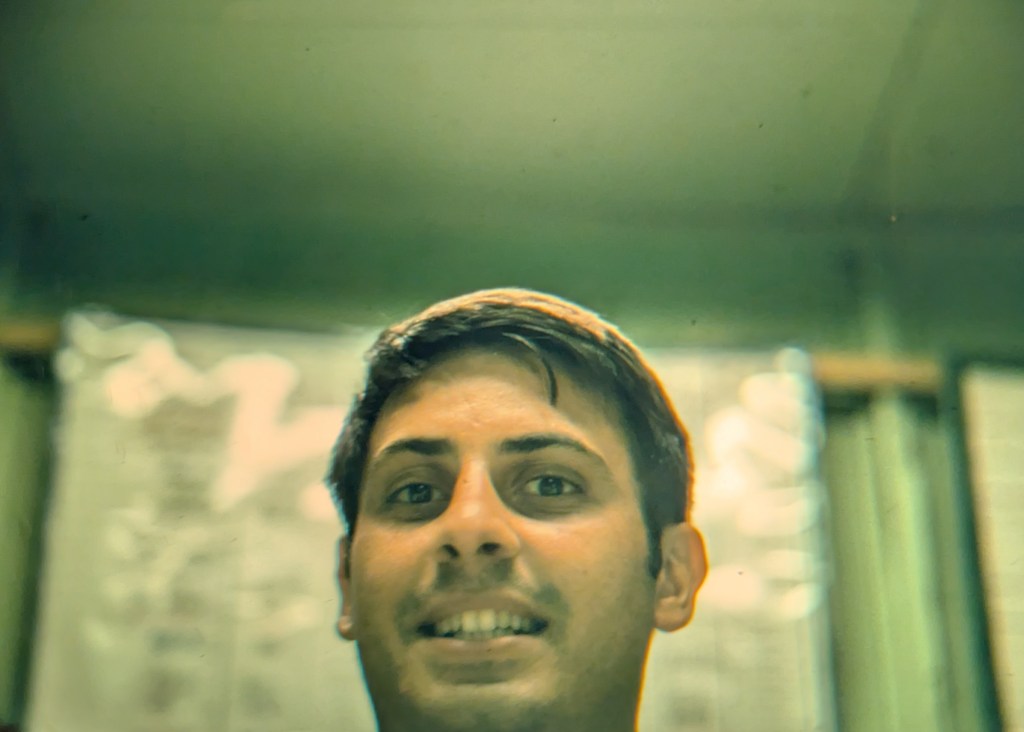
DMZ PogotaCeiling of DMZ PogotaNorth Korean DMZ HQMe in North KoreaMy First Ever Selfie
The Homestretch
In 1973, the U.S. was withdrawing from Vietnam and reducing its forces. Despite my “Indefinite” contract, I was released from service early because—ironically—I still lacked that college degree (remember those two missing credits?).
I was discharged on September 8, 1973, after serving 3 years, 11 months, and 23 days of active duty (about four months of that in Korea), followed by two years in the reserves. I received an Army Commendation Medal and an Honorable Discharge.
The Bottom Line:
I was never in a combat zone. I never shot at anyone, and no one ever shot at me. THANK GOD.
I still wear a POW bracelet to this day. It serves as a constant reminder: Someone else saved my butt.
The Date: November 9, 1965. The Time: 5:27 PM. The Location: Somewhere in the bowels of the NYC.
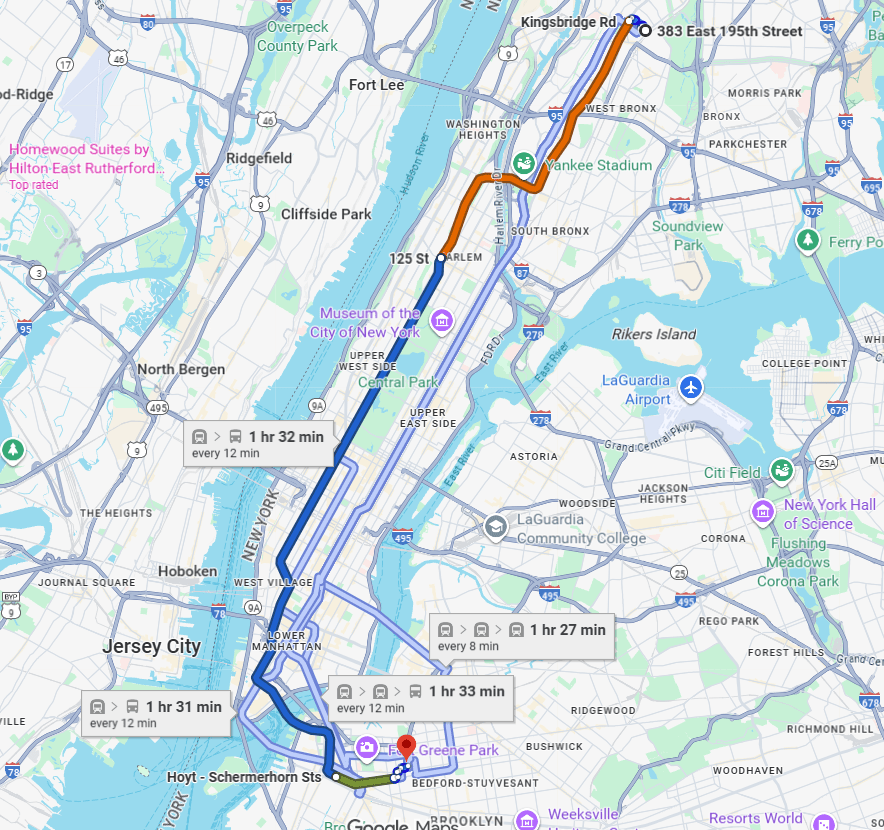
NYC Metro Subway Map; My Daily Commute
The Alphabet Soup Commute
I know exactly what I was doing on that day and time. I will never forget it. But I’ll write it down for you. I was traveling from school to home on my daily commute. School was Pratt Institute in Brooklyn. My home was on East 195th Street in The Bronx. Usually, on the NYC Subway, it’s the “G” train South to the “A” train West to the “D” train North. It took about 1.5 hours one way. Not this Tuesday afternoon.
At 5:27 PM, the “A” train I was on came to a slow stop. It wasn’t like the screeching brakes were used as usual. Almost immediately, the small emergency 5 watt electric light bulb illuminated in our car. I had a seat with a friend and the subway car was not full. This happens from time to time and the train resumes travel quickly. Not today. It didn’t look like the train would get on it’s way anytime soon. People started moving to the front of the train. What’s going on? Where are they going? There were no announcements or warnings.
Only one way to find out. My friend and I got up and started walking to the front of the train. I’m thinking, “How are all these people fitting in the first train car?” They weren’t. They were leaving the train and we were not at a station yet. One of the two sliding doors at the front of the train was open. Passengers were exiting the train with the help of Metro personnel. My friend And I shuffled our way to the open door and left the train. Now what? In the dark!
Tunnel Vision
There were subway employees with flash lights but very little illumination from emergency lighting. From the train we stepped onto a narrow catwalk which ran along the tracks. And the adventure begins. I could barely see but we were about 50 yards from the next station. From the catwalk there was a short ladder to the tracks. Then, walk along the tracks until we got to the station. It was the West 4th Street station, under Greenwich Village. Passengers were queued up to climb the next ladder from the tracks to the station platform. My pal and I, young as we were, decided to hop up to the platform. Every turn and corner was barely lit. Now up to the street.
We followed other passengers up the steps to the next level where the turnstiles are positioned and tokens are sold. There, I noticed two immigrant women, dressed in black, on their knees, praying the rosary. “Holy Smoke! What do they know that I don’t?” I didn’t ask. The next flight of stairs brought us to the street.
Chaos?
Everything was still dark, except for the headlights of the passing cars and trucks. The street was alive with hurrying people. Traffic lights were out, yet young people, teens, were directing traffic with flashlights. It was an orderly chaos. We heard there was a massive power outage. Nevertheless, there was no panic or screaming except for fire and police sirens. All the buildings and streetlamps around us were dark.
We had to get home, but how? My pal lived in the Bronx as well, but a different neighborhood. It was at least 13 miles away. Trains were not available. Bus? I had no clue how to navigate the city by bus. Plus they were all full. Walk? Fat chance. Well maybe a slim chance. We decided to walk to the West Side Drive, about a dozen short blocks away. The best plan was to hitch.
Hitchhiking: The 1960s Uber
We didn’t have to wait long. Some nice guy stopped and we gladly jumped into a stranger’s car. He was going North and so were we. We got all the latest news from the car radio. Holy smokes! It was a huge mess. I noticed the lights on the Jersey side as we drove past the George Washington Bridge. New Jersey had lights too. Freaky. We continued to drive North into the Riverdale section of The Bronx. If we continued, we would be getting further from home. So our helpful stranger pulled off the highway to let us out. At this point my friend and I split up. He was closer to home than I was.
The Home Stretch (Literally)
I didn’t realize until recently that my trip home now would be another 4-5 miles. There were no other options than walk. I saw 1 bus, going in the wrong direction. I navigated as best I could by the main streets I knew and the elevated train routes. There was no Google Maps.
Walk, walk, walk. La-de-da. Walk, walk, uneventful walk. Neighborhood and streets began getting more familiar. I think I got home around 9:00 PM. My mom was glad to see me. My Dad was at work, kind of. His shift at the machine shop started at 5 PM. Lights went out around 5:30. He and his crew sat round for hours, getting paid, with nothing to do. The boss let the crew go at about 11 PM. The lights came on shortly thereafter.
Final Score:
Electricity: 0 New York Spirit: 1
What an adventure! Sorry, no pictures. They were all underexposed anyway.