Tanks, Toes, and 100-Pound Tubes: My Not-Quite-Regular Army Career

Looking back, my military service is a collection of fond memories, unexpected detours, and one very specific silver-plated tray. It technically started in college at the Pratt Institute. I joined the ROTC for four years, and during the last two, the Army enlisted us and even gave us a small monthly stipend. 

After my junior year, I was shipped off to a summer camp for 2 weeks with cadets from all over the country. It wasn’t quite as rigorous as enlisted Basic Training, but the Army instructors certainly enjoyed their hobby of pushing future officers to their absolute physical limits.

I survived, and at our final formation, I was actually called out of ranks to receive the Superior Cadet Award for my company. The prize? An engraved silver-plated tray that sits in my house to this day.
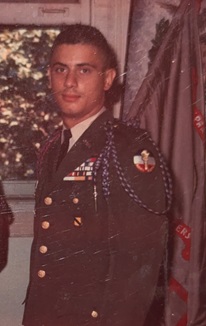
ROTC Cadet Di Santis

The Fork in the Road

Before graduation, the Army offered me a commission as a Second Lieutenant in the Regular Army. This was the serious career track with an indefinite commitment. I wasn’t sure I wanted to be a “lifer,” so I politely declined and took a Reserve Army commission instead, which only required a four-year commitment.

There was a slight hiccup at the end of my senior year involving being short two credits for graduation (a long story for another time), but I received an Honorable Discharge from ROTC on September 15, 1969, and officially pinned on my “butter bars” as a Second Lieutenant in the U.S. Army Armor Branch.

Next stop: Fort Knox, Kentucky.

The 52-Ton Portable Radio

I reported to the U.S. Army Armor School in October 1969. The nine-week training on M60 tanks is a bit of a blur, but I remember the “Big Three” courses: Communications, Automotive, and Gunnery.

Every instructor claimed their subject was the most critical. But let’s be honest—the Gunnery instructors won that argument. As they liked to remind us: “Without gunnery, you are just driving a 52-ton portable radio.” Ha ha.

I must have paid attention because I graduated on the Commandant’s List, placing me among the top officers in the class. I was even selected for an additional course on the latest high-speed light armored vehicle. I was on a roll.

The “Deal” of a Lifetime

It was 1969. The Vietnam War was ongoing. Just before graduation, the Army offered us fresh officers a deal: Sign a “Vol-Indef” (Voluntary Indefinite) contract, and you can pick your first duty assignment for 18 months.

The choice was essentially: Vietnam or… literally anywhere else?

I’ve never made a decision faster. I chose Germany.

Deutschland and the Mortar Surprise

I arrived in Erlangen, Germany, in February 1970, reporting to the 1st Battalion, 35th Armored Regiment, 4th Armored Division. I walked in expecting to command a tank platoon. Instead, they handed me the Mortar Platoon.
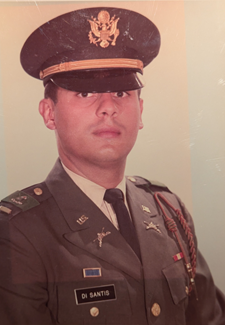
2nd Lieutenant Di Santis

I was stunned. I had zero training on the 4.2″ (“four-deuce”) mortar.

So, I did what any good leader does: I let my subordinates teach me. My “tutor” was a buck Sergeant (my forward observer). It was a crash course in humility. I was the “leader,” but they were the experts. It taught me a massive lesson: The best leaders are the ones willing to learn from the people they lead.

(Note: Amidst all this military shuffling, life happened. In March 1971, my eldest son, Peter, was born in Nuremberg Army Hospital!)

The “Second Scariest Thing”

By 1971, the Army was reorganizing. The 4th and 1st Armored Divisions were combined. My mortar platoon was mothballed, and I was moved to a cushy desk job as an assistant to the Brigade Commander. That lasted until the division decided, “Hey, let’s bring the mortars back!”

They assigned a new Lieutenant to the reactivated platoon, but tragedy struck when his father fell ill, and he had to return to the U.S. suddenly. The platoon was leaderless and scheduled for a massive Army Proficiency Test.

The Army looked at me—the guy at the desk who used to run mortars—and said, “You’re up.”

We loaded Jeeps and five modified armored personnel carriers, including one FDC (Fire Control Center) and four motorized mortars onto flatbed rail cars and took a train to the test grounds. (Best sleep I ever got was on that train). Since I had an authorized copy of the test, I gathered the platoon in a barracks room and we… let’s call it “aggressively reviewed” every single question.

The test included night firing, which is undeniably cool. One gun fires an illumination round (a giant flare) over the target area, and the other three fire for effect.

The Scariest Thing on a range is an uncontrolled explosion.

The Second Scariest Thing is a misfire.

We place a 25-pound mortar round in the muzzle, and it slides down the tube. It’s supposed to hit the firing pin and fly out at 800 feet per second.

Thunk.

Silence.

The round was stuck. 25 pounds of high explosives, just hanging out in the tube. As the leader, it was my job to fix it. The procedure? Kick the tube as hard as you can to jar it loose.

I made the sign of the cross. I kicked it. Nothing. I kicked it again. I started sweating bullets. Still nothing.

The next theoretical step was much more dangerous. With the help of my team, we had to gently lift the bottom of the mortar tube—which weighs about 100 pounds—high enough so gravity would slide the explosive round back out the top.

You can imagine the sound of metal-on-metal scraping as we lifted the tube. I was sweating profusely, my hands hovering over the muzzle, preparing to “collar” the live round as it peeked out. I successfully snatched the baby out of the tube, and the drama was over.

I remember silently cursing the Safety Officer, thinking, “That idiot didn’t check the round properly!”

Decades later, I realized the truth: The misfire was part of the test. The Safety Officer wasn’t an idiot; I was the one being tested. (We passed, by the way).

You Can’t Win Them All

We passed the mortar test, but my luck ran out later. I was assigned as Executive Officer (XO) of Company C. At the annual Tank Commanders’ Qualifying Course, a Commander was unavailable, and I had to step in.

I hadn’t been in Armor School for two years. I hadn’t trained with this crew. I was dropped into the tank cold, and frankly, we failed. I felt terrible for the team, but it was a reminder that you can’t fake proficiency in a 52-ton machine.

Tanks, Planes, and Broken Toes

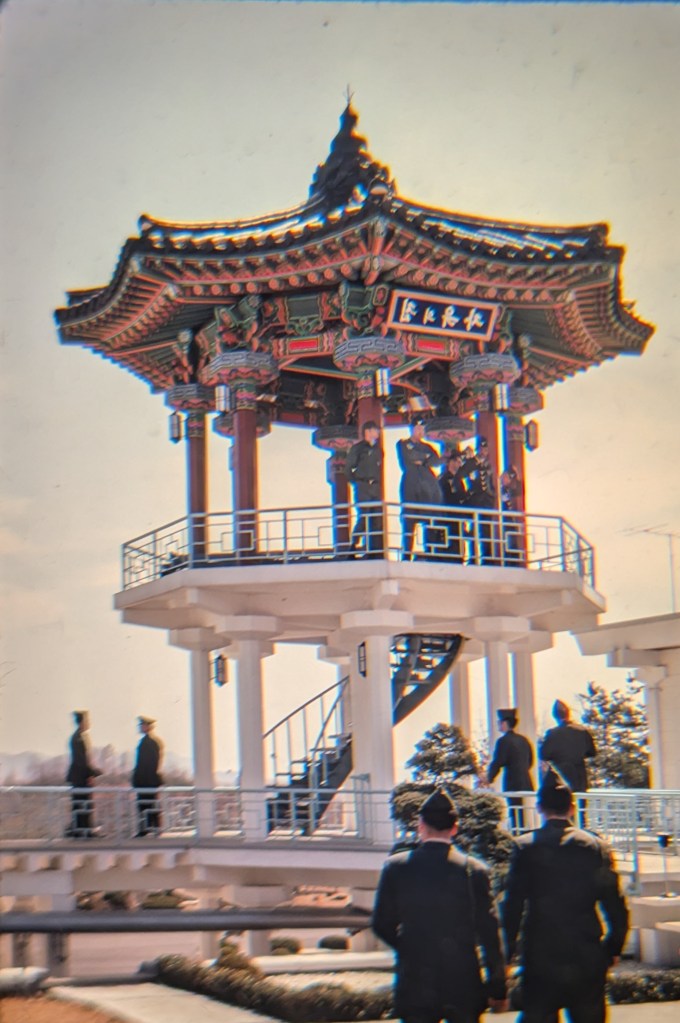
I eventually made Captain and braced myself for my next assignment. I assumed I’d go stateside. Instead, the Army said: “Surprise! You’re going to Korea.”

Getting there was an odyssey. There were no direct military flights. I flew from New Jersey to California… zig-zagging across the US on a hospital air transport. From California, we stopped in Hawaii and Guam before finally landing in Seoul.

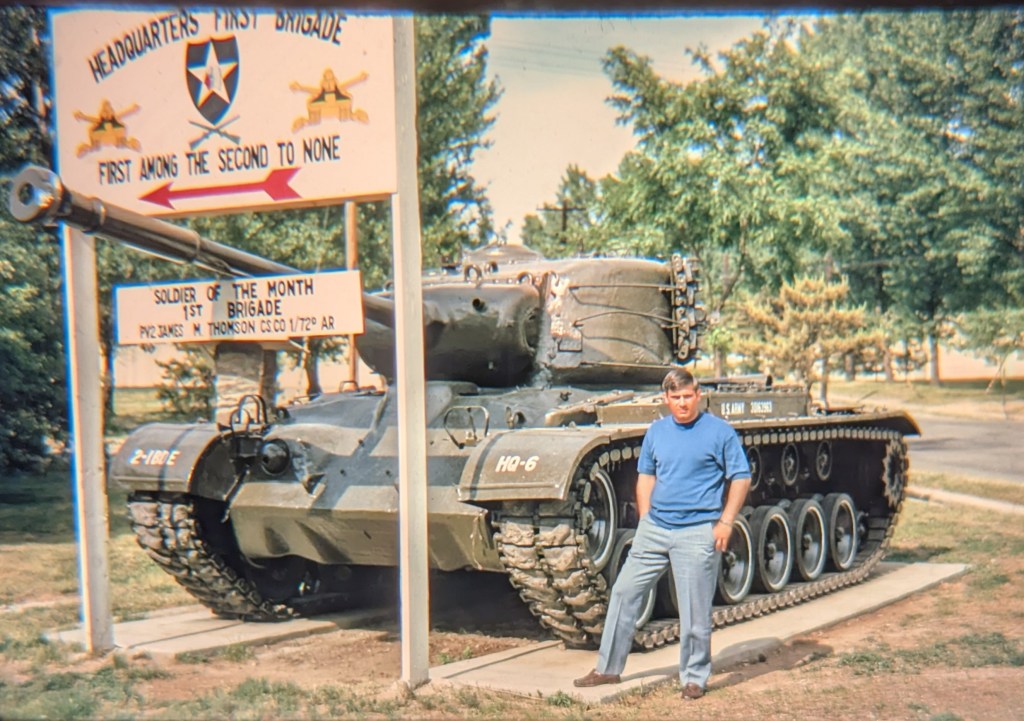
I was assigned to Camp Casey as the S1 (Personnel) Officer for the 1st Brigade, 2nd Infantry Division. It was familiar territory—paperwork and correspondence. But I did get out a bit.

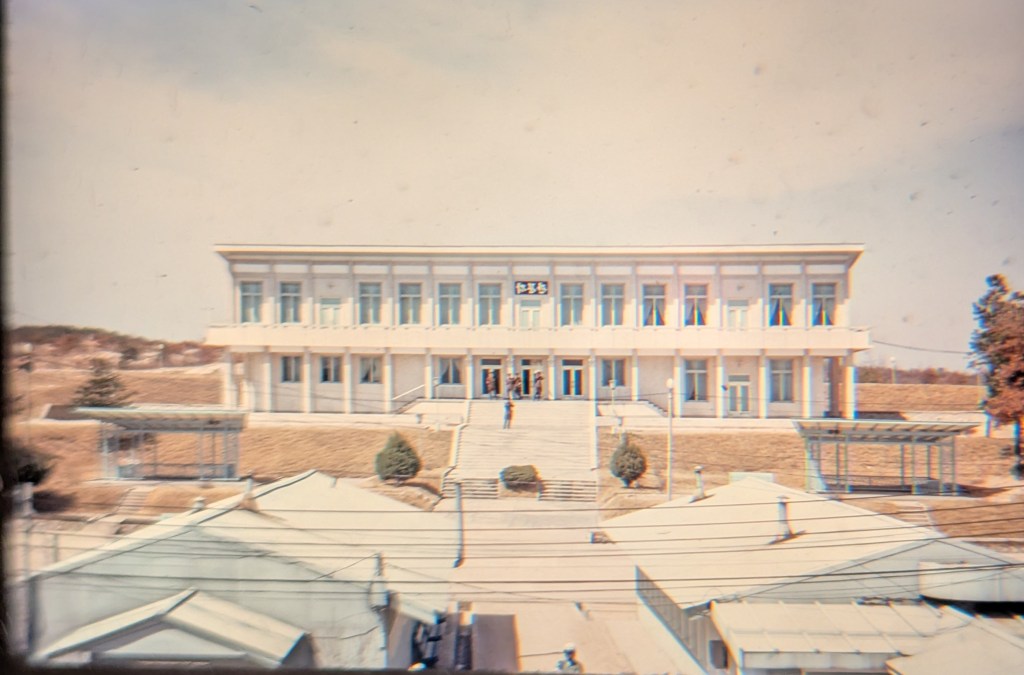
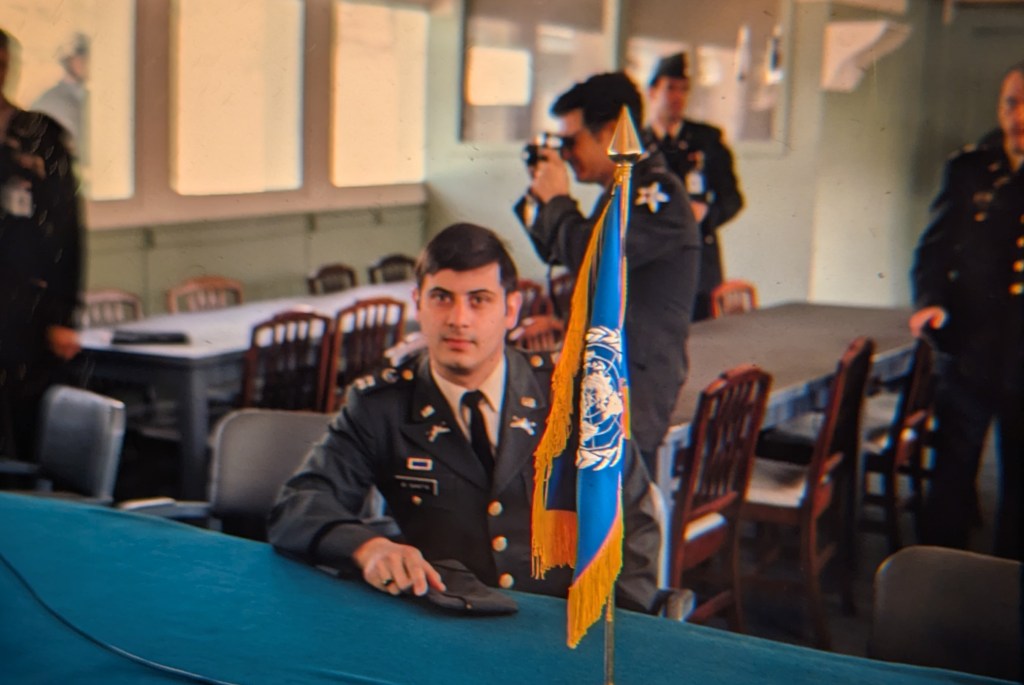
  • The DMZ: I toured the border and visited the peace talk Quonset hut. I even stepped to the North side of the table for a photo op. Technically, I was in North Korea for about 15 seconds.
  • Tae Kwon Do: I trained three times a day. This ended after two incidents. First, my master kicked me in the chest, knocking me out cold. (When I woke up, I politely agreed he had scored the points). Second, he blocked my kick and broke my big toe. That was the end of my fighting career, but I did retire as a Green Belt.
  • Cards: When I wasn’t breaking bones, I was playing Pinochle or Bridge from Saturday noon until Sunday night.

The Homestretch

In 1973, the U.S. was withdrawing from Vietnam and reducing its forces. Despite my “Indefinite” contract, I was released from service early because—ironically—I still lacked that college degree (remember those two missing credits?).

I was discharged on September 8, 1973, after serving 3 years, 11 months, and 23 days of active duty (about four months of that in Korea), followed by two years in the reserves. I received an Army Commendation Medal and an Honorable Discharge.

The Bottom Line:

I was never in a combat zone. I never shot at anyone, and no one ever shot at me. THANK GOD.

I still wear a POW bracelet to this day. It serves as a constant reminder: Someone else saved my butt.
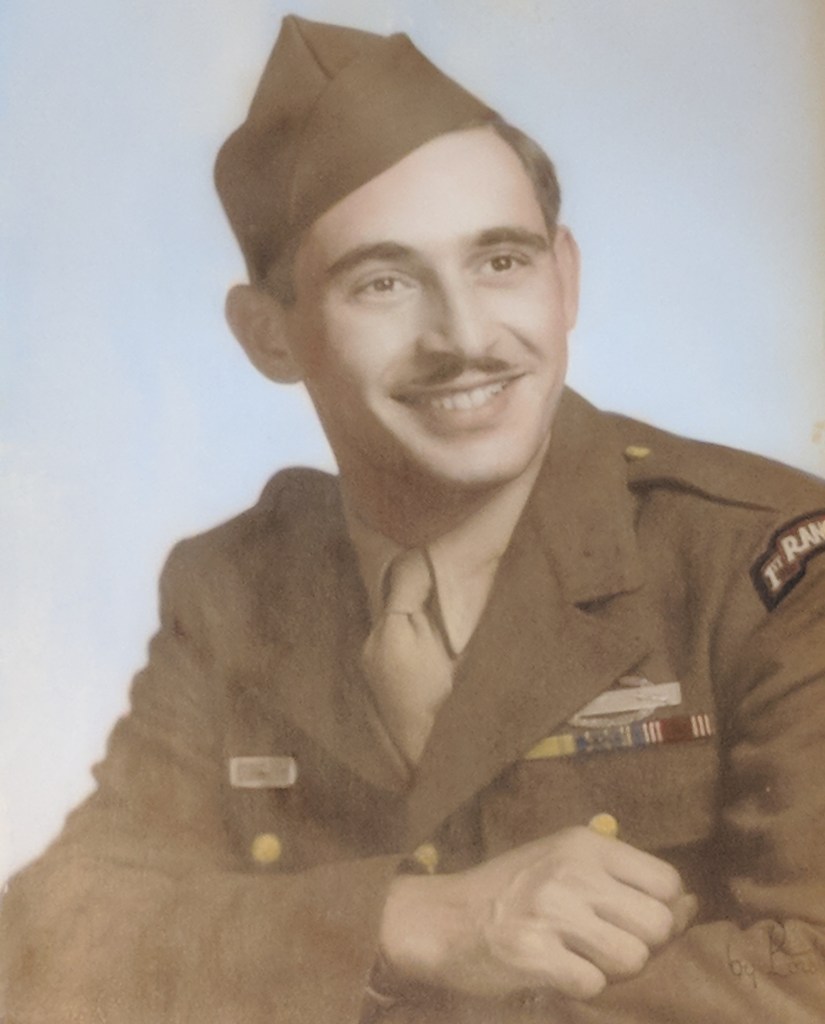
My Father, Tony

I am very proud of my father, who had the distinction of being one of the first U.S. Army Rangers. Darby’s Rangers hold a unique place in military history as an elite unit renowned for their exceptional skills and unwavering courage.

The Rangers

At the height of World War II, an extraordinary group of soldiers emerged known as Darby’s Rangers. Led by Lieutenant Colonel William O. Darby, this unit was unlike any other, characterized by their unparalleled determination and remarkable combat abilities.

Darby’s Rangers underwent rigorous training with the British Army Commandos in Scotland to hone their skills and prepare for the challenges that lay ahead. From mastering advanced combat techniques to developing exceptional marksmanship and survival skills, these soldiers exemplified the highest standards of military training. A 1958 movie, “Darby’s Rangers” starring James Garner, as LTC Darby depicted a brief history of the unit.

Throughout their distinguished service, Darby’s Rangers engaged in numerous combat missions that showcased their extraordinary capabilities. Notable missions, such as the assault on Cisterna during the Italian Campaign and the crucial role they played in the invasion of Anzio, demonstrated their prowess and tenacity in the face of adversity. Anzio was a brutal battle with many American casualties. My father said he was there after the beachhead had been established and not during the initial bloody invasion.

The legacy of the Rangers paved the way for the establishment of the modern U.S. Army Rangers, who continue to uphold the same values and traditions that defined Darby’s original unit. The legacy of Darby’s Rangers will forever remain a testament to the power of determination and courage.

My father attended Ranger Reunions every two years, often with my mother. The conventions were held around the country and were the highlight of Dad’s summer. Every two years, he would grow out his mustache as it was when he was with the unit. I remember taking a road trip to Milwaukee, WI sometime during the 1960s. We even toured a brewery (I was underage at the time). I also recall my mom and dad going to Des Moines, IA, Dallas, TX, and Washington, DC for Ranger reunions.

During the reunion, my dad would sit in the hotel lobby where the event took place and watch his old friends walk in the door. As the years went on, more men became aware of the reunions and attended whenever possible. In fact, for the last 20-30 years of his life, Dad wore a black beret with a Ranger patch, proudly advertising his association with the battalion. I don’t know how many men he recruited to attend the next biennial reunion, but I’m sure even one would have been plenty. My dad especially loved reconnecting with friends who he thought had been casualties at the reunion. It brought him great joy to see those old comrades again.

I have Dad’s black beret, his stiletto, and a book titled “Darby’s Rangers” by James Altieri. The book was published in 1945 and chronicles William O. Darby, the formation of the unit, its training, and operations during WWII. My dad is pictured once in the book and listed on the roster of the Ranger Force Headquarters. I remember this book has a cardboard cover, but my father had it proudly leather-bound.

Within the covers of this magazine-formatted book were some of my dad’s cherished Ranger mementos: old newspapers and clippings, his discharge papers, a Special Official Pass (to travel to Naples, and any other “off limit” areas), a color photograph of my dad and other members of the Northeast Chapter of the Ranger Battalion Association, a telephone roster of Northeast Chapter members, and an invitation from Warner Brothers Pictures to a “special screening” of “Darby’s Rangers” in New York City.

The Rangers were a significant part of my dad’s life.

Recently, while reading his discharge papers, I came across things I knew, forgot, and never knew. After U.S. Army Basic Training, Dad served 30 months as a Sergeant in the 1st and 4th Ranger Battalions in Africa, Sicily, and Italy. He was overseas for almost 16 months. He was awarded the Combat Infantry Badge, a Distinguished Unit Badge, with an Oak Leaf Cluster, a European – African – Middle Eastern Service Medal, and a Good Conduct Medal. His last 10 months of service were as a Private First-Class, Military Policeman. He was honorably discharged after 3 years, 8 months, and 11 days from Fort Monmouth, N.J.

Working With Dad

I might have been 10 years old when I first went to work with him. We left our apartment in The Bronx, and walked to the newsstand, where he tossed a nickel and grabbed a New York Daily News. Then we went to the diner on Fordham Road for a fried egg sandwich on a hard roll. My eggs were scrambled. Afterward, we waited for his boss to pick us up for the hour’s drive north to Westchester County.

We didn’t have a car at the time. However, I remember he drove a panel truck for work and brought it home one weekend. He received a ticket because he parked the commercial vehicle on the street outside our apartment. So hitching a ride with his boss was how Dad commuted to work for many years until he purchased a green 1957 Pontiac Chieftain.

While he was employed in Westchester, he worked for a dry cleaner. He was proficient in all the tasks at the shop: taking clothes at the front counter (the only area where I was helpful), cleaning the clothes in the toxic solution at the time, removing spots if necessary, and pressing the clothes. However, Dad spent approximately half of his day preparing orders for delivery, which included bagging the orders in a plastic bag and loading the panel van, and delivering them,

From the first time I accompanied him to work, he imparted to me the importance of organization. You could say this is where the seeds were planted for my career in small package delivery. I learned the art of organizing the pre-work so that the actual tasks would proceed more smoothly. Additionally, I gained knowledge about the sequential loading of the truck and arranging the customer’s stops in the most efficient order to minimize time and distance. Dad excelled in customer service. He knew the preferred delivery locations for customers who were not home, such as the front door, back door, garage, breezeway, and so on.

Dad taught me the value of quality. Whether it was assisting Uncle Teddy in building my grandparents’ house in Hopatcong, NJ, or playing cards with my uncles, he consistently demonstrated the proper way to accomplish tasks. This laid the foundation for my future career as an Industrial Engineer. It is often said that women build relationships face-to-face, while men build relationships shoulder-to-shoulder. In my case, I understand the truth in this statement. My most cherished memories of my Dad are working alongside him. Two particular instances come to mind: breaking up a 300-square-foot concrete patio in Hopatcong and laying a vinyl tile kitchen floor in their Yonkers home.

Our Name

Another significant lesson I learned from my father was how to spell our last name. He always said, “It’s D-I capital S.” I didn’t realize until many years later that my father had a unique spelling. His family was large, consisting of six sisters and two brothers. I’m unsure how my aunts spelled their maiden names, but my uncles Angelo and Ralph, along with all their children, spell their names as “DeSantis.” D-E! Where did that come from? I never asked Angelo or Ralph. D-E is very common, whereas D-I is not. When we acquired our first telephone in 1961, The Bronx phone book contained pages and pages of DeSantis listings and only one DiSantis entry, which was my Mom and Dad.

But why D-E? I have some clues. It seems to have originated from a clerical error in my grandfather’s U.S. Naturalization papers. The typewritten document stated “Pietro Santis,” and the “De” was handwritten above and between the first and last name. However, my grandfather signed the paper as D-I. Additionally, I possess a copy of an Ellis Island manifest that my grandfather signed as DiSantis when he entered the country. I also have a photograph of him standing in front of his grocery store with his name, “Pietro DiSantis,” in gold letters, above his head, on the plate glass window. (As soon as I find that picture, I will post it.)

DiSantis or Di Santis? No space or space. That is a recent issue propagated by technology. Some apps and systems will not allow a capital “D”, a small “I” and a capital “S”, with no space between the “I” and the “S”. The resulting output is Disantis, with no capital “S”, which is incorrect. Therefore the only way to spell our name correctly would be to add the space.