Hat Fetish

Who Me? Okay, maybe. I’m guilty.

Recently, I have been buying hats and coveting many, many others. I do have a small collection. Some purchased and some gifted and all special. A hat for almost every occasion; in which I would care to participate. Most of my hats are new but two are old, and I will get to those two stories momentarily.

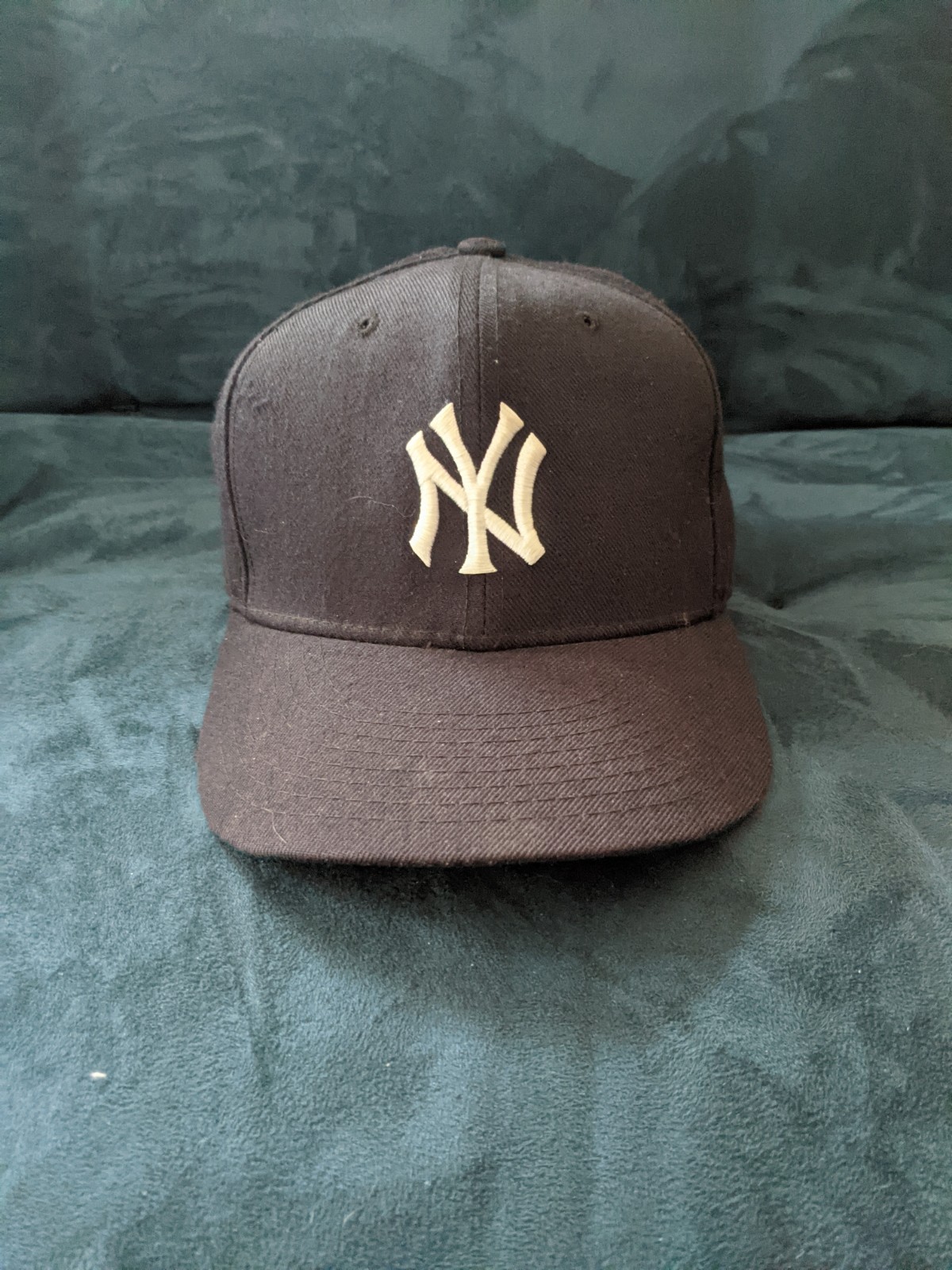
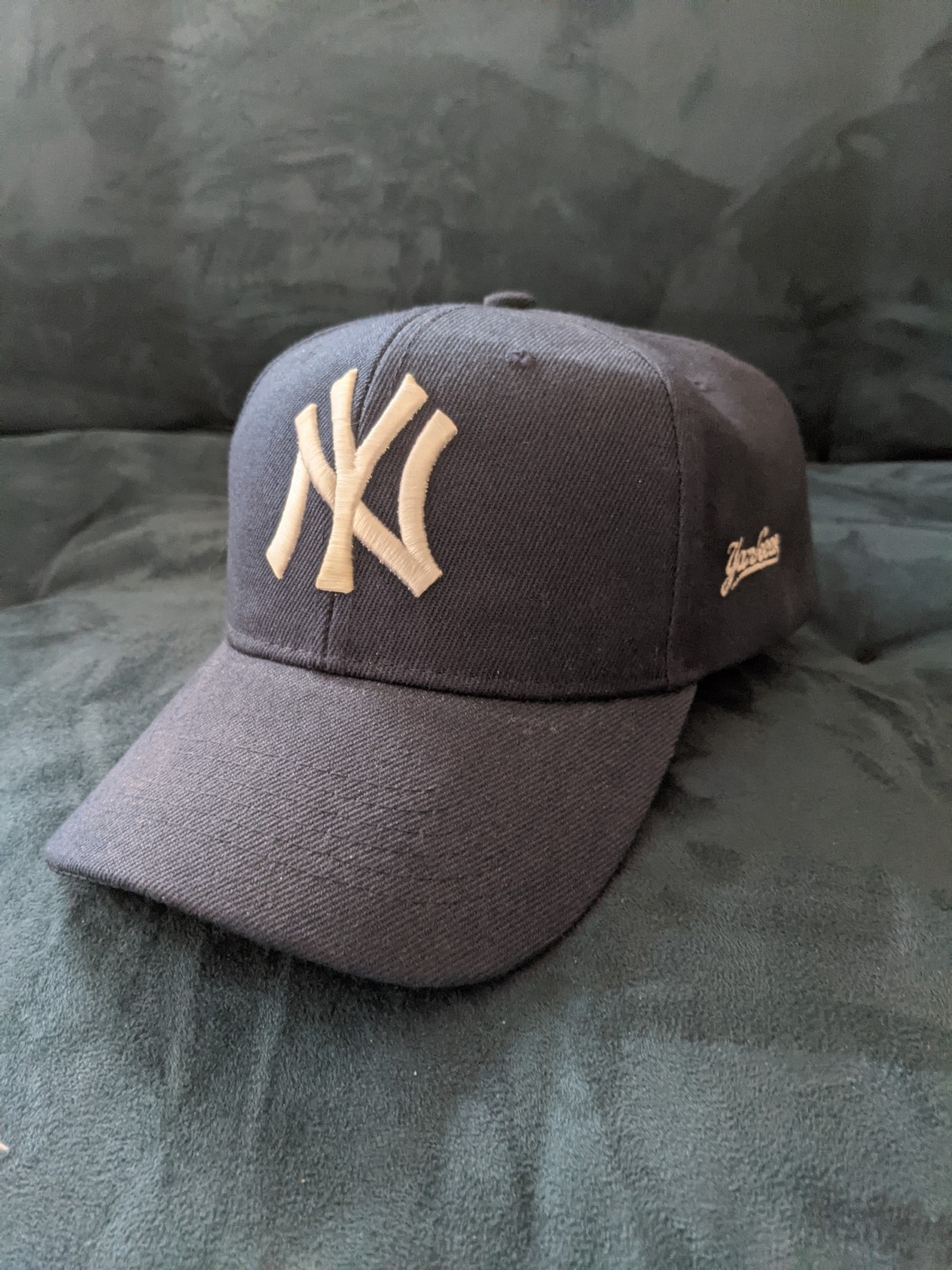
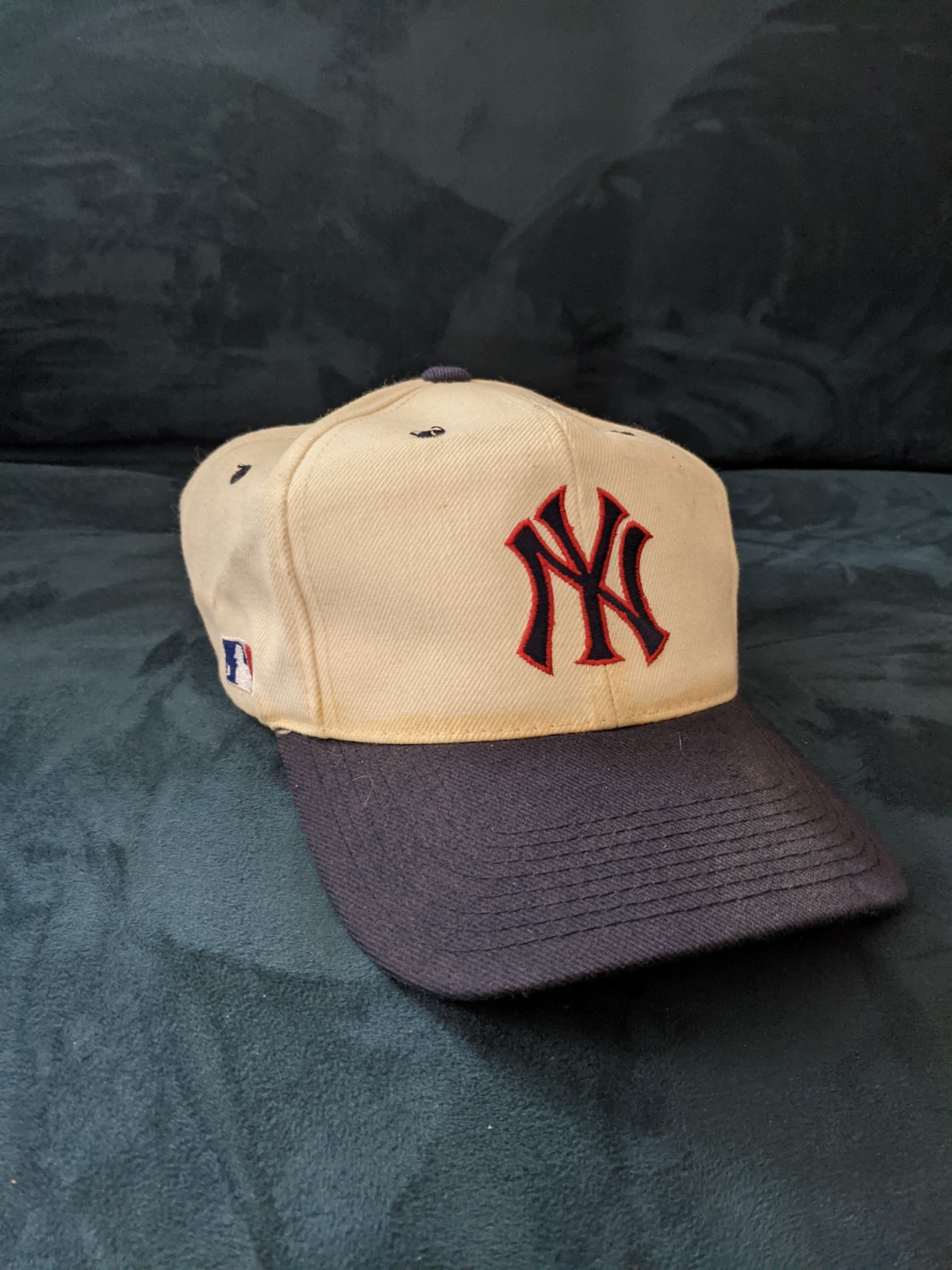
First, let me make the distinction between a hat and a cap. Baseball caps are just that, CAPS, of which I have a few. I used to have many more but my taste turned to other styles. So, I gave away dozens of baseball style caps.

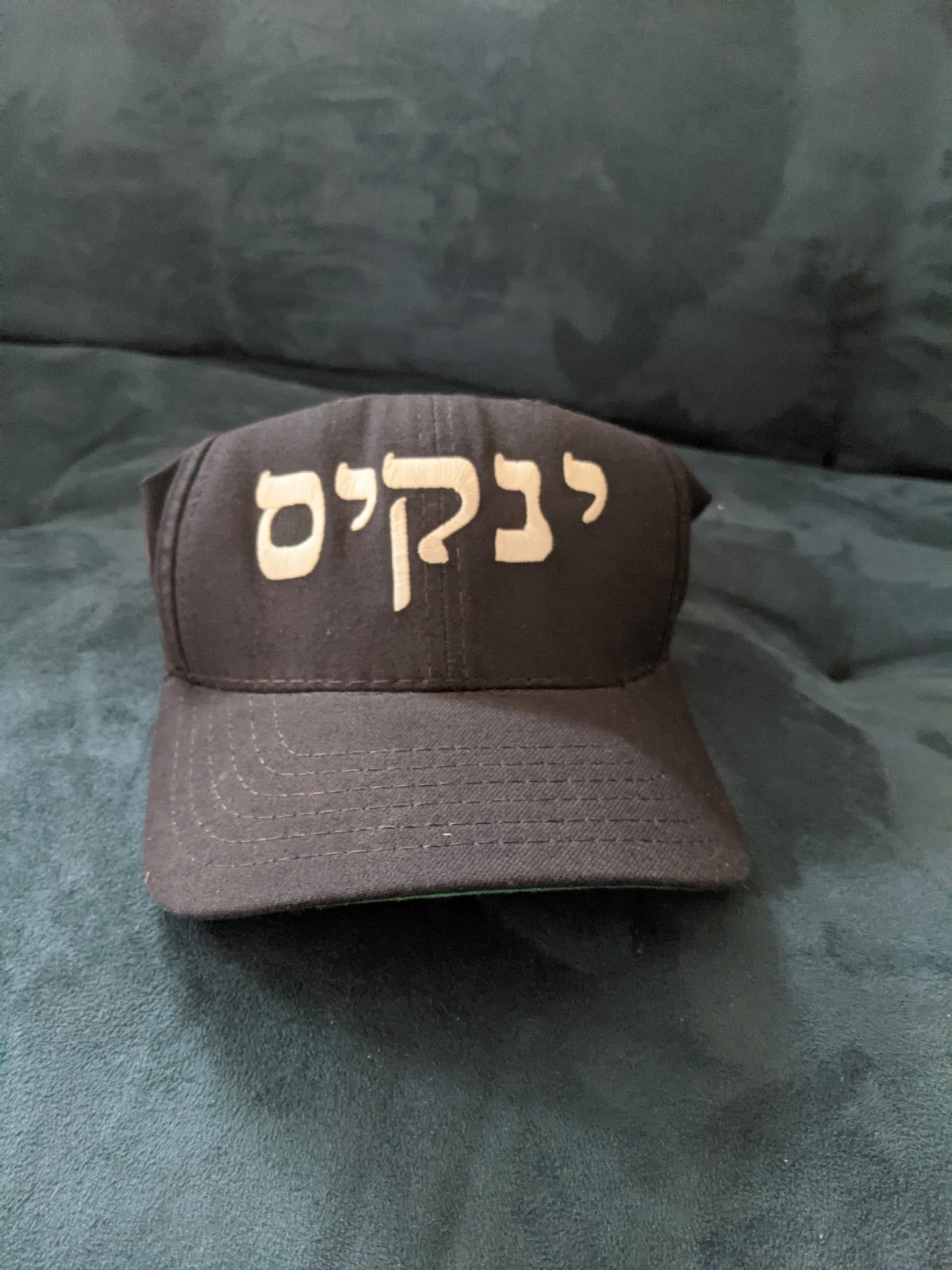
The only baseball team cap I ever had is, of course, the New York Yankees; of which I have four. The most unique is one without the embroidered NY logo on the front, you would expect. Instead, emblazoned on the front are Hebrew characters that sound like “yang-keys.” It’s an MLB cap, so it is officially licensed.

I do have another NY baseball cap, which is also special. It is a replica of a 1948 New York Cubans wool cap. The Cubans won the Black League World Series in 1947, the year I was born. (I even have a moth-eaten woolen Cubans replica jersey, #1.) All totaled, I have seven baseball-style caps. Not many, yet all with memory and history.

HATS are another story! I have four fedoras, two berets, several Ivy caps, and one each Jungle Hat, Stetson Panama, Newsboy, tribal headdress, Cowboy, and Coonskin.

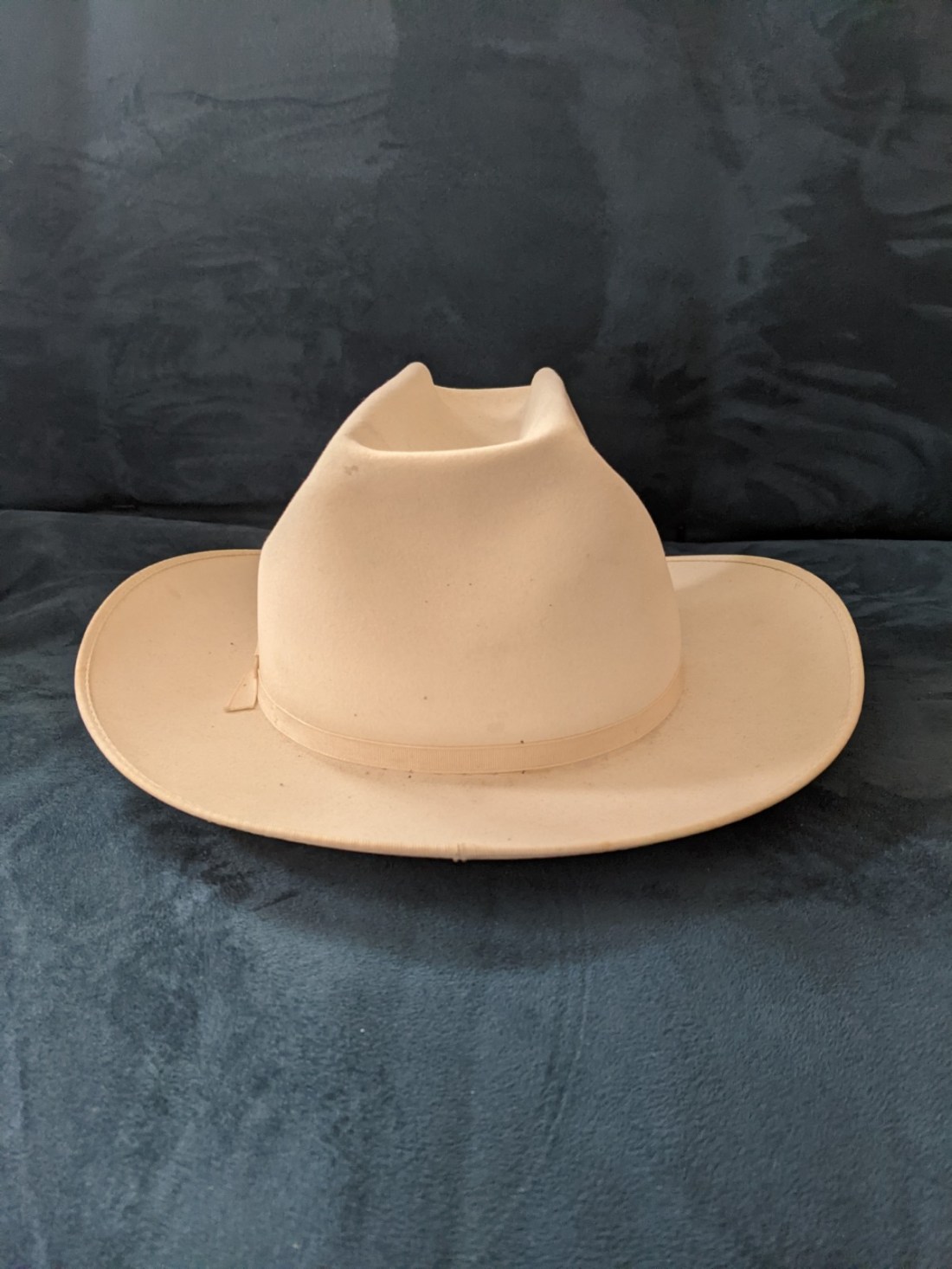
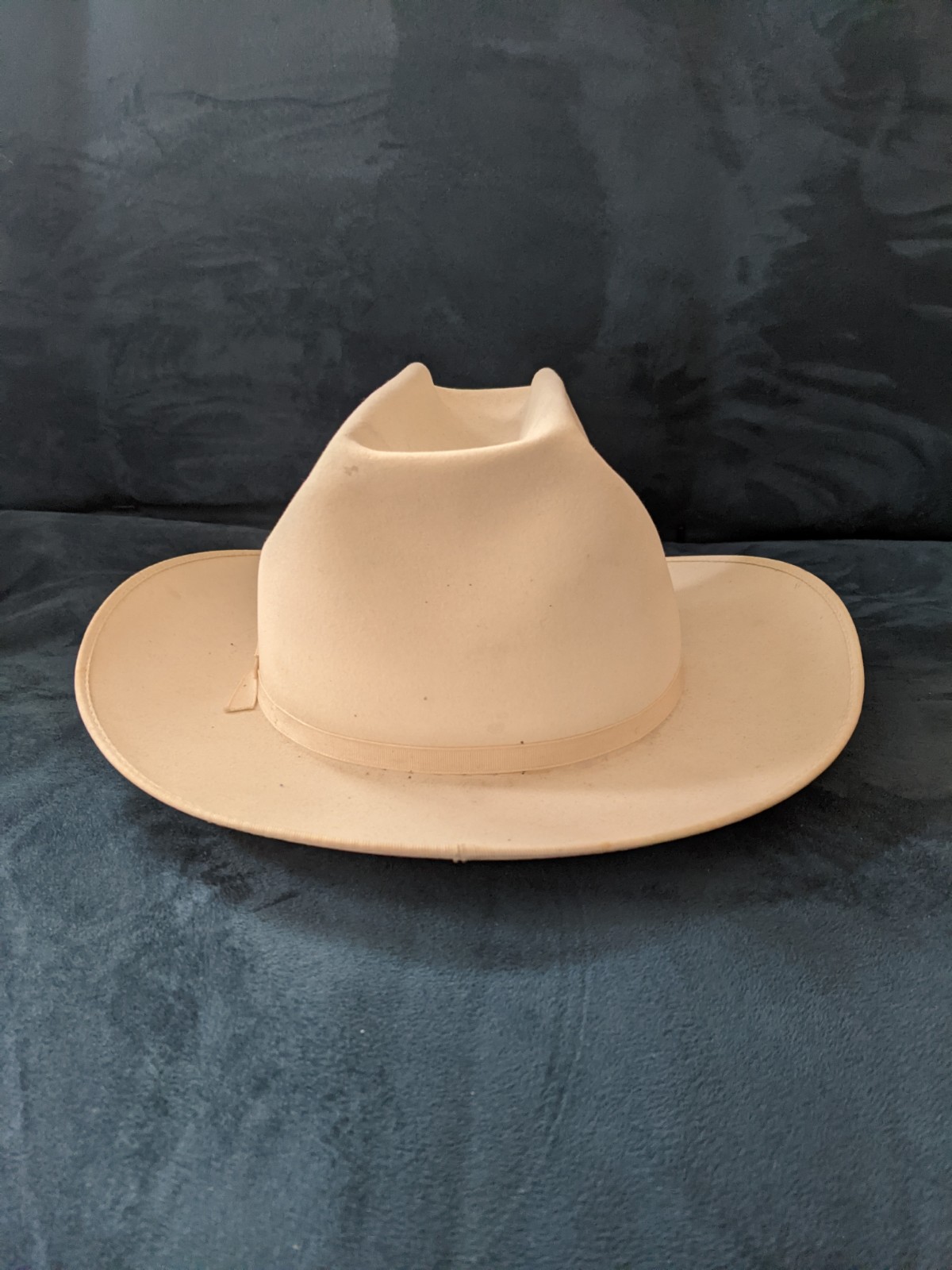
The last two: Cowboy and coonskin are the most special. The Cowboy hat is not your run-in-the-mill rodeo hat. Or a fake wannabe cowboy hat. It’s a beaver Resistol in the “Cattleman” style. It’s a businessman’s hat.

SIDEBAR: In 1963, JFK was assassinated. His alleged killer Lee Harvey Oswald was in custody by the Dallas police. My Cattleman’s style cowboy hat was very similar to the hats worn by the Dallas detectives guarding Oswald which reminds me of JFK.

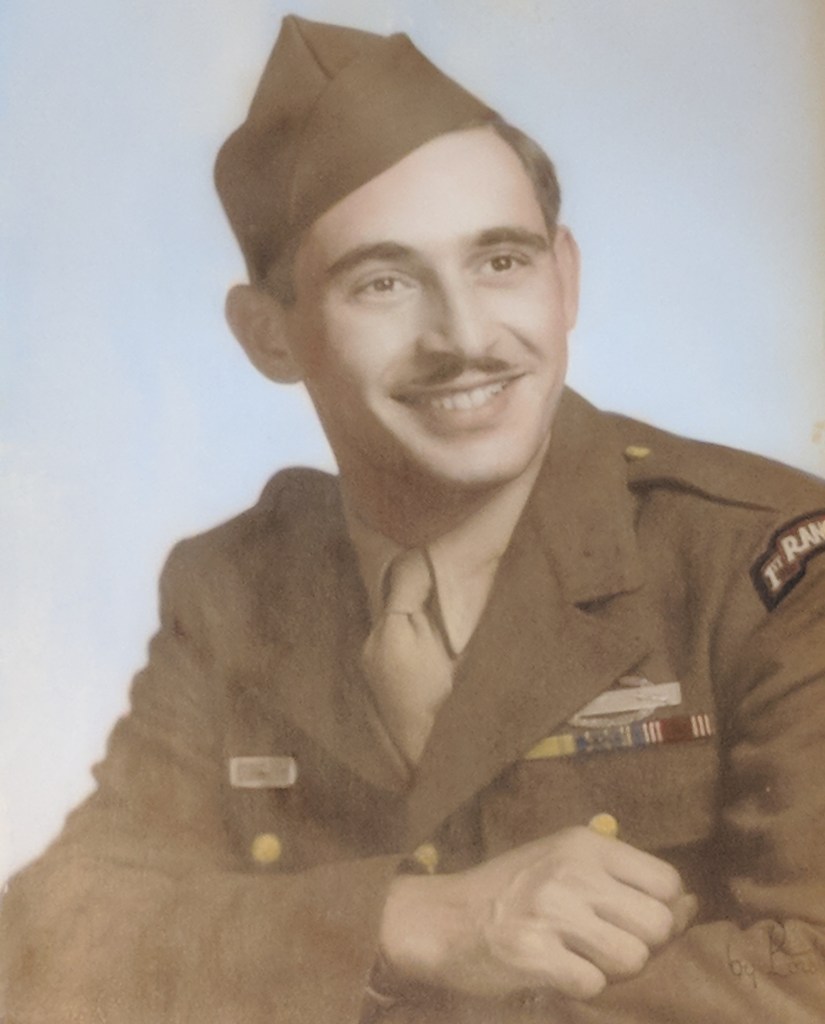
Before eighth grade, we lived on Lorillard Place in the Bronx, in the Italian neighborhood. This is my only point of reference regarding timing, so, before I was 13. Every other year in August, Dad would go to a reunion of his WWII Army (Ranger) unit. Most times Mom would go as well. At one of these reunions, before I was 13, Dad reconnects with an old Army buddy, Randy Raines. Randy was from Dallas, and Dad said he talked long and very slowly. As most conversations go among friends, the family becomes a topic. Randy says to Dad, “You got a boy! I’m gonna send him a cowboy hat.” When I heard that I was thrilled. I sat on the stoop for days, maybe weeks, waiting for the UPS truck to deliver my cowboy hat. No truck, no cowboy hat, not even a beanie! Crestfallen. I couldn’t look a cowboy in the eyes for years. Not that I met that many in the Bronx.

Decades later, after 1976 (again, another point of reference based on where I lived), Mom and Dad are coming to visit. As he pulls into the driveway, I immediately noticed he is wearing a white cowboy hat. THAT IS MY HAT! I’m about 30 at this time and still very excited. This was the Resistol beaver Cattleman! It was August, and Dad had just returned from his biennial Ranger Reunion. Texan Randy reminds Dad of his promise years ago and Dad had to say, “that was years ago. He’s not a boy anymore.” Right there and then, Mr. Randy Raines takes the hat off his head and puts it on my father’s. Promise fulfilled!

Long before the cowboy hat promise, I was crazy for Davy Crockett (King of the Wild Frontier). Disney had a movie and a TV series. I learned the theme song and sang it all the time. I even taught my younger sister the song. I was smitten.


SIDEBAR: I choose “David” as a Confirmation name. And, since I was not born with a middle name, I assumed it as my middle name, which has since then caused some confusion about my “legal” name. Another story.

Anyway, everybody knew Davy Crockett wore a coonskin cap and I had to have one. Mom refused to buy me one. A friend of hers was willing to buy the hat for me and Mom refused to accept the gift. Another frustration in my young life. Apparently, decades later, I might have complained about it to my sons: Peter, Matthew, and Michael, in the course of some abject “disappointment” lesson.

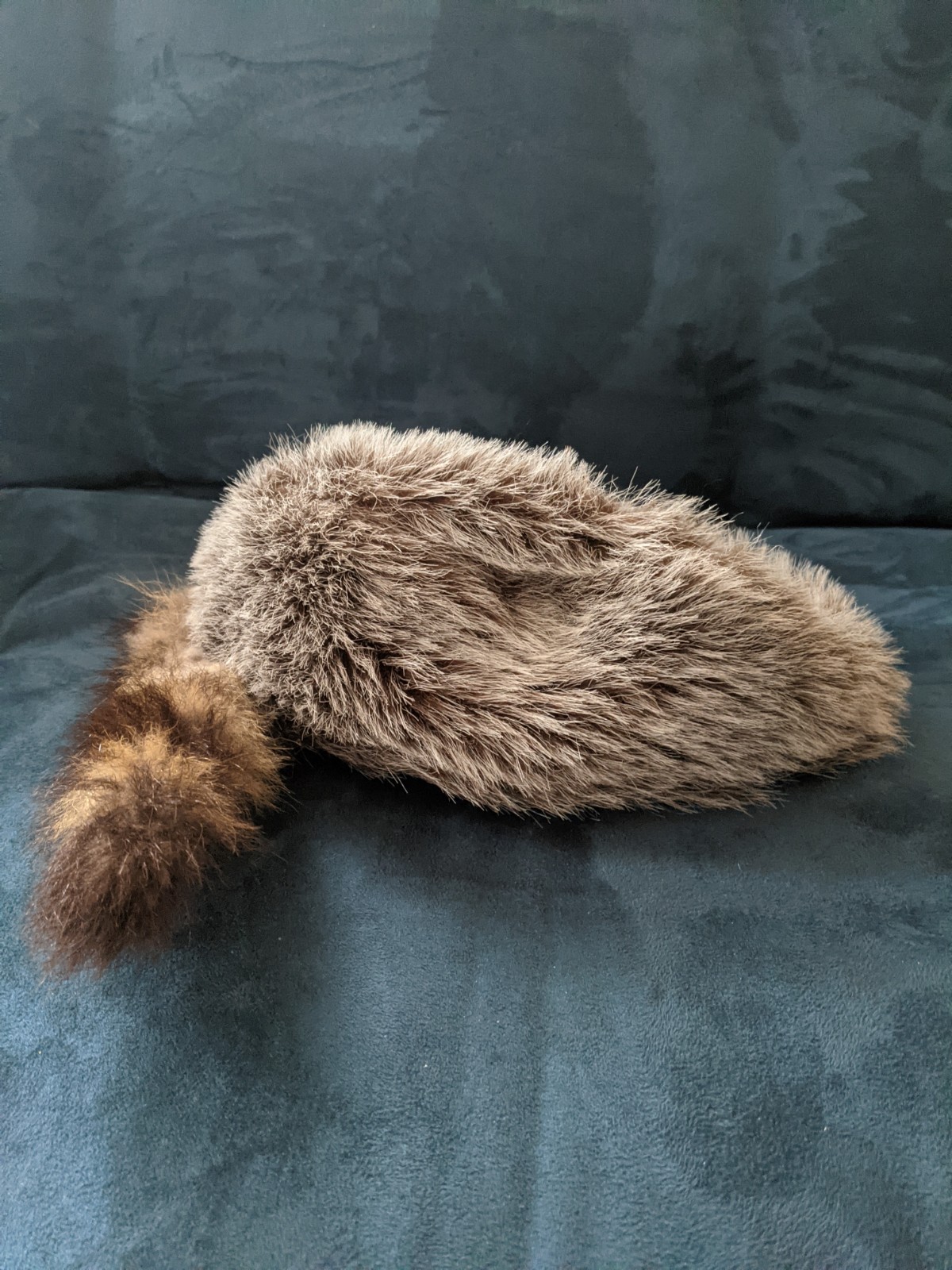
Years later, the boys had returned from a trip to Disneyland with their Mother. At our next meeting, second son Matthew very proudly presented me with a Davy Crockett coonskin cap, which he bought for me at Disneyland. I was very touched and grateful. I treasure that faux fur and real raccoon tail cap. I will bequeath it to Matthew’s eldest son, and my eldest grandson, Anthony.

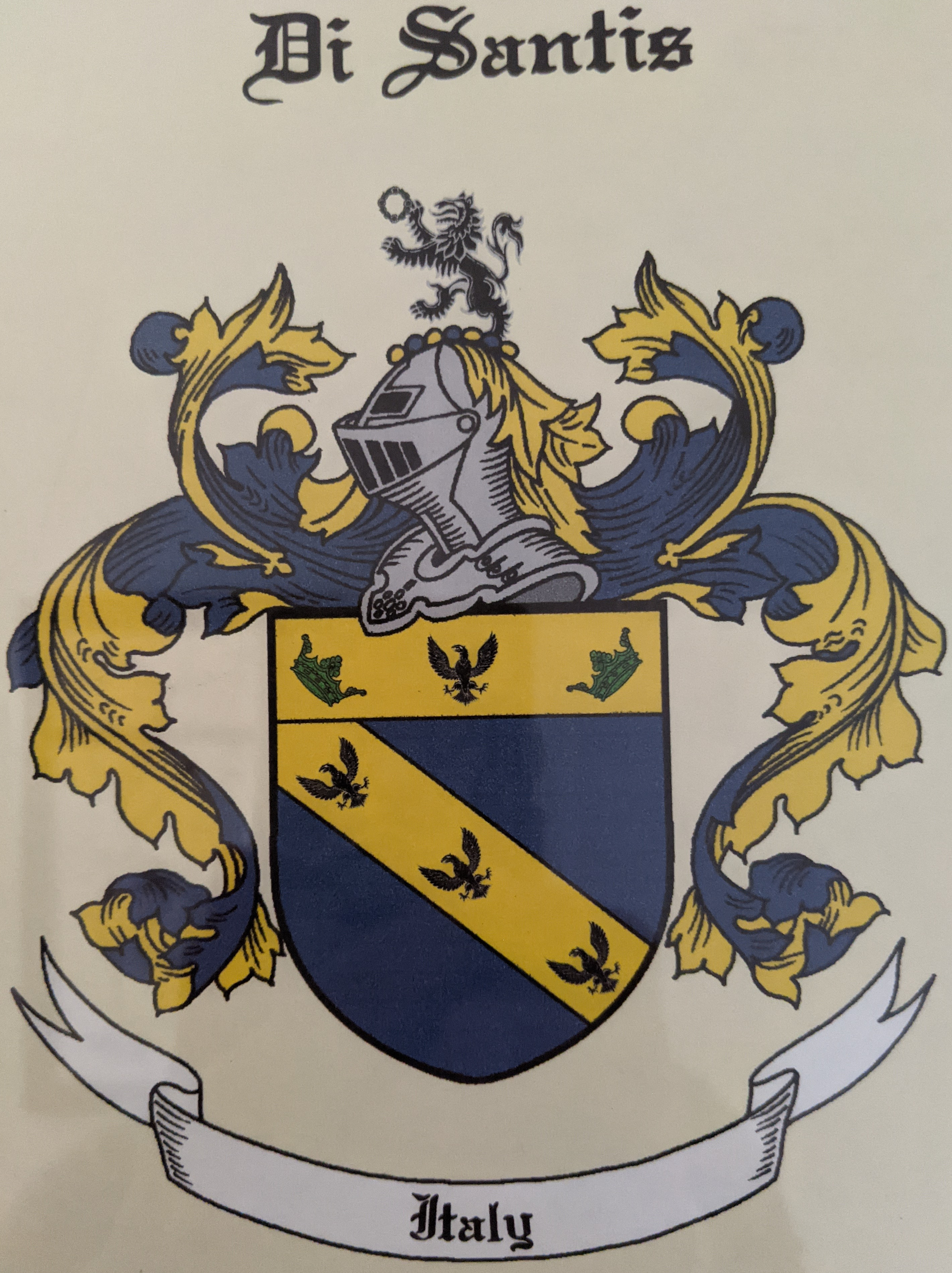
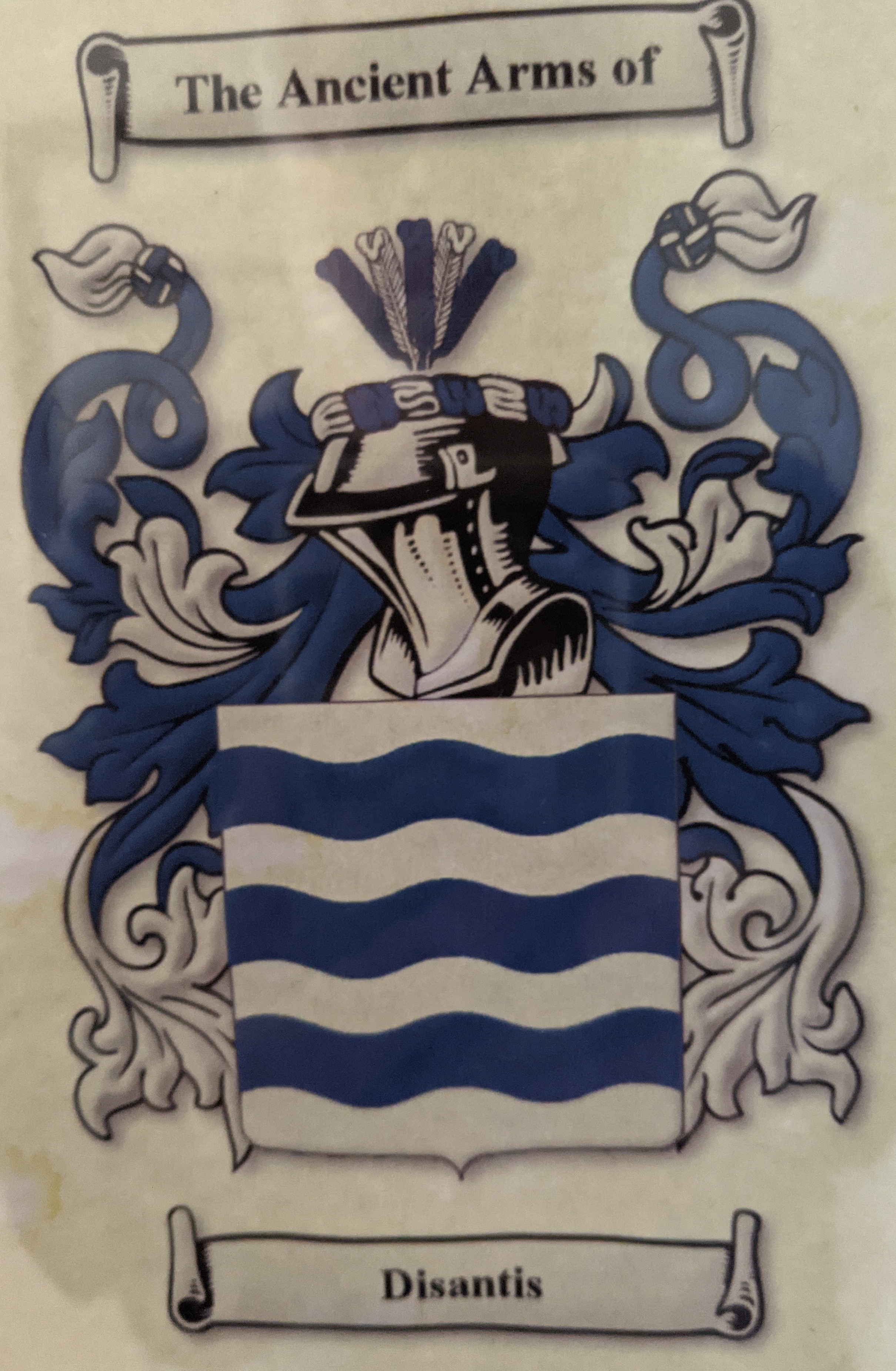
The Family Crest(s)

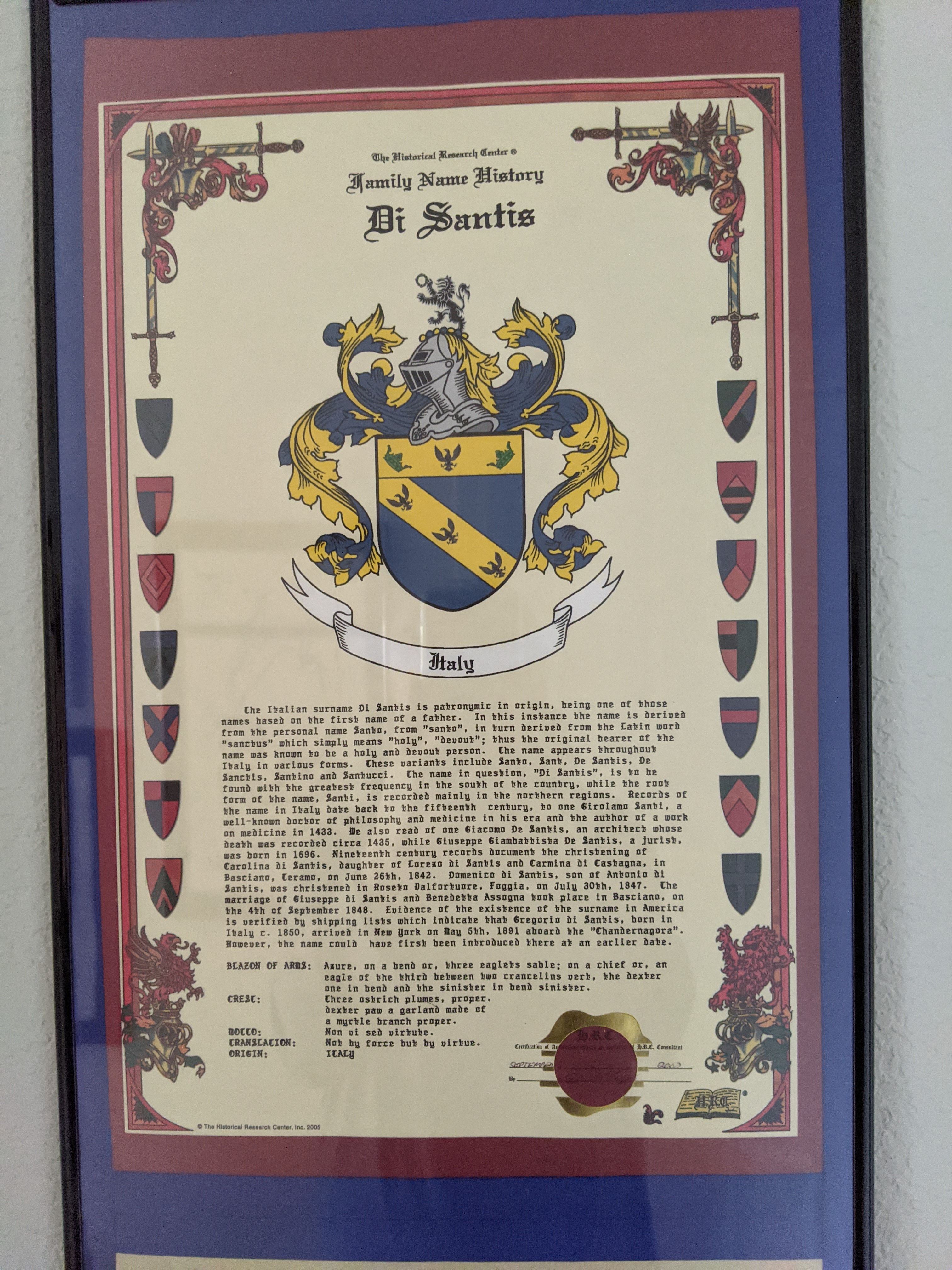
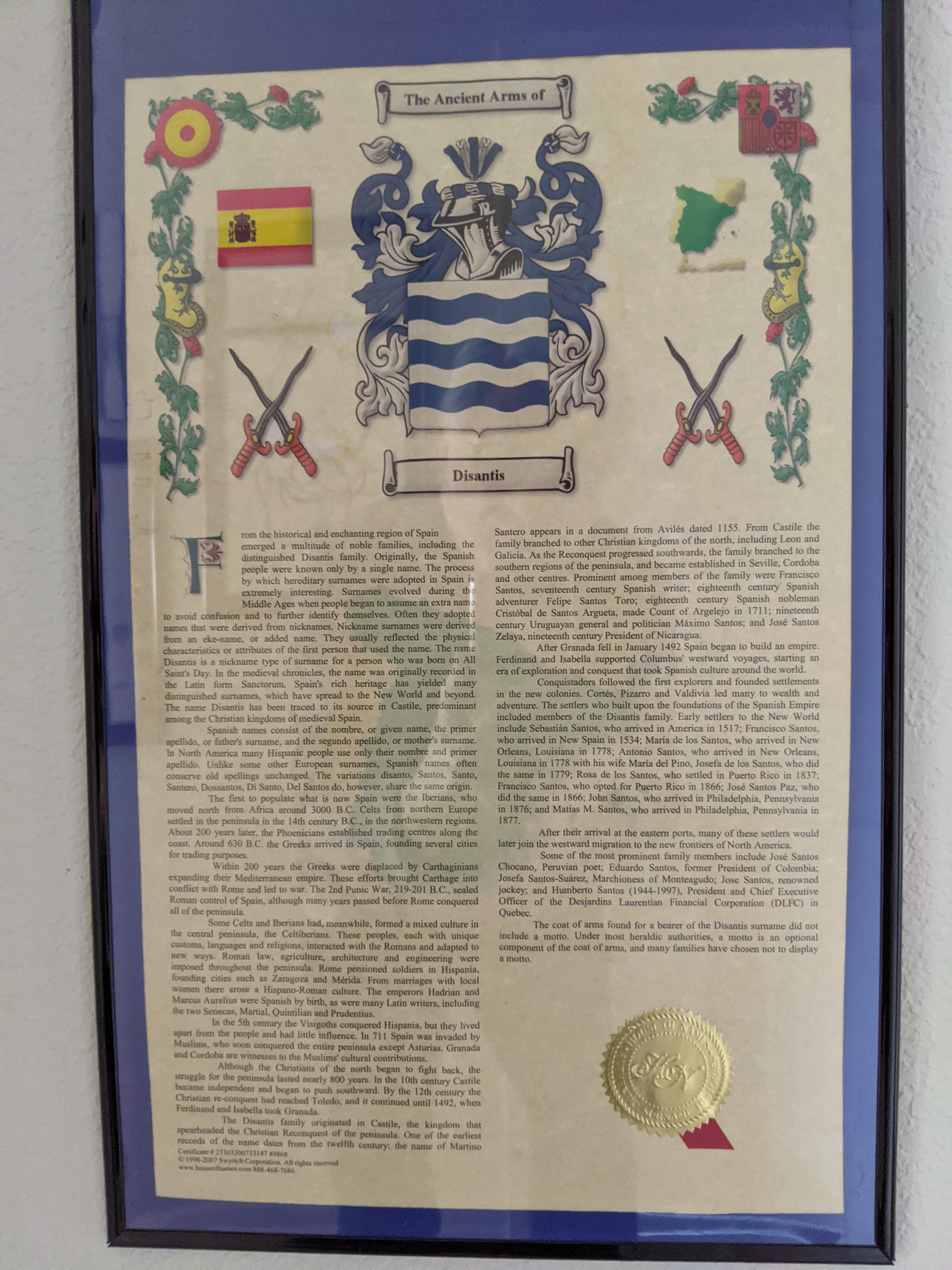
Disclaimer: Who knows how much of this is true. I did not do independent research. I bought these heraldic citations at the Washington State Fair years ago.

Two family crests: one from Italy and the other from Spain. It has always been curious to me why our name does not end in a vowel, like most Italian names, until I read this Spanish heraldry. Since the Spanish pre-dates the Italian, I assumed there was a migration to Italy at some point. If you read the Spanish citation, they indicated Roman soldiers retired in the conquered Hispania. Some Roman emperors were even born in Hispania before returning to Rome. However, according to my Ancestry there are no DNA links to the Iberian Peninsula. Curious.

So, my personal choice would be the Italian Coat of Arms because I know my paternal grandfather, Pietro DiSantis immigrated from Avellino, Italy, 47 km east of Naples. My paternal grandmother was also from the same area of Italy. My maternal grandparents were from Sicily. I’m going with the Italian crest.

Italian Coat of Arms Citation

The Italian surname Di Santis is patronymic in origin, being one of those names based on the first name of a father. In this instance the name is derived from the personal name Santo, from “santo”, in turn derived from the Latin word “sanctus” which simply means “holy”, “devout”; thus the original bearer of the name was known to be a holy and devout person. The name appears throughout Italy in various forms. these variants include Santo, Sant, De Santis, De Sanctis, Santino and Santucci. The name in question, ”Di Santis”, is to be found with the greatest frequency in the south of the country, while the root form of the name, Santi, is recorded mainly in the northern regions. Records of the name in Italy date back to the fifteenth century, to one Girolamo Santi, a well-known doctor of philosophy and medicine in his era and the author of a work on medicine in 1433. We also read of one Giacomo De Santis, an architect whose death was recorded circa 1435, while Giuseppe Giambattista De Santis, a jurist, was born in 1696. Nineteenth century records document the christening of Carolina di Santis, daughher of Lorezo di Santis and Carmina bi Castagna, in Basciano, Ceramo, on June 26th, 1842. Domenico di Santis, son of Antonio di Santis, was christened in Roseto Valfortuore, Foggia, on July 30th, 1847. The marriage of Giuseppe di Santis and Benedetta Assogna took place in Basciano, on the 4th of September 1848. Evidence of the existence of the surname in America is verified by shipping lists which indicate that Gregorio di Santis, born in Italy c. 1850, arrived in New York on May 5th, 1891 aboard the ”Chandernagora”. However, the name could have first been introduced there at an earlier date.

BLAZON OF ARMS: Azure on a bend or, three eaglets sable; on a chief or, an eagle of the third between two crancelins vert, the dexter one in bend and the sinister in bend sinister.

CREST: Three ostrich plumes, proper, dexter paw a garland made of a myrtle branch proper.

MOTTO: Non vie sed virtute

TRANSLATION: Not by force but by virtue

ORIGIN: Italy

More details from the website http://hrc-500.appspot.com/
CREST: A symbol (sometimes more than one) relating to hopes, ambitions or status
A lion rampant sable, holding in the dexter paw a garland made of a myrtle branch proper.

SYMBOLISM: The meaning of symbols (known as charges) and colors on the Coat of Arms and Crest. These represented the hopes, dreams and ambitions of bearers of this heraldry insignia.

Azure – A bright blue color which represents truth and loyalty. Bend – A diagonal bar on the shield which signifies the scarf or shield suspender of a knight commander and stands for defense or protection. Chief – The upper part of the shield. It was often granted as a special reward for prudence and wisdom or successful military command. Crancelin – A diagonal bar topped with a shape similar to the profile of a crown. Eagle – The eagle plays an important part in heraldry in almost every part of the globe and denotes a person of noble nature, strength, bravery and alertness. Or – The color gold. It denotes the qualities of generosity and elevation of mind. Sable – Black. This color denotes constancy or grief. This may also refer to the animal Sable prized for its fur. Vert – The color green. Represents the qualities of hope, joy and loyalty in love.

Spanish Coat of Arms Citation

From the historical and enchanting region of Spain emerged a multitude of noble families. including the distinguished Disantis family, Originally, the Spanish people were known only by a single name. The process by which hereditary surnames were adopted in Spain is extremely interesting. Surnames evolved during the Middle Ages when people began to assume an extra name to avoid confusion and to further identify themselves. Often, they adopted names which were adopted from nicknames. Nickname surnames were derived from an eke-name or added name. They usually reflected the physical characteristics or attributes of the first person that used the name. The name Disantis is a nickname type of surname for a person who was born on All Saints Day. ln the medieval chronicles, the name was originally recorded in Latin form Sanctorum. Spain’s rich heritage has yield many distinguished surnames, which have spread to the New World and beyond. The name Disantis has been traced to its source in Castile, predominant among the Christian kingdoms of medieval Spain.

Spanish names consisted of the nombre or given name, the primer apeliido, or father’s surname and the segundo apellido, or mother’s surname. ln North America many Hispanic people use only their nombre and primer apeliido. Unlike some other European surnames. Spanish names often conserve old spellings unchanged. The variations disanto, Santos, Santo, Santero, Dossantos, De Santo, Del Santos do. however, share the same origin.

The first to populate what is now Spain were the Iberians, who moved north from Africa around 3000 B.C. Celts from northern Europe settled in the peninsula in the 14th century B.C.in the northwestern regions. About 200 years later, the Phoenicians established trading centres along the coast. Around 630 B.C. the Greeks arrived in Spain, founding several cities for trading purposes.

Within 200 years the Greeks were displaced by Carthaginians expanding their Mediterranean empire. These efforts brought Carthage into conflict with Rome and led to war. The 2nd Punic War, 219·201 B.C., sealed Roman control of Spain, although many years pasted before Rome conquered the peninsula.

Some Celts and Iberians had, meanwhile, formed a mixed culture in the central peninsula, the Celtiberians. The peoples. each with unique customs, languages and religion, interacted with the Romans and adapted to new ways. Roman law, agriculture, architecture and engineering were imposed throughout the peninsula. Rome pensioned soldiers in Hispania founding cities such as Zaragoza and Mérida. From marriages with local women there arose a Hispano-Roman culture. The emperors Hadrian and Marcus Aurelius were Spanish by birth, as were many Latin writers including the two Senecas, Martial, Quintilian and Prudentius.

In the 5th century, the Visigoths conquered Hispania, but they lived apart from the people and had little influence. ln 711 Spain was invaded by Muslims, who soon conquered the entire peninsula except Asturias. Granada and Cordoba are witnesses to Muslim cultural contributions.

Although the Christians of the North began to fight back, the struggle for the peninsula lasted nearly 800 years. In the 10th century Castile became independent and began to push southward. By the 12th century the Christian re-conquest had reached Toledo, and it continued until 1492, when Ferdinand and Isabella took Granada.

The Disantis family originated in Castile, the kingdom that spearheaded the Christian reconquest of the peninsula. One of the earliest records of the name dates from to the twelfth century: the name Martino Santero appears in a document from Avilés dated 1155. From Castile the family branched to other Christian kingdoms of the north, including Leon and Galicia. As the Reconquest progressed southwards, the famiIy branched to the southern regions of the peninsula, and became established in Seville, Cordoba and other centres. Prominent among members of the family were Francisco Santos, seventeenth century Spanish writer; eighteenth century Spanish adventurer Felipe Santos Toro; eighteenth century Spanish nobleman Cristóbal de Santos Argueta made Count of Argelejo in 1711; nineteenth century Uruguayan general and politician Maximo Santos; and José Santos Zelaya, nineteenth century President of Nicaragua.

After Granada fell in January 1492 Spain began to build an empire. Ferdinand and Isabella supported Columbus’ westward voyages, starting an era of exploration and conquest that took Spanish culture around the world.

Conquistadors followed the first explorers and founded settlements in the new colonies. Cortés, Pizarro and Valdivia led many to wealth and adventure. The settlers who built upon the foundations of the Spanish Empire included member of the Disantis family. Early settlers to the include Sebastián Santos, who arrived in America in 1517; Francisco Santos, who arrived in New Spain in 1534; Maria de los Santos, who arrived in New Orleans, Louisiana in 1778; Antonio Santos, who arrived in New Orleans, Louisiana in 1778 with his wife Maria del Pino; Josefa de los Santos who did the same in 1779; Rosa de los Santos, who settled in Puerto Rico in 1837; Francisco Santos, who opted for Puerto Rico in 1866; José Santos Paz, who did the same in 1866; John Santos, who arrived in Philadelphia, Pennsylvania in 1876; and Matias M. Santos who arrived in Philadelphia, Pennsylvania in 1877.

After their arrival in the eastern ports, many of these settlers would later join the western migration to the new frontiers of North America.

Some of the most prominent family members included José Santos Chocano, Peruvian poet; Eduardo Santos, former President of Colombia; Josefa Santos-Suárez, Marchioness of Monteagudo; Jose Santos renowned jockey; and Humberto Santos (1944-1997), President and Chief Executive Officer of the Desjardins Laurentian Financial Corporation (DLFC) in Quebec.

The coat of arms found for a bearer of the Disantis surname did not include a motto. Under most heraldic authorities, a motto is an optional component of the coat of arms and many families have chosen to not display a motto.


More information at https://www.houseofnames.com/disantis-family-crest

An Inspirational Mother

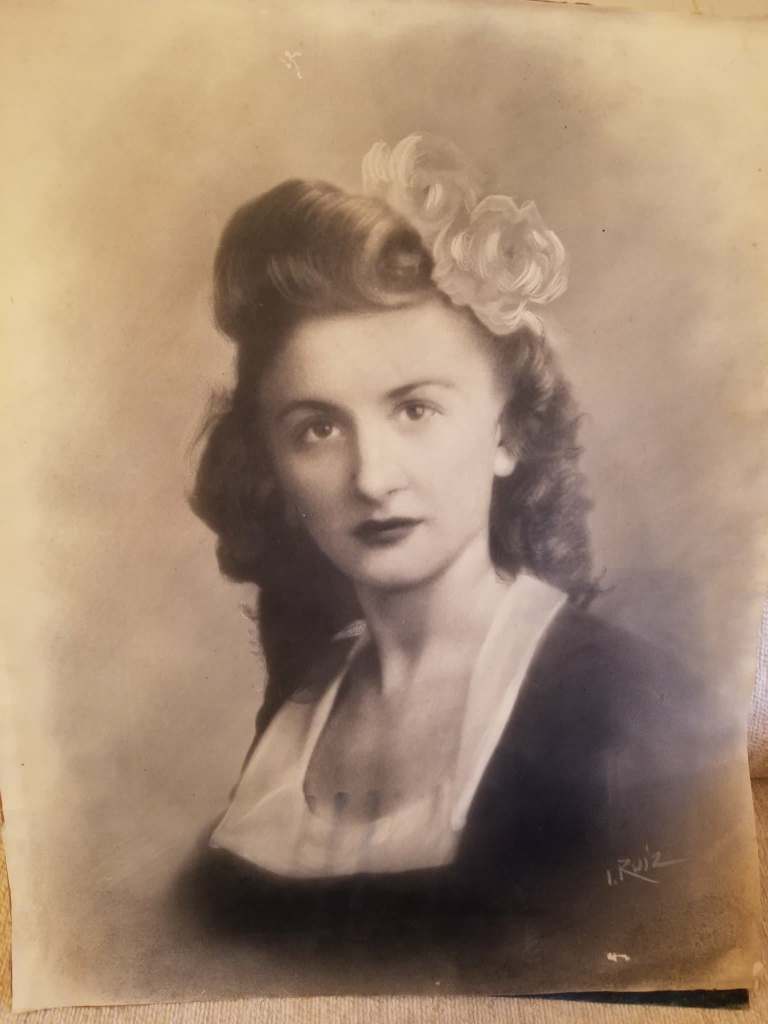
Adeline Denaro DiSantis

Everyone loves their mother, usually. I have been inspired by mine.

After my father’s death in 1987, Mom was not alone. Janet (my only sibling) and her family lived in the duplex unit upstairs. Obviously, for Mom, life was going to change very dramatically. (I know Janet can add more about that time in Mom’s life, because I was not around, living Washington.)

There were three things at that time Mom did which inspired me and proved you are never too old to change, never too old to learn new tricks and never too old to start over. Yet it was not the first time Mom impressed me.

It didn’t take me 40 years to appreciate my mother. Embarrassingly and too late, it started in 1965. As I was preparing to enter college at Pratt Institute, in Brooklyn, I had little savings to pay for my own education. Mom, who had been a “stay at home Mom” for 18 years, decided to find a job and it was for my benefit. Realizing she didn’t want to work retail, the next biggest company within walking distance from home, was the Dollar Savings Bank on Grand Concourse near Fordham Road. It was a huge marble columns and floors majestic bank.

With few marketable clerical skills (read none), she marched into the personal office of the bank for an interview. I’m not sure how the interview started, I just know it ended well. At sometime during the interview the bank’s VP of Personnel stuck his head into the interview room. He asked my mother one question, “Can you cook?” CAN YOU COOK? In a bank? What kind of a crazy question was that? Was he patronizing her? No. Actually, in fact, he was recruiting to fill a position in the executive dining room.

I’m sure Mom lit up the room with that question as she recanted the size of our extended family and the many meals she prepared or helped to prepare for them. The VP took Mom on a tour of the dining room on the top floor of the bank and she met her soon to be co-worker, Gisella, the head cook. I think she was hired on the spot. In so doing, she began her second career after marriage. There she remained as the second in command (there were no others) at the Dollar Savings Bank Executive Dining Room for over 20 years.

Fast forward about 22 years, my father died. My Mom’s sister, Doris, came up from Mexico to stay with her for a while. One of the things Aunt Doris did was to motivate Mom to learn to drive. As a young teenager, I remember Dad trying to teach Mom to drive. It didn’t go well and I thought I could do a better job driving. The subject was dropped for a long time. Mom had always depended on Dad for a lift anywhere she wanted to go. After moving away from The Bronx, Dad would take her to work at the bank and bring her home daily. (Janet could verify that.)

After studying her New York Drivers License Manual, and passing the learner’s permit test, she was ready to go. But who would teach her to drive? Good question. Mom, eventually signed up to learn to drive from the Sears Driving School. It may sound like a joke, but it was a real thing then. She, eventually got her license and she was 65. I remember arranging for her to buy a retiring company car from Airborne Express, which she drove for many more years. The driver’s license was the first step in rebuilding her life. New York State Driver’s License, CHECK.

With all this new found freedom and mobility, the second step was high school. She never graduated in the 1940’s. So, Mom enrolled in a GED program for adults, she attended classes to brush up on some academics, took her test and got her GED. (Again Janet could add more depth to this story.) G.E.D., CHECK.

Proudly with her GED in hand Mom had more skills for her third step forward which was a new job! She was retired, getting her Social Security, widows benefits and a pension from the bank, yet she wanted to work. After all, she was young, maybe 66. (Once again I would turn to Janet to fill in the details to this part.) Mom worked for a local community newspaper doing subscriptions or advertising. That’s all I know. I’m not even sure I got that right, but something like that. Thus, her third career. Career in journalism, CHECK.

Currently at this writing, Mom turned 98 last December and is living her life out in a nursing home in Danbury, CT.

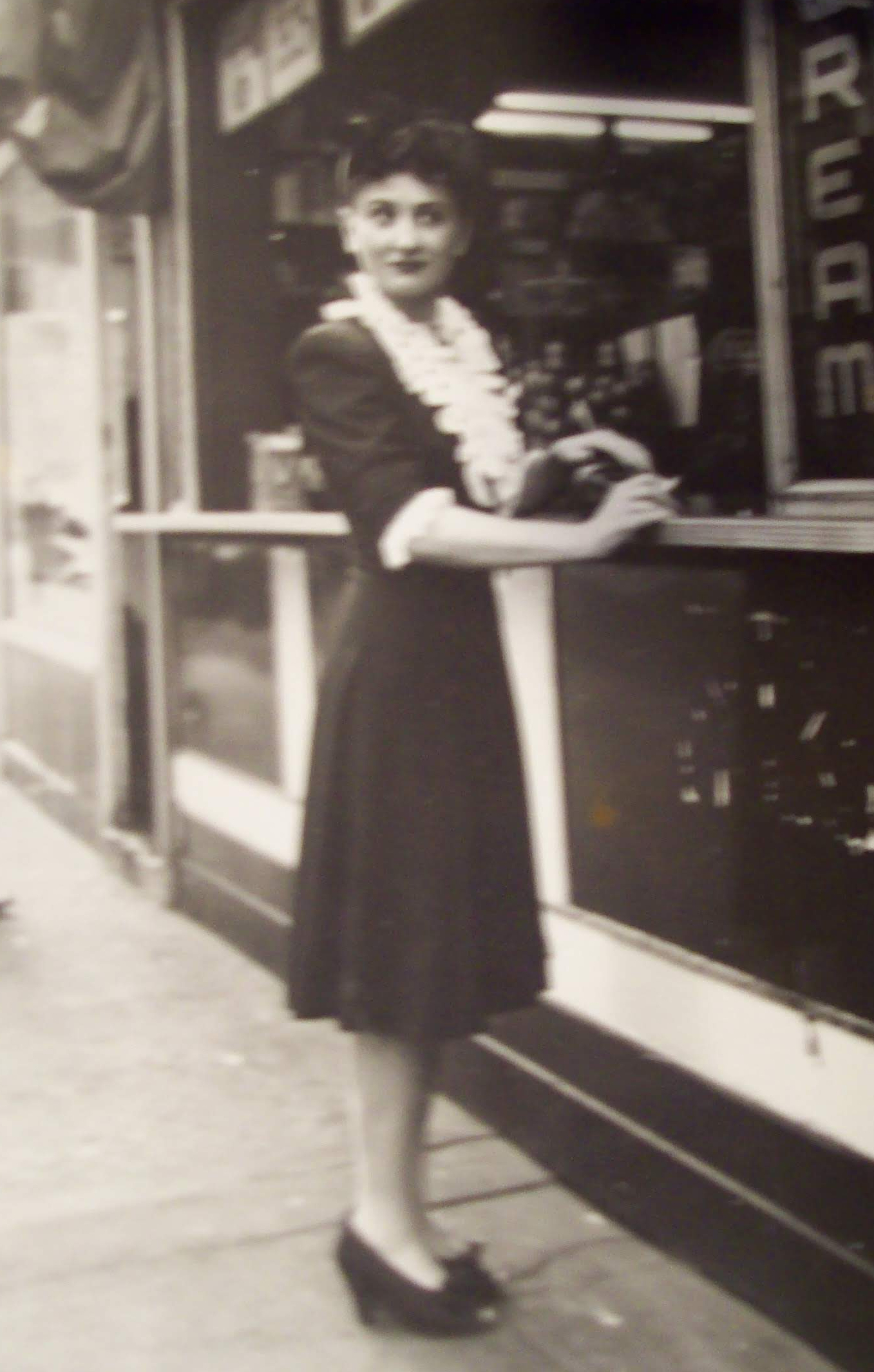
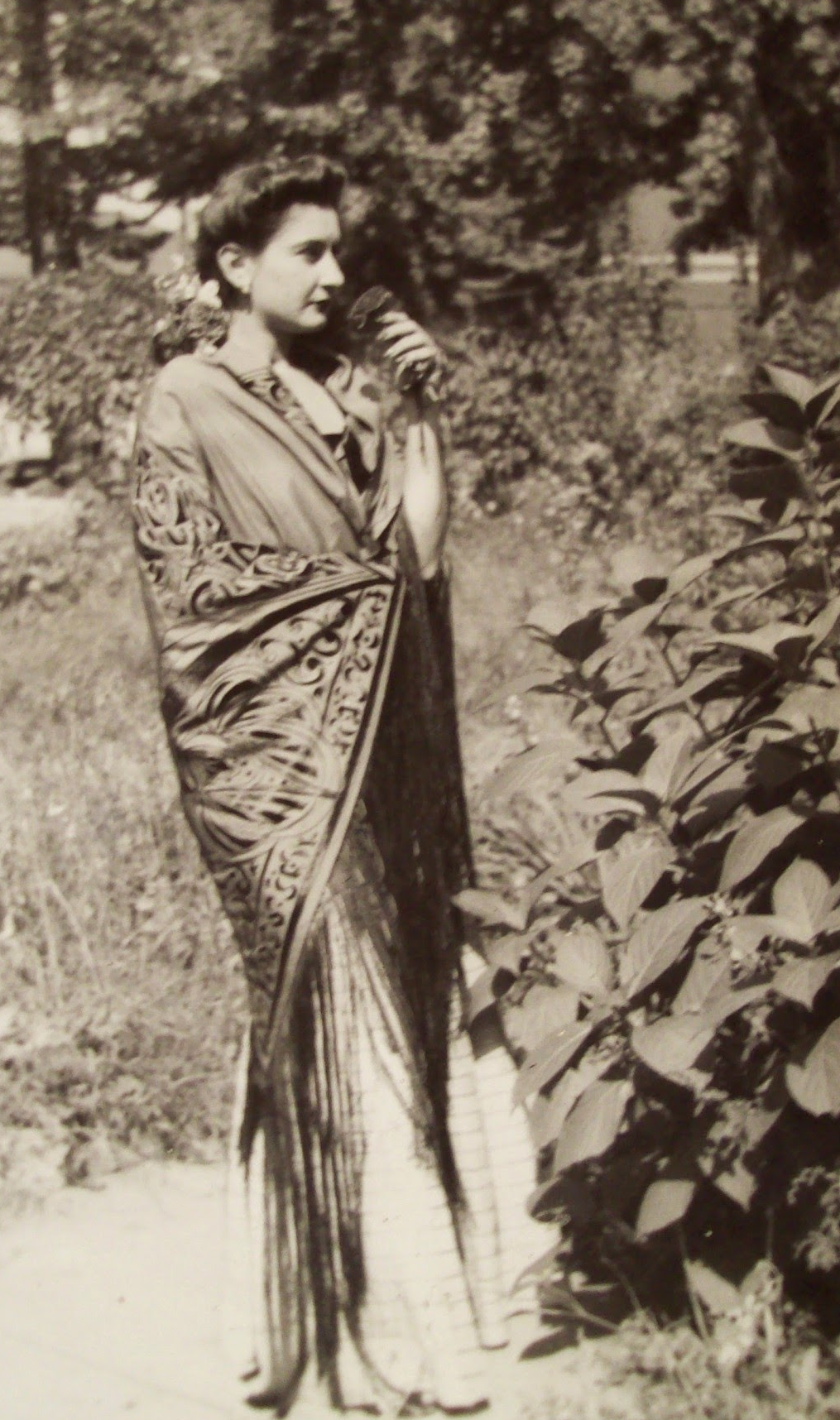
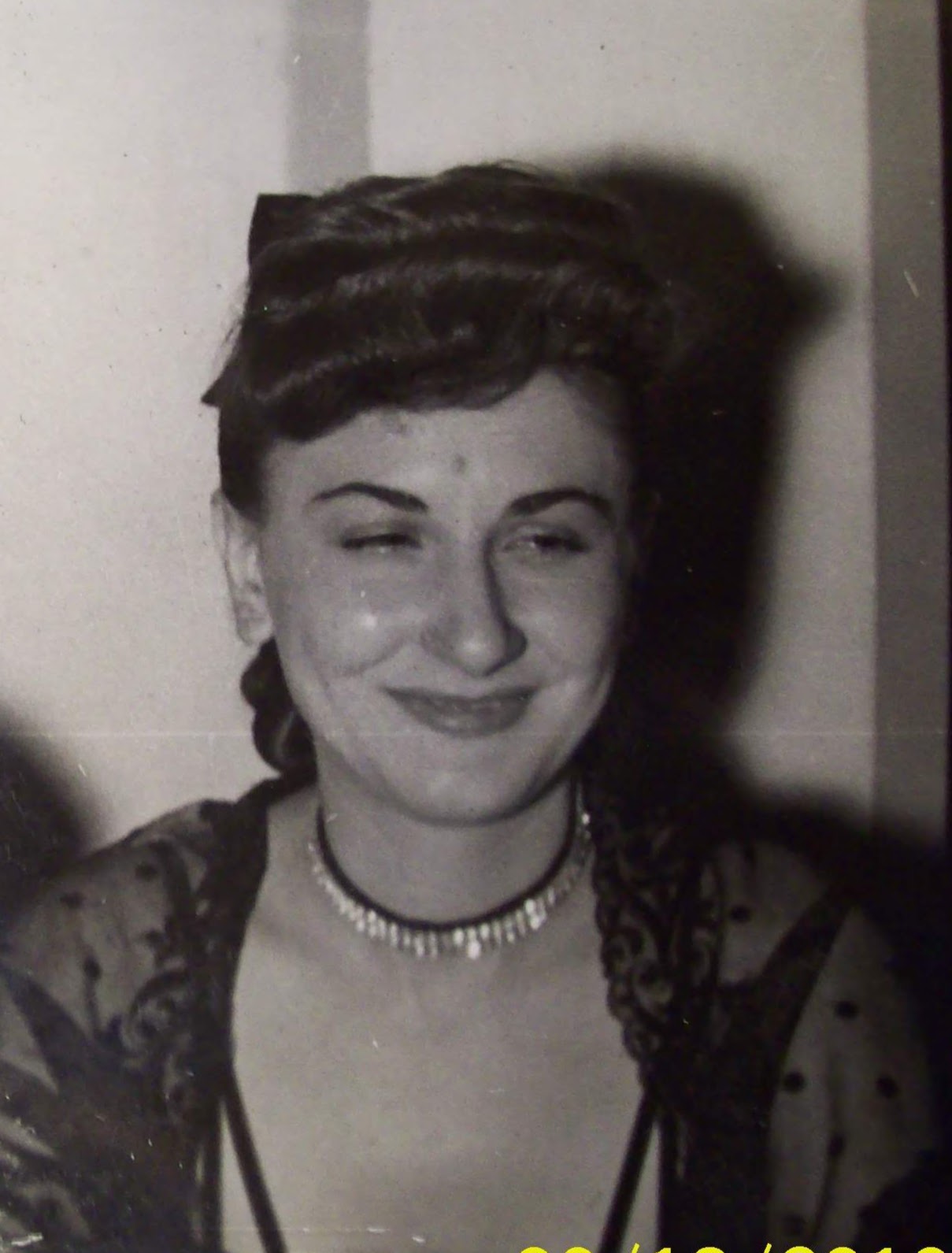
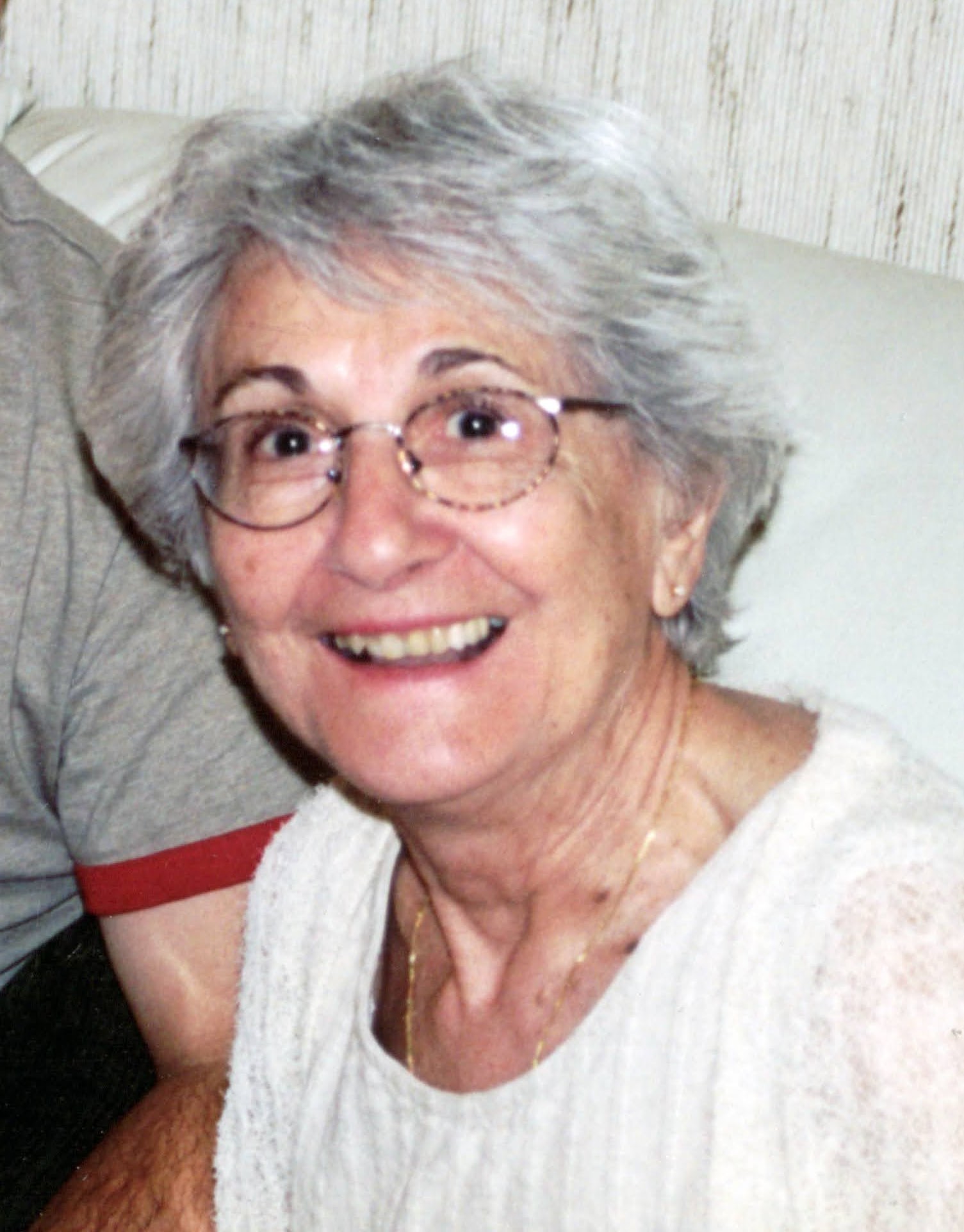
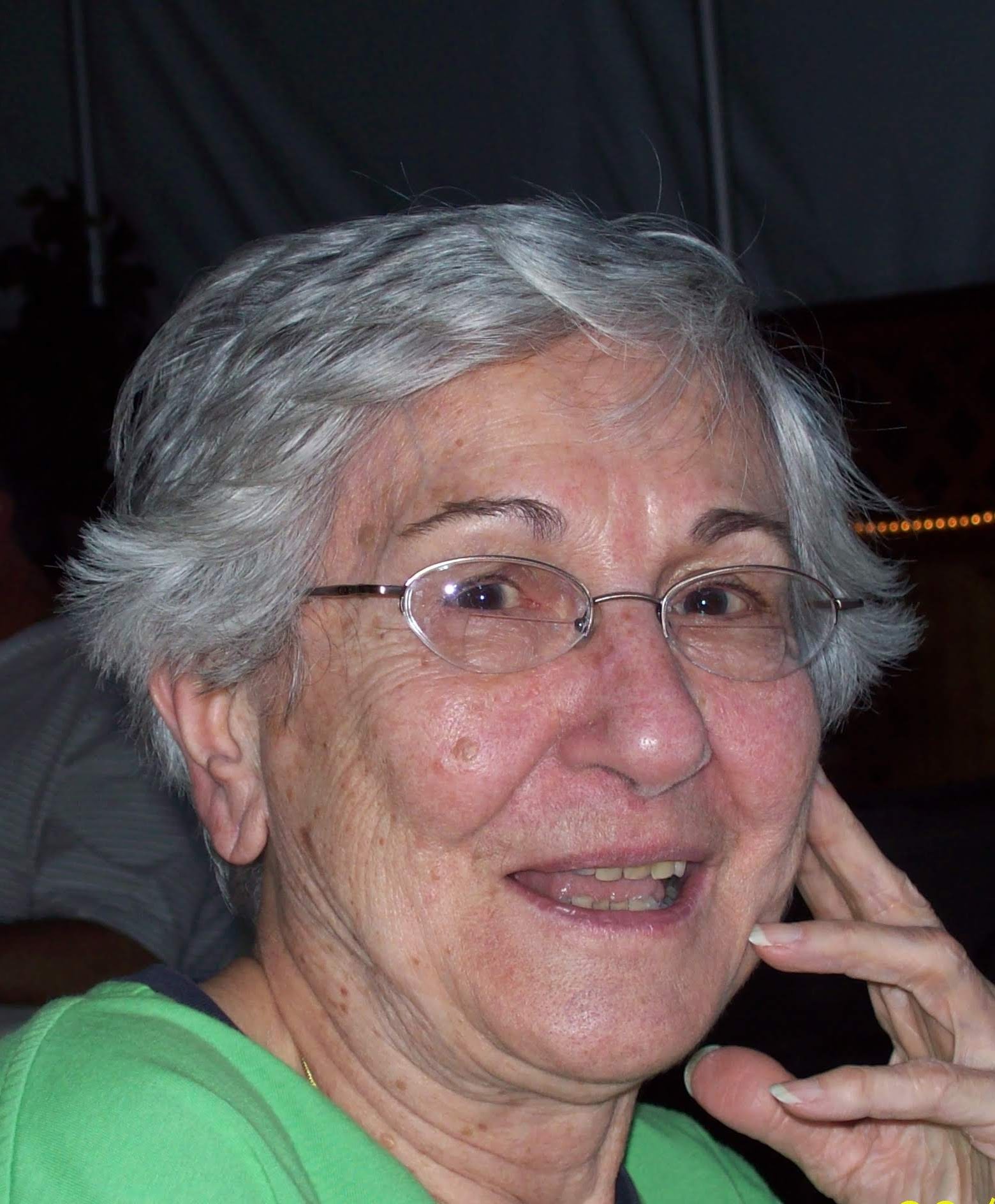
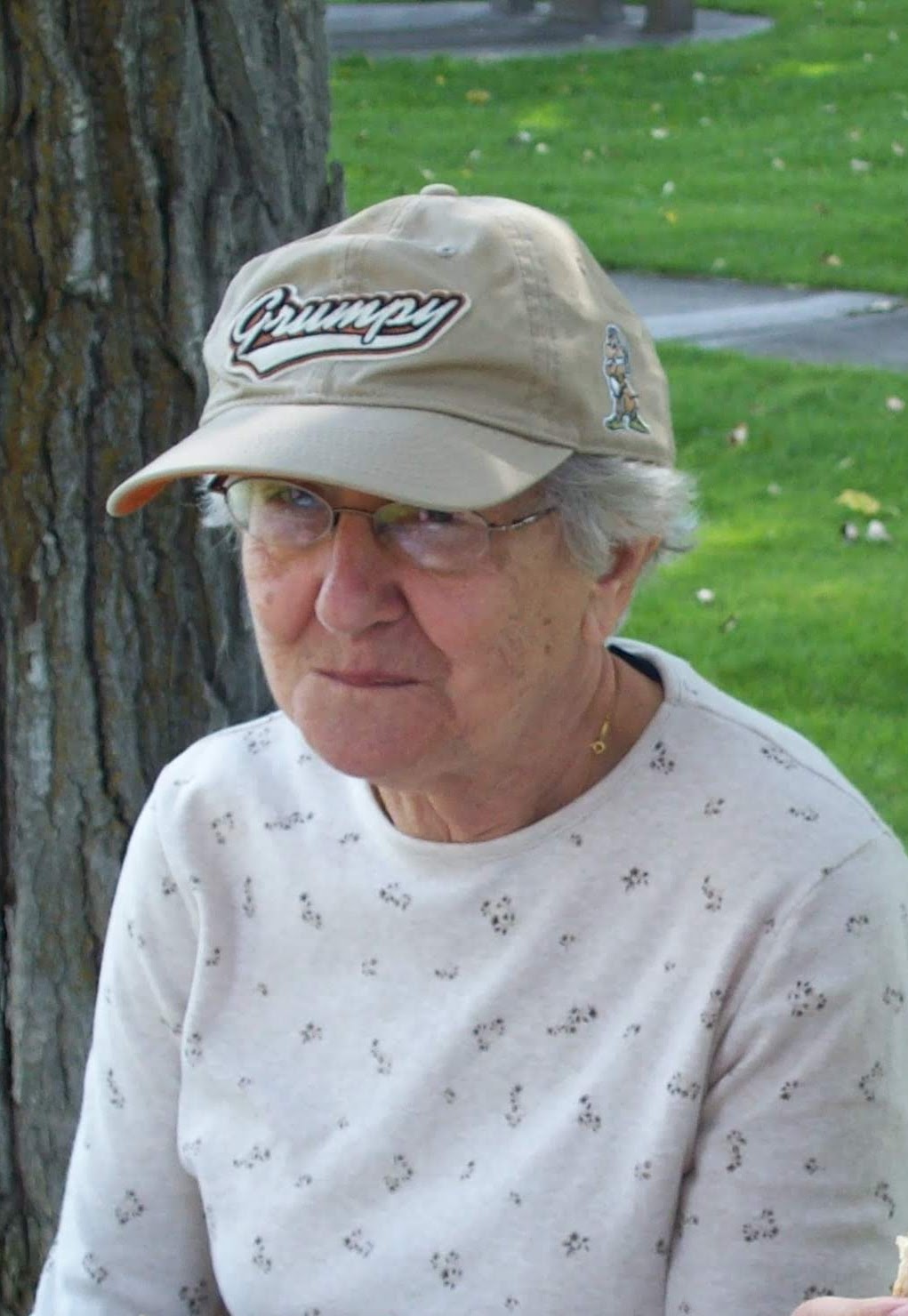
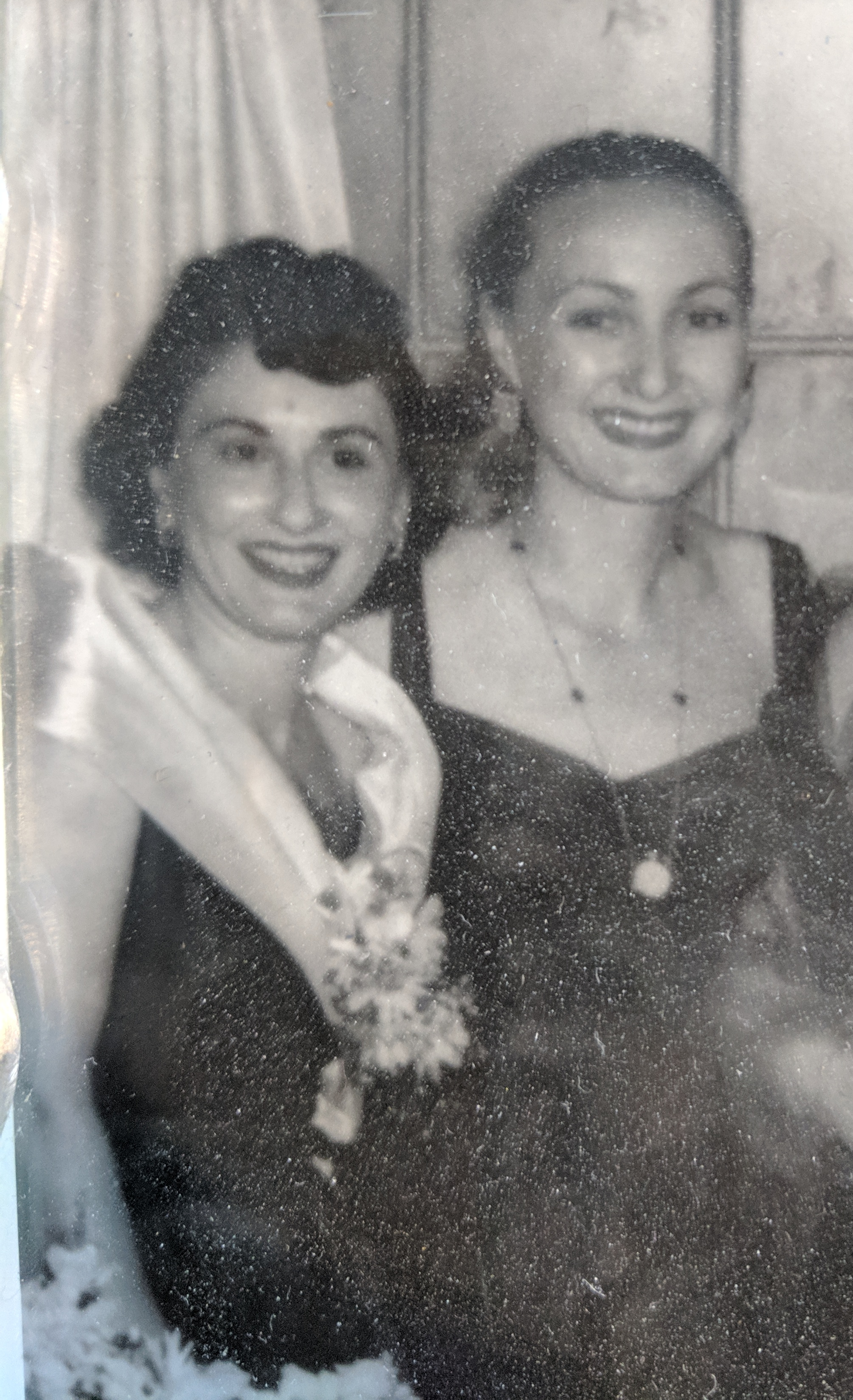
Photo Notes: Top row, l to r – Teenage girl, young woman, young married lady and unknown (Sorry, I liked the smile.) . Bottom row, both were from our RV road trip to Yellowstone in 2007. She is wearing MY hat!

Denaro Sisters

I have never, in my entire life, been exposed to a great relationship between two sisters, except the one connecting my mother, Adeline, and Aunt Doris. There were other Denaro sisters but I was most familiar with this beautiful pair. If I have never seen a great relationship between sisters, how would I know this one was great? I felt it, like I hope you have, if you have ever seen them together.

Slide your cursor over the middle of the photo to view 1950’s vs. 1997

They were not together much, which was ironically part of the connection. Because we did not have a phone in our Bronx apartment in the 1950’s, I remember my mother and I carrying fists full, no pounds, of quarters to the public phone booth at the local candy store to call Aunt Doris. Later, they hardly ever called each other because it was so expensive. So they wrote to each other. Well, they tried to write to each other. They tried very hard to stay connected over the many miles and many years they were apart.

Mom was with Aunt Doris in Mexico after her husband, Dan, passed away suddenly. And just as devoted, Aunt Doris was here in the States with Mom when Dad died, also very suddenly. At that time, Doris motivated Mom to get a driver’s license. (That is another story.)

But when Adie and Doris (born Matilda) got together, they were very funny. The way they talked and reminisced was wonderful to hear and watch. When they began to laugh, they would screech and cackle and howl; it would tickle your heart, if you were nearby. They loved and fought like sisters, I guess. Even that was amusing and interesting to watch.

I had the great opportunity to be alone with the “Sisters” several times. The last time was several years ago when they stayed at my home for a few weeks. Their heartfelt love for each other was obvious and it had sustained, if not been nourished by, the thousands of miles and years they were away from each other.

Driving. Many wonderful things also come to mind, but driving comes to mind when I think of Aunt Doris. Driving with Aunt Doris in Mexico City was impressive. Actually, at age 14, on my first trip to Mexico, anyone who drove was impressive. But in Mexico City, the congested traffic, the furious traffic circles and the bowling ball sized speed bumps, put anyone driving there in another class.

Aunt Doris is always fond of reminding me about the day she made a wrong turn into a stock car race. I don’t remember where we were going, but she turned onto this road which was lined with bales of hay. Cars with numbers on their doors were whizzing by us at an incredible speed. She did not stop immediately.

As I remember it, we had to be waved off the road by race officials. Well, there goes all the fun. Not so. We stood on the side of the road, on the other side of the bales of hay from the “normal” spectators and enjoyed the rest of the race. And I had the photographs to prove it! When it was all over, and the last car past our position, we got back in Aunt Doris’s car and drove by the bales of hay and spectators for our victory lap. The drive home was anti-climatic.

For my 50th birthday I took my mother to visit her sister in Mexico. After a few days, I got up enough nerve to ask Aunt Doris if I could drive her car in town. We had to wait a day. Local gas rationing dictated only even number license plates were allowed on the road that day. So the next day was the first time Aunt Doris and I collaborated as the “Mexican Driving Machine”. It was exciting as I drove and she navigated, with Mom in the back seat, in Mexico City (Grand Prix). Actually, we were just going to her daughter, Jacqueline’s for dinner. However, it was a very impressive and exciting drive for all.

Photo Notes: The one on the left is from a Denaro family group shot at my grandparents 50th wedding anniversary party. I’m assuming it was in the 1950’s. The photo on the right was from our trip to Mexico City after my 50th birthday. I cropped myself out of the photo yet we were standing in front of a cactus fence around the home of the famous Mexican mural artist Diego Rivera, who Aunt Doris knew, back in the day.

Friday the 13th

This one is not mine but very similar

This will not be a scary story. Promise.

It was 1971 or 1972, I was in the U.S. Army in Germany and in the market for a new car. My current car a 1963 VW Bug, which I bought for $600 was better known as “Invincible” yet was breaking down too often. I had already fixed the broken clutch cable and that was the extent of my mechanical skills. Also, the engine was very noisy but very soothing for my infant son who was colicky. Invincible always lulled him to sleep when nothing else worked. Nevertheless, I needed a new car.

I shopped around, of course. In our small town was a BMW dealer and I was looking at the 1600 or 2002 coupes. My eye was really on the 2002, but it was too expensive. If I recall it was $3600 US. Too much for a soldier. So then, I drove 10.5 miles south to Nuremburg to the VW dealer to order a brand new (’71 or ’72) Volkwagen Fastback. I loved the style and the color had to be the dark metallic blue.

Weeks later it was Friday the 13th, I don’t recall the month, VW from Nuremburg called to say pick up your car. Invincible was on her last legs and we hobbled in to pick up my brand-new blue VW fastback. We sat down to do all the paperwork and they wanted money, only $2400 US. Cool. I didn’t have it. I forgot all about it. What do I do?

In the Nuremburg PX was a credit union, so I went there immediately and filled out a loan application. Within a matter of hours, I was approved and I had the certified check for the car and all the fees. Back to VW. Great. Now you need plates. Oh! How do I do that? Go to the Military Police (MP) office down the block from the PX. I’m really stressing Invincible at this point. She is not well and may give out at any time.

I made it to the MP office and filled out all the forms for a car registration. It’s now about 2:45 pm (1445 military time) and there is a big sign on the wall that the office doors close at 3pm (1500). I got on the long line which did not seem to move for the first 5 minutes. Slowly, ever so slowly, I inched my way up to the counter. At 1500 hours the doors closed . . . behind me. I was inside and about 4 people away from success. I finally got up to the counter, filed my application, paid the fees and got my license plates.

COME ON INVINCIBLE! One more short trip to the VW dealer. I made it.

In the course of four hours, I drove 10.5 miles to pick up a car I had NO money for, applied for a loan, got the money, paid for the car, applied for a vehicle registration, stood in a long line, got the license plates and put them on my brand-new metallic blue, Volkswagen Fastback.

Friday the 13th has been a very lucky day for me ever since.

Getting Started

If I run out of things to say, I will refer to a handy little book, “To Our Children’s Children – Preserving Family Histories for Generations to Come”, by Bob Greene and D.G. Fulford. As I open this book, I notice the bookplate. Apparently, I got this from my eldest daughter, Andrea. Thanks.

There are hundreds of questions in this book and I’m sure it will help prompt me to write something. First, let’s go through the 30 demographic questions. I won’t give you the questions, just the answers in short bursts.

I was born Peter DiSantis (with no middle name) in the Bronx Hospital on a Saturday morning. I was named after my paternal grandfather, Pietro DiSantis, an Italian immigrant.

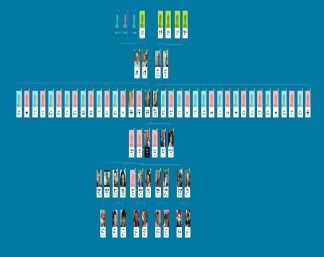
My mother was one of 11 and my dad was one of nine. I came into a big Italian family and very happy about it. With 36 aunts and uncles come, 54 first cousins. Now, those cousins are grandparents and I’m not sure anyone has a total headcount of the clan. If each cousin had two children and each of them had two, that would be 216 not counting spouses. I’m the exception to that rule. I have 5 children and eight grandchildren.

Based on my heritage, I assumed I was 100% Italian. I bragged for the longest time, “I’m FBI – full blooded Italian”. Well, science and DNA proved me wrong.

Speak Clearly

Sometimes you don’t need to speak to anyone as you do your daily routine. But when you do, it is important to remember that you are an agent and a brand ambassador of your company. If you expect to communicate clearly, you cannot stumble around like the Mumbles character in Dick Tracy.

Here are a few tips on speaking clearly:

  1. Speak slowly and concisely: Customers are often busy with their own daily routine when they approach you. A polite greeting may be enough to capture their attention. Use their name, if you know it and you will surely get their attention. Stop and wait until you have their full attention before speaking. This way you avoid having to repeat yourself or being misunderstood.
  2. Speak courteously and politely: Smile inside and smile outside and project a friendly, helpful, and caring professional attitude. The words you speak account for only seven percent of your communication. How you speak or your tone of voice is a major mark of your courtesy and politeness. Your good manners, words such as “please,” “yes,” “hello,” “thank you,” “certainly,” and “good morning,” are always welcome and appreciated in a professional environment. Phrases such as, “Yes, I would be happy to,” or, “It would be my pleasure,” demonstrate a helpful desire to be of service.
  3. Avoid slang and acronyms: Avoid slang because it may be perceived as rude or disrespectful. Acronyms may be a quick and efficient way to speak to colleagues at your company. Those same acronyms may not be understood, or worse, be misunderstood by a customer. Slang and acronyms are not effective ways of communicating professionally with your customers.

Speaking clearly respects your customers and the work they entrust to you. Speaking clearly respects your position, profession, and yourselves personally. In order to earn respect, speak respectfully by:

  • Speaking slowly and concisely
  • Speaking courteously and politely
  • Avoiding slang and acronyms


Stubborn

I saw this roadsign twice in one weekend. So, I thought I would take the hint. At 60 MPH, I couldn’t read the fine print. I wasn’t quite sure who the ad was for. Nevertheless, I got the message.  I didn’t want to die of stubbornness. So I had to think, “What was I being stubborn about?” (Is this a multiple choice question?)

Well, I picked one and I went to the doctor. Not a bad start. In fact, the road sign is a campaign initiated by the US government to bring awareness not only to the issue of the prostate but to all aspects of male health. Not a bad guess on my part.  Then I wondered, about business.

How many businesses would die of stubbornness? How many businesses are stuck in their ways? Stuck in their old ways. No new ideas, no innovation? No progress! Can failure or death be far behind?  Albert Einstein quoted, “you can’t solve a problem with the same mind that created it.” Einstein also said, “Insanity: doing the same thing over and over again and expecting different results.”

The Familiar Will Kill Ya

Everybody wants to get better, make more money, have more time, whatever you want more of. And as Mark Twain has said, “The only person who likes change is a wet baby.” Many people want change without changing. Or they want everyone else to change, but not them. It doesn’t work that way. And it’s not change for the sake of change. It’s change for the sake of measured progress.

To quote the wisdom of the ages . . .

Einstein said, “Insanity: doing the same thing over and over again and expecting different results.” Routine is good if it’s working and moving you forward. If you feel stuck, then it’s time to change. Create a new routine that will keep you moving forward. You must continually evaluate your position. If you are on course, stay the course. If you are off course, adjust. This requires you know where you are and where you are going.

“It is not the strongest of the species that survives, nor the most intelligent that survives. It is the one that is the most adaptable to change,” said Charles Darwin. This is the law of the survival of the fittest, not the strongest, not the most steadfast. You can survive if you adapt. You cannot drive your car without steering. It would be suicide.

Gandhi has said, “BE the change you wish to see in the world.” This is obviously an inside job. It’s always an inside job. It starts with you. This is leading by example. Not always easy but necessary if you expect progress. Many are afraid to change. It is essential that someone muster the courage to lead the way. Otherwise, you will all stay stuck.

“Progress is impossible without change and those who cannot change their minds cannot change anything.” ~George Bernard Shaw. It starts with a decision. Of course, change is scary. It’s unfamiliar; it’s different, it’s risky. So you take your head out of the sand and weigh the pros and cons. That’s how you move forward if you want to move forward. It’s your choice.

“The world will not evolve past its current state of crisis by using the same thinking that created the situation,” Einstein again. If you are stuck and you know it, you may not even know how to change. That’s where a support system comes in. You need new thinking, new options, better choices than you are aware of. Seek out the help and it will be there.

“It takes a lot of courage to release the familiar and seemingly secure, to embrace the new. But there is no real security in what is no longer meaningful.” Alan Cohen