Tanks, Toes, and 100-Pound Tubes: My Not-Quite-Regular Army Career

Looking back, my military service is a collection of fond memories, unexpected detours, and one very specific silver-plated tray. It technically started in college at the Pratt Institute. I joined the ROTC for four years, and during the last two, the Army enlisted us and even gave us a small monthly stipend. 

After my junior year, I was shipped off to a summer camp for 2 weeks with cadets from all over the country. It wasn’t quite as rigorous as enlisted Basic Training, but the Army instructors certainly enjoyed their hobby of pushing future officers to their absolute physical limits.

I survived, and at our final formation, I was actually called out of ranks to receive the Superior Cadet Award for my company. The prize? An engraved silver-plated tray that sits in my house to this day.
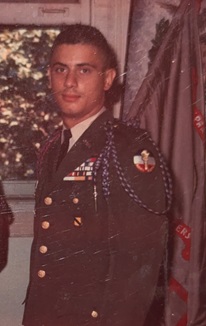
ROTC Cadet Di Santis

The Fork in the Road

Before graduation, the Army offered me a commission as a Second Lieutenant in the Regular Army. This was the serious career track with an indefinite commitment. I wasn’t sure I wanted to be a “lifer,” so I politely declined and took a Reserve Army commission instead, which only required a four-year commitment.

There was a slight hiccup at the end of my senior year involving being short two credits for graduation (a long story for another time), but I received an Honorable Discharge from ROTC on September 15, 1969, and officially pinned on my “butter bars” as a Second Lieutenant in the U.S. Army Armor Branch.

Next stop: Fort Knox, Kentucky.

The 52-Ton Portable Radio

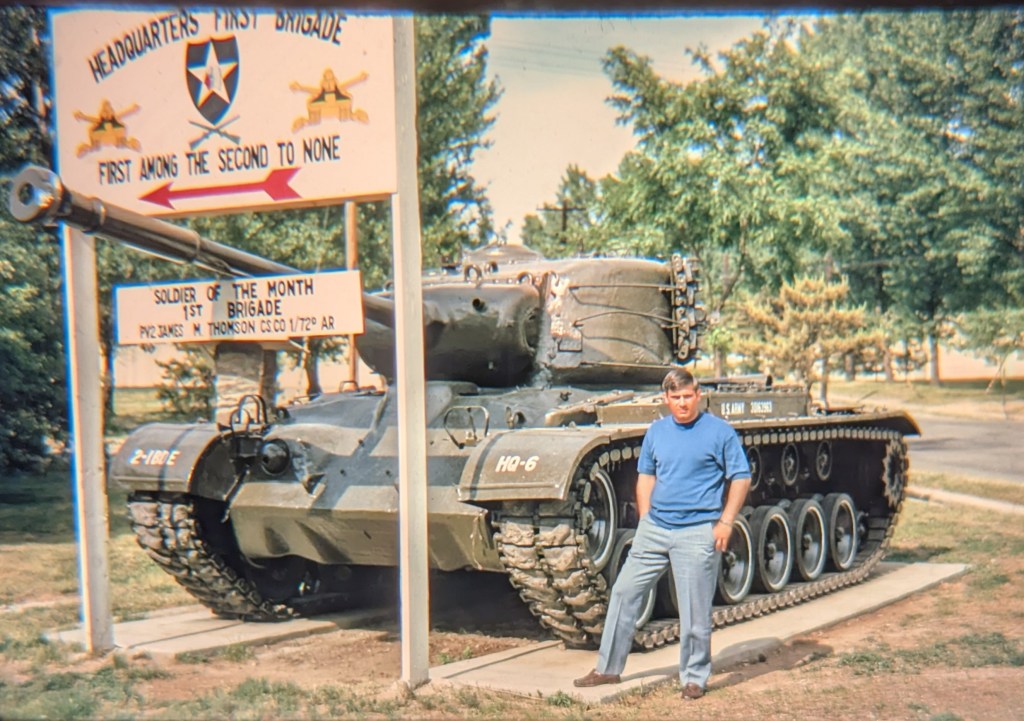
I reported to the U.S. Army Armor School in October 1969. The nine-week training on M60 tanks is a bit of a blur, but I remember the “Big Three” courses: Communications, Automotive, and Gunnery.

Every instructor claimed their subject was the most critical. But let’s be honest—the Gunnery instructors won that argument. As they liked to remind us: “Without gunnery, you are just driving a 52-ton portable radio.” Ha ha.

I must have paid attention because I graduated on the Commandant’s List, placing me among the top officers in the class. I was even selected for an additional course on the latest high-speed light armored vehicle. I was on a roll.

The “Deal” of a Lifetime

It was 1969. The Vietnam War was ongoing. Just before graduation, the Army offered us fresh officers a deal: Sign a “Vol-Indef” (Voluntary Indefinite) contract, and you can pick your first duty assignment for 18 months.

The choice was essentially: Vietnam or… literally anywhere else?

I’ve never made a decision faster. I chose Germany.

Deutschland and the Mortar Surprise

I arrived in Erlangen, Germany, in February 1970, reporting to the 1st Battalion, 35th Armored Regiment, 4th Armored Division. I walked in expecting to command a tank platoon. Instead, they handed me the Mortar Platoon.
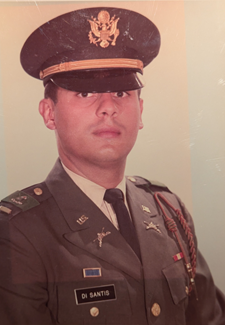
2nd Lieutenant Di Santis

I was stunned. I had zero training on the 4.2″ (“four-deuce”) mortar.

So, I did what any good leader does: I let my subordinates teach me. My “tutor” was a buck Sergeant (my forward observer). It was a crash course in humility. I was the “leader,” but they were the experts. It taught me a massive lesson: The best leaders are the ones willing to learn from the people they lead.

(Note: Amidst all this military shuffling, life happened. In March 1971, my eldest son, Peter, was born in Nuremberg Army Hospital!)

The “Second Scariest Thing”

By 1971, the Army was reorganizing. The 4th and 1st Armored Divisions were combined. My mortar platoon was mothballed, and I was moved to a cushy desk job as an assistant to the Brigade Commander. That lasted until the division decided, “Hey, let’s bring the mortars back!”

They assigned a new Lieutenant to the reactivated platoon, but tragedy struck when his father fell ill, and he had to return to the U.S. suddenly. The platoon was leaderless and scheduled for a massive Army Proficiency Test.

The Army looked at me—the guy at the desk who used to run mortars—and said, “You’re up.”

We loaded Jeeps and five modified armored personnel carriers, including one FDC (Fire Control Center) and four motorized mortars onto flatbed rail cars and took a train to the test grounds. (Best sleep I ever got was on that train). Since I had an authorized copy of the test, I gathered the platoon in a barracks room and we… let’s call it “aggressively reviewed” every single question.

The test included night firing, which is undeniably cool. One gun fires an illumination round (a giant flare) over the target area, and the other three fire for effect.

The Scariest Thing on a range is an uncontrolled explosion.

The Second Scariest Thing is a misfire.

We place a 25-pound mortar round in the muzzle, and it slides down the tube. It’s supposed to hit the firing pin and fly out at 800 feet per second.

Thunk.

Silence.

The round was stuck. 25 pounds of high explosives, just hanging out in the tube. As the leader, it was my job to fix it. The procedure? Kick the tube as hard as you can to jar it loose.

I made the sign of the cross. I kicked it. Nothing. I kicked it again. I started sweating bullets. Still nothing.

The next theoretical step was much more dangerous. With the help of my team, we had to gently lift the bottom of the mortar tube—which weighs about 100 pounds—high enough so gravity would slide the explosive round back out the top.

You can imagine the sound of metal-on-metal scraping as we lifted the tube. I was sweating profusely, my hands hovering over the muzzle, preparing to “collar” the live round as it peeked out. I successfully snatched the baby out of the tube, and the drama was over.

I remember silently cursing the Safety Officer, thinking, “That idiot didn’t check the round properly!”

Decades later, I realized the truth: The misfire was part of the test. The Safety Officer wasn’t an idiot; I was the one being tested. (We passed, by the way).

You Can’t Win Them All

We passed the mortar test, but my luck ran out later. I was assigned as Executive Officer (XO) of Company C. At the annual Tank Commanders’ Qualifying Course, a Commander was unavailable, and I had to step in.

I hadn’t been in Armor School for two years. I hadn’t trained with this crew. I was dropped into the tank cold, and frankly, we failed. I felt terrible for the team, but it was a reminder that you can’t fake proficiency in a 52-ton machine.

Tanks, Planes, and Broken Toes

I eventually made Captain and braced myself for my next assignment. I assumed I’d go stateside. Instead, the Army said: “Surprise! You’re going to Korea.”

Getting there was an odyssey. There were no direct military flights. I flew from New Jersey to California… zig-zagging across the US on a hospital air transport. From California, we stopped in Hawaii and Guam before finally landing in Seoul.

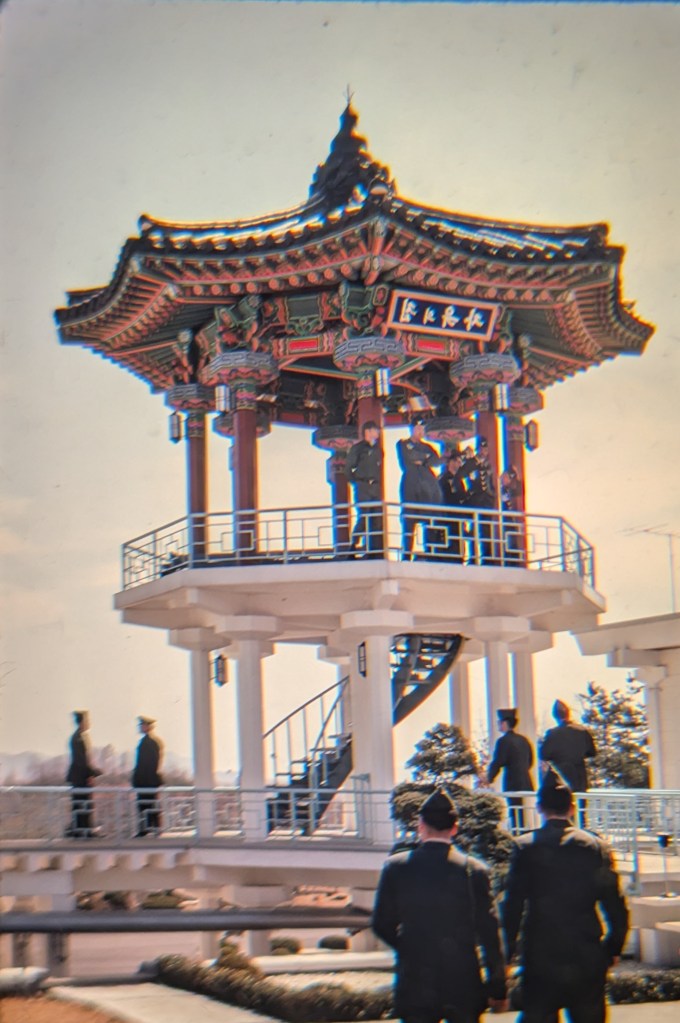
I was assigned to Camp Casey as the S1 (Personnel) Officer for the 1st Brigade, 2nd Infantry Division. It was familiar territory—paperwork and correspondence. But I did get out a bit.

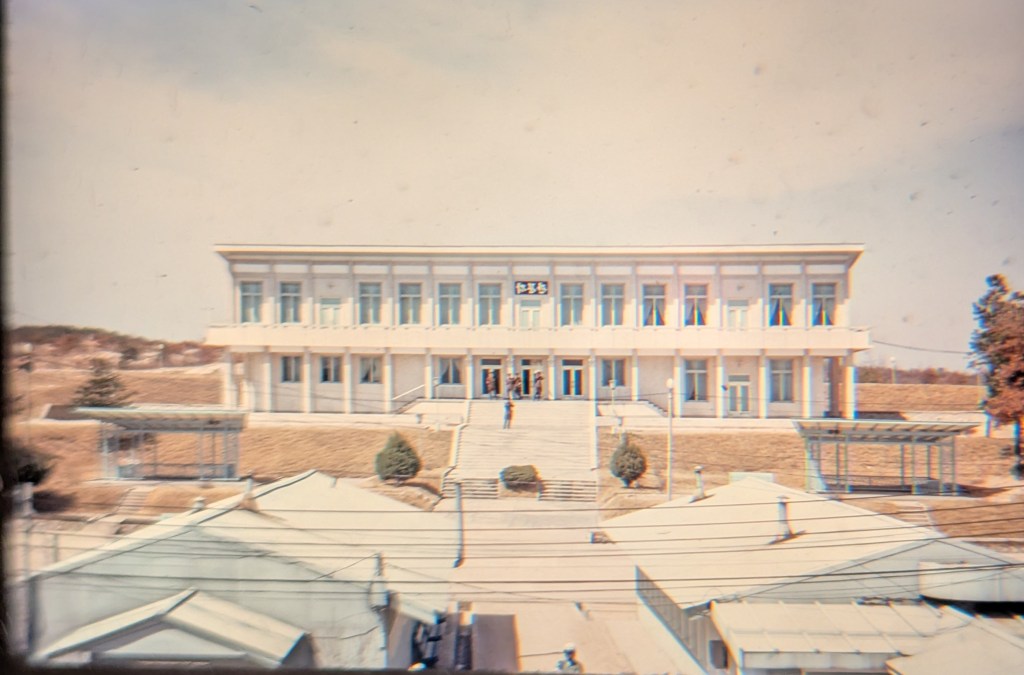
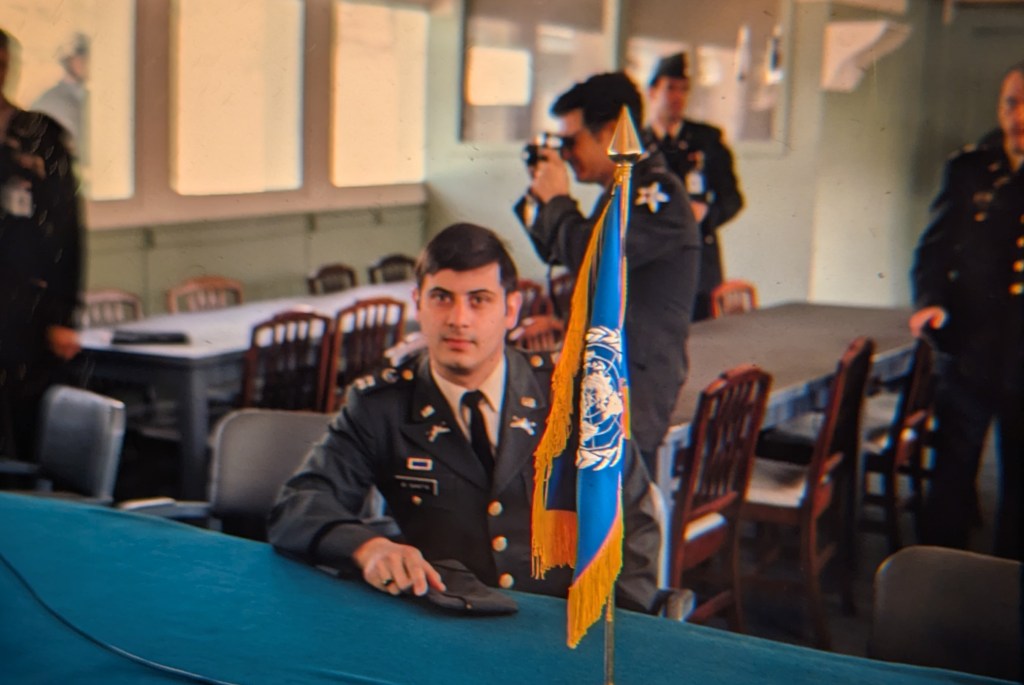
  • The DMZ: I toured the border and visited the peace talk Quonset hut. I even stepped to the North side of the table for a photo op. Technically, I was in North Korea for about 15 seconds.
  • Tae Kwon Do: I trained three times a day. This ended after two incidents. First, my master kicked me in the chest, knocking me out cold. (When I woke up, I politely agreed he had scored the points). Second, he blocked my kick and broke my big toe. That was the end of my fighting career, but I did retire as a Green Belt.
  • Cards: When I wasn’t breaking bones, I was playing Pinochle or Bridge from Saturday noon until Sunday night.

The Homestretch

In 1973, the U.S. was withdrawing from Vietnam and reducing its forces. Despite my “Indefinite” contract, I was released from service early because—ironically—I still lacked that college degree (remember those two missing credits?).

I was discharged on September 8, 1973, after serving 3 years, 11 months, and 23 days of active duty (about four months of that in Korea), followed by two years in the reserves. I received an Army Commendation Medal and an Honorable Discharge.

The Bottom Line:

I was never in a combat zone. I never shot at anyone, and no one ever shot at me. THANK GOD.

I still wear a POW bracelet to this day. It serves as a constant reminder: Someone else saved my butt.

The Power of Family Stories

This is a podcast I heard recently, and it captivated my attention from the very beginning. I believe it is very relevant for this blog. It dives deep into themes that resonate with many families today. The researcher confirms what I have suspected. I have heard these things in stories about my parents’ families. The researcher weaves together personal anecdotes with scientific insights. These insights illuminate our shared experiences. This is something I want to share with my family. We do not see each other often enough. This gathering of narratives could serve as a bridge to bring us closer together. The wealth of knowledge shared in the podcast encourages meaningful conversations. It also prompts reflections that could enrich our understanding of one another. It was created by the Hidden Brain Staff. It was released on November 17, 2025. This makes it a timely piece that can spark dialogue in our own family discussions.

The link below is a simple YES/NO questionnaire, which will test your knowledge of your family. To fill in your blanks (or NO answers), some questions may be easy to ask. Others may be difficult based on circumstances. I am willing to answer questions for me to the best of my ability. Send your questions and they may be part of another blog post.

This post also presents a new opportunity. This is the first of my posts which includes audio. Do you have a story about our family you would like to share? If writing it feels daunting, just record it! Send it to me and I will post it here.

Stay tuned, video posts may be soon.

I Could Have Died

As I reach the age of 76, I find myself reflecting on my life and my own mortality. Twice in my life, I have had experiences that scared me close to death. 

The first time occurred when I was working a summer job with my father at American Cystoscope. The company manufactured medical equipment and devices, including opto-digital technology for a variety of medical purposes. They also had a contract with the U.S. Army to make periscopes and other optical equipment for tanks. As a government contractor, they were required to hire teenagers for summer jobs, and so I was employed there after my sophomore year of college.

Dad made small medical instruments, like scalpels for biopsy devices. He always carried one in his wallet in case someone would ask, “What do you do?” He liked to joke that the blueprints were on a huge piece of paper, yet the device was one-half inch long.

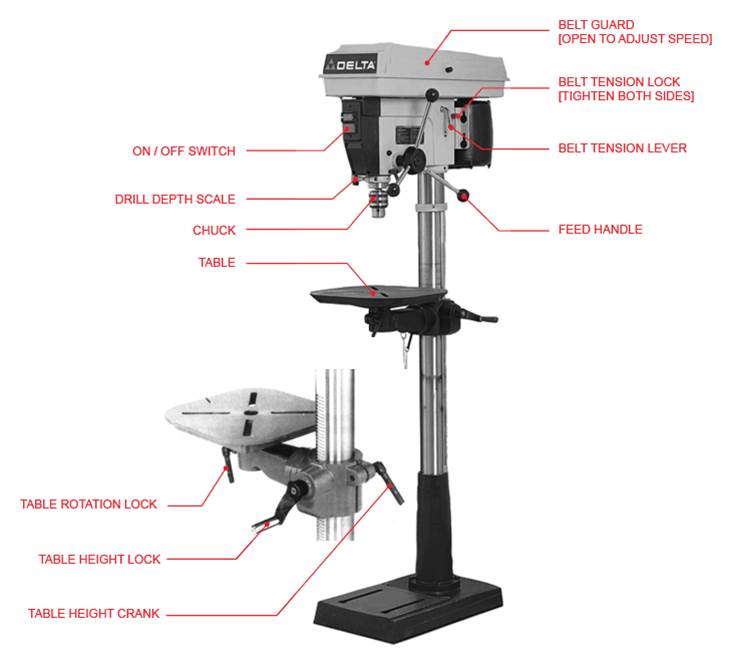
During my time there, I was tasked with a job that involved drilling holes into a metal piece. I had no idea what I was making. I just did what they said. I had a foreman who set up the job and showed me how to work the drill press, and I did the job for hours on end. One day, I was drilling several holes into a metal piece, and I had to load it into a metal jig that ensured it was in the correct position and aligned for drilling. To drill the holes, I had to align the vertical drill above the appropriate hole in the jig and then gently pull down on the feed wheel/lever, which lowered the spinning drill into the jig. 

However, I was working too quickly, and the drill bit became stuck in the metal piece in the jig. The jig, then began spinning violently, and I lost my grip on it. For a few seconds, which seemed like an eternity, I watched it spin and wobble out of control at 1000 RPM. I was standing about a foot away from this tornado of cold metal. The drill bit eventually broke causing the jig to fly 20 feet through the air and it sparked when it hit the concrete shop floor. Luckily, I was not in the way or injured. I was never asked to work on that drill press again. 

The second time I was close to death occurred when I was driving to work after dropping my daughter, Andrea, off at preschool. The road was wet, and I was heading down a slight decline when I spun out of control on black ice. I headed straight for a ditch on the left side of the road, narrowly missing a telephone pole. I was then stuck in the ditch, unable to stop until the front of my car hit something and the rear swerved to the left, causing the car to roll sideways. 

I don’t know how many times the car rolled, but it was enough to scare me. When I stopped, I was still in the ditch, right-side up, and perpendicular to the ditch. I couldn’t open the doors, so I climbed out of the driver’s window. Luckily, a couple of women stopped to help me out of the car and took me home. I didn’t suffer any major injuries, thanks to my seat belt, but I did have a mild AC joint separation that was caused by the seat belt. 

In both instances, I was lucky to come out unscathed.

Zip-A-Dee-Doo-Dah

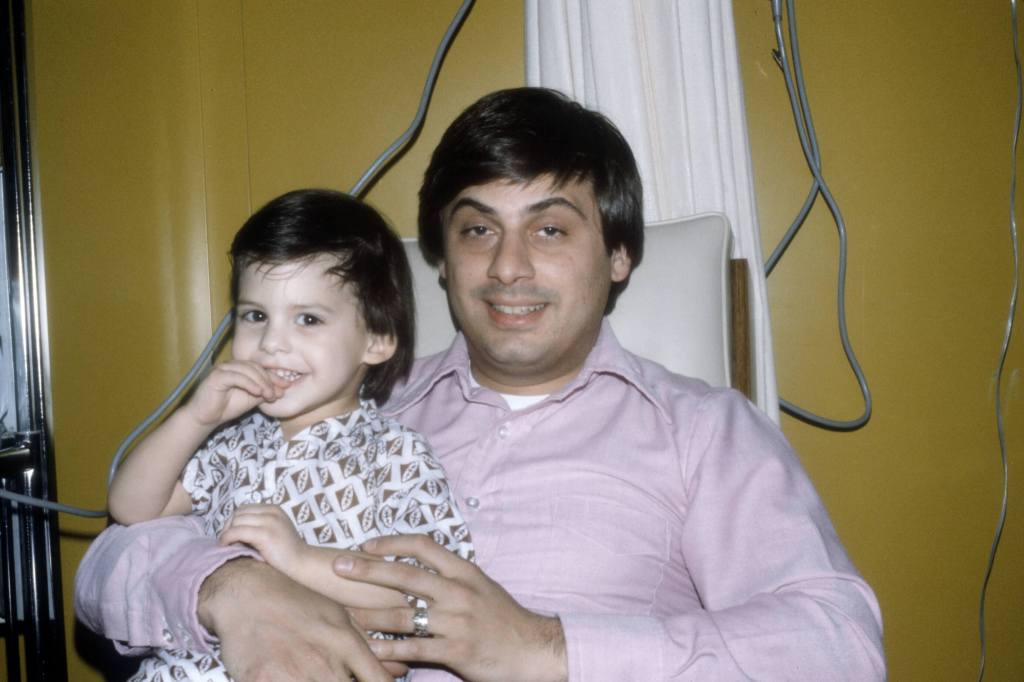
Can you tell from the images below who is sick? Actually, it’s the little boy in PJs.

My three-year-old son Michael was admitted into the children’s ward at our local hospital late one December. To the best of my recollection, his symptoms were mysterious, and his pediatrician wanted to have him tested and observed. I remember his bed was a large crib with slatted sides and a Plexiglas bubble on top to prevent any escapes. It seemed appropriate for the little rascal.

As Christmas got closer, all the parents, who had children in the ward, were notified they could take their little kiddos home for the holiday, EXCEPT US. Michael had to stay in the hospital during Christmas. The doctors were uncertain about his condition and didn’t want him to leave the hospital. The staff of nurses was very kind and gave us the direct phone number to the pediatric nurse’s station, which was right outside Michael’s door. We were sad Michael had to stay in the hospital and maybe a little relieved we had a direct line to the nurses on duty.

For the holiday, we had scheduled family to come over for dinner, and it was too late to cancel or make other plans. So on Christmas Day, everyone showed up for dinner, but all we could think about was Michael. As the afternoon wore on, we decided to call the nurse’s station, and maybe we could speak to Michael. Maybe he would like to hear from his parents and grandparents.

So we called. There was no answer at the direct line to the nurses on duty. There must be something wrong. We gave it a few minutes and called again. Again, no answer! What gives! Who the heck is taking care of Michael, the ONLY child in the ward.

I’m unsure how many times we called, but the phone was finally answered. Trying to remain calm, I had to ask why the phone at the nurse’s station had been unanswered for so long. There was a simple answer.

One of the wonderful nurses heard Michael singing in his room and alone. Soon the whole staff was in Michael’s hospital room singing a song he had been singing solo:

Zip-a-dee-doo-dah, zip-a-dee-ay
My, oh, my, what a wonderful day
Plenty of sunshine headin’ my way
Zip-a-dee-doo-dah, zip-a-dee-ay!

Mister Bluebird’s on my shoulder
It’s the truth, it’s “actch’ll”
Everything is “satisfactch’ll”

Zip-a-dee-doo-dah, zip-a-dee-ay
Wonderful feeling, wonderful day!

As Michael led the nurses in this joyful song at the top of their lungs, it’s no wonder they did not hear the phone ring.

At the time, I’m not sure why Michael was in the hospital at all. After speaking to Michael now, over four decades later, he says he was in for pneumonia. Who knew?

Hat Fetish

Who Me? Okay, maybe. I’m guilty.

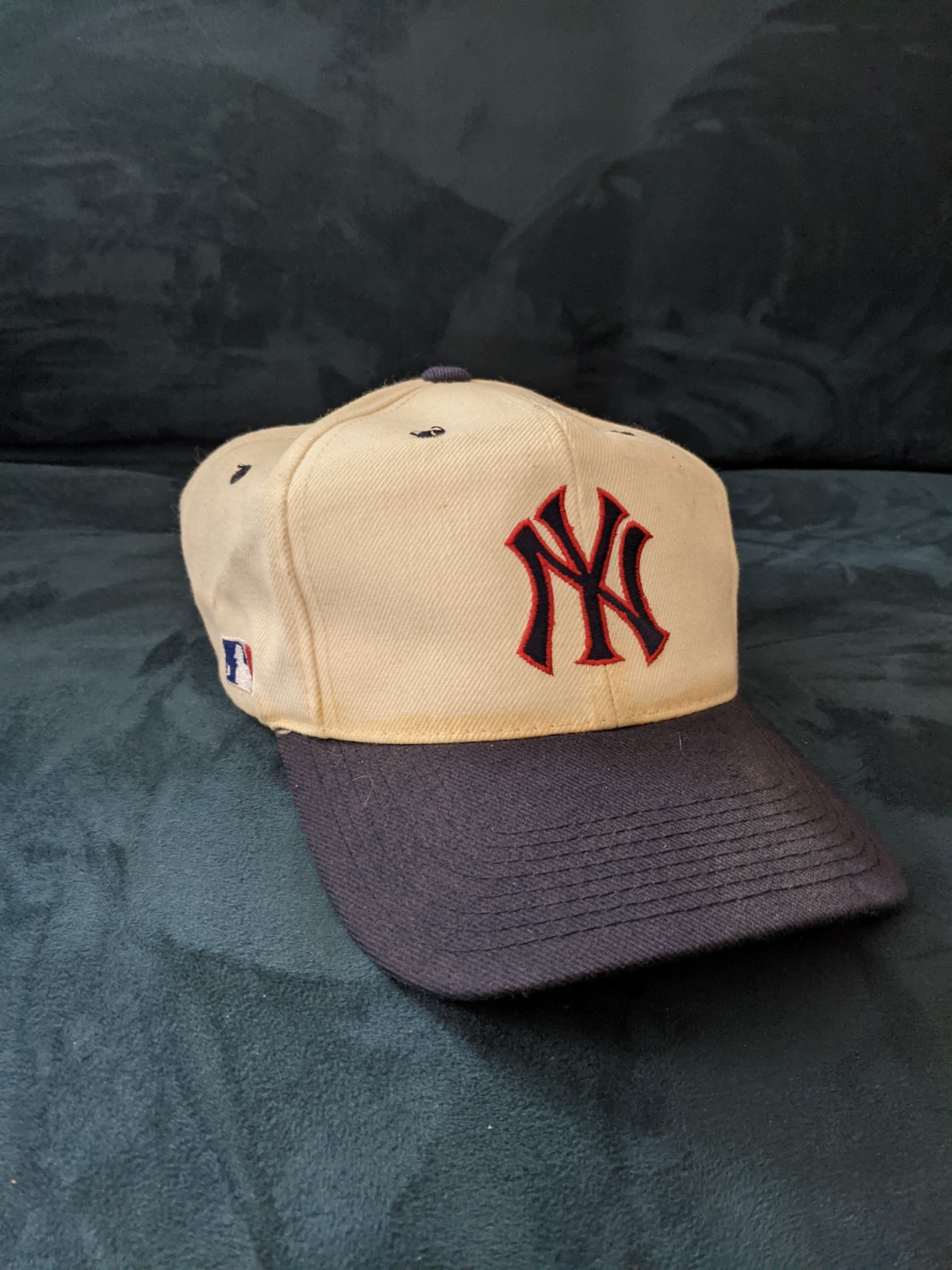
Recently, I have been buying hats and coveting many, many others. I do have a small collection. Some purchased and some gifted and all special. A hat for almost every occasion; in which I would care to participate. Most of my hats are new but two are old, and I will get to those two stories momentarily.

First, let me make the distinction between a hat and a cap. Baseball caps are just that, CAPS, of which I have a few. I used to have many more but my taste turned to other styles. So, I gave away dozens of baseball style caps.

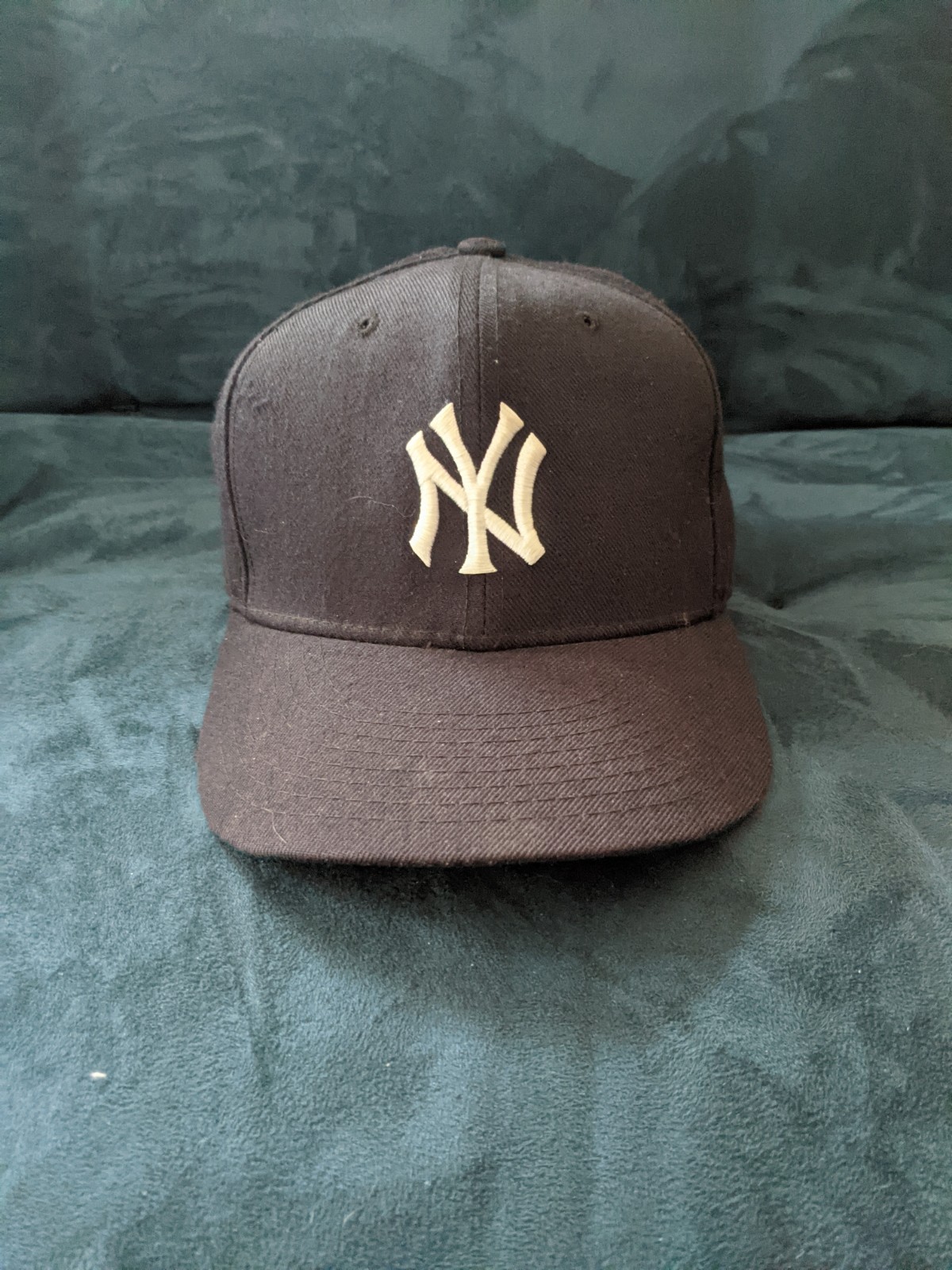
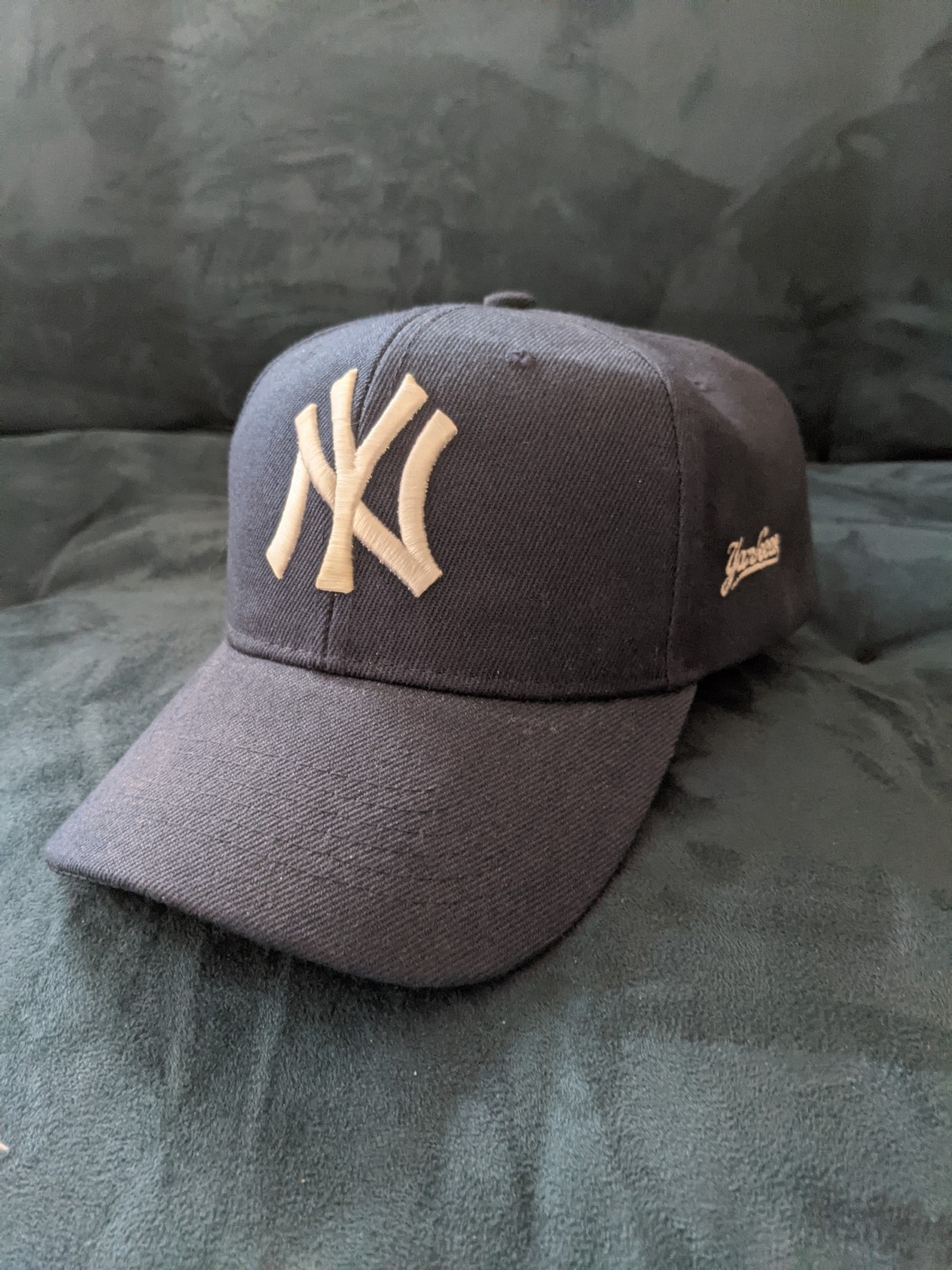
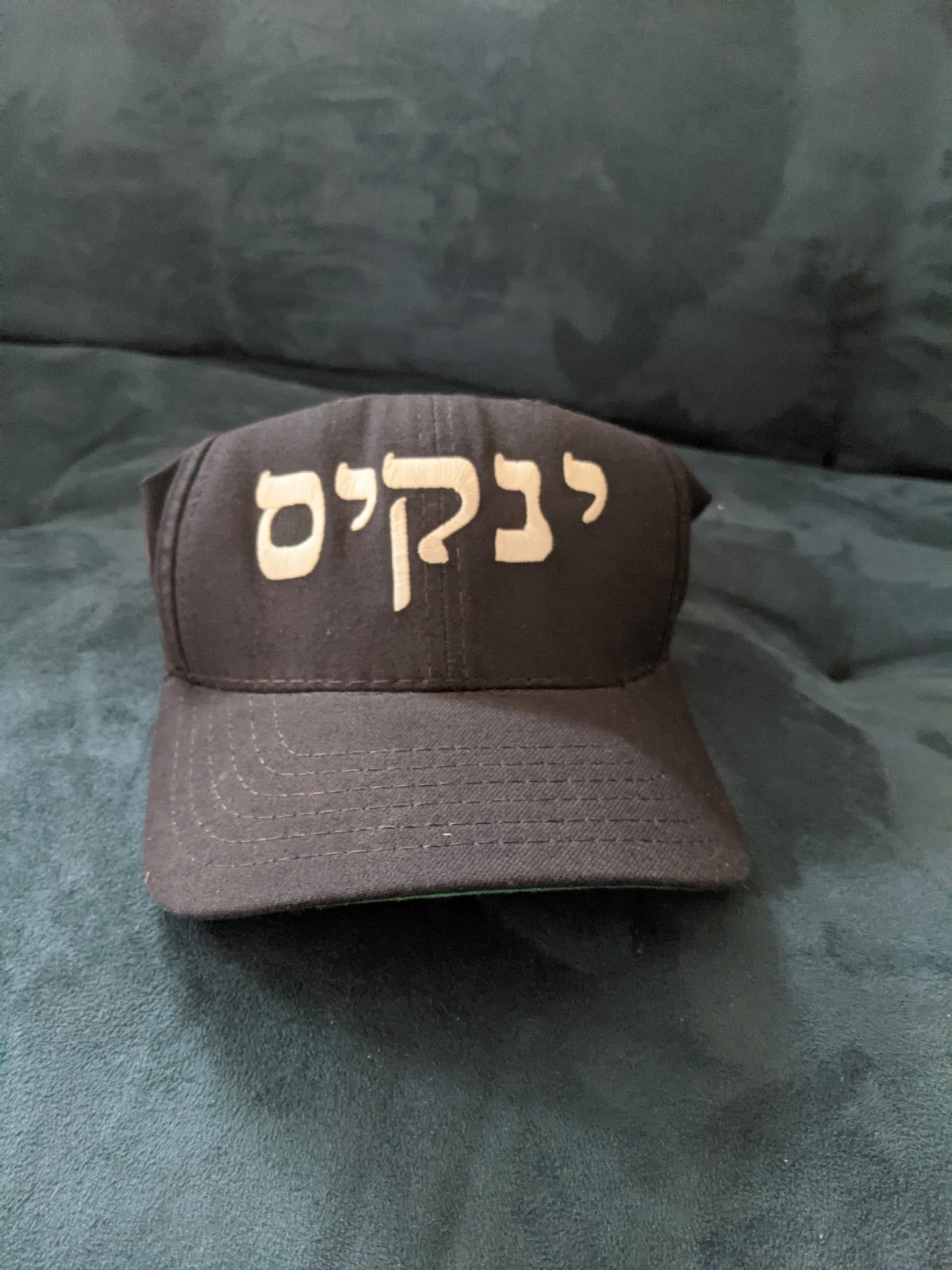
The only baseball team cap I ever had is, of course, the New York Yankees; of which I have four. The most unique is one without the embroidered NY logo on the front, you would expect. Instead, emblazoned on the front are Hebrew characters that sound like “yang-keys.” It’s an MLB cap, so it is officially licensed.

I do have another NY baseball cap, which is also special. It is a replica of a 1948 New York Cubans wool cap. The Cubans won the Black League World Series in 1947, the year I was born. (I even have a moth-eaten woolen Cubans replica jersey, #1.) All totaled, I have seven baseball-style caps. Not many, yet all with memory and history.

HATS are another story! I have four fedoras, two berets, several Ivy caps, and one each Jungle Hat, Stetson Panama, Newsboy, tribal headdress, Cowboy, and Coonskin.

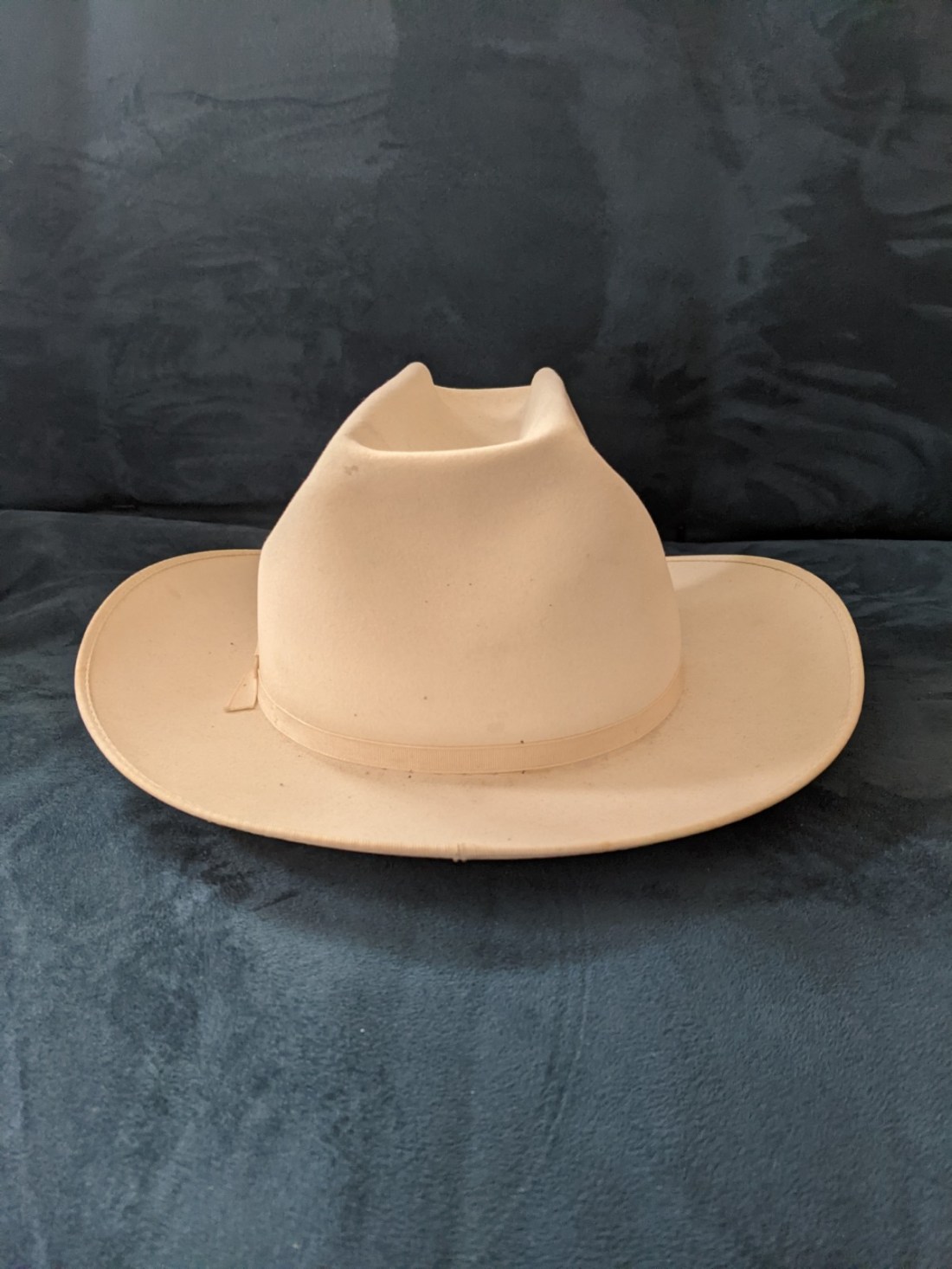
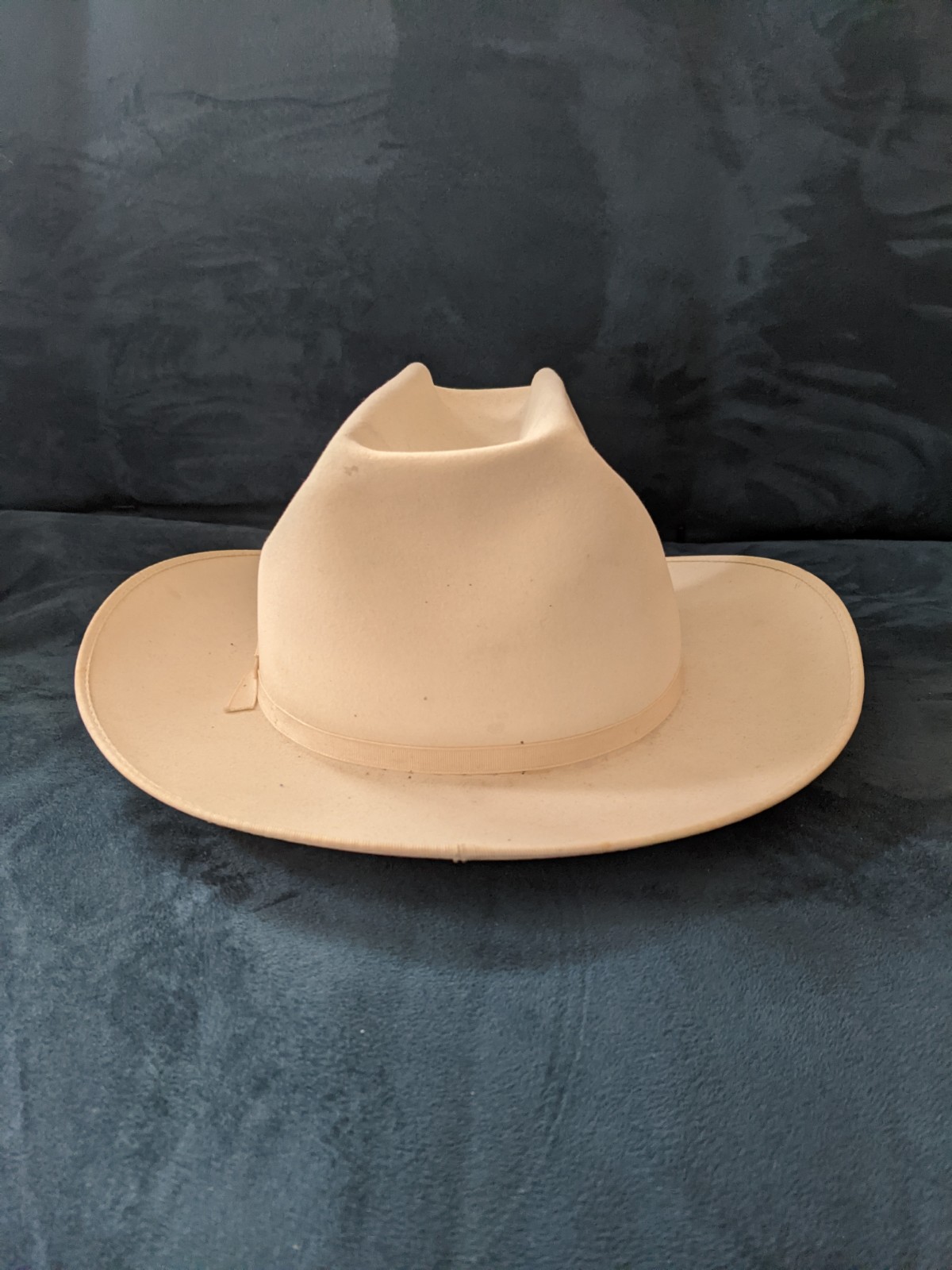
The last two: Cowboy and coonskin are the most special. The Cowboy hat is not your run-in-the-mill rodeo hat. Or a fake wannabe cowboy hat. It’s a beaver Resistol in the “Cattleman” style. It’s a businessman’s hat.

SIDEBAR: In 1963, JFK was assassinated. His alleged killer Lee Harvey Oswald was in custody by the Dallas police. My Cattleman’s style cowboy hat was very similar to the hats worn by the Dallas detectives guarding Oswald which reminds me of JFK.

Before eighth grade, we lived on Lorillard Place in the Bronx, in the Italian neighborhood. This is my only point of reference regarding timing, so, before I was 13. Every other year in August, Dad would go to a reunion of his WWII Army (Ranger) unit. Most times Mom would go as well. At one of these reunions, before I was 13, Dad reconnects with an old Army buddy, Randy Raines. Randy was from Dallas, and Dad said he talked long and very slowly. As most conversations go among friends, the family becomes a topic. Randy says to Dad, “You got a boy! I’m gonna send him a cowboy hat.” When I heard that I was thrilled. I sat on the stoop for days, maybe weeks, waiting for the UPS truck to deliver my cowboy hat. No truck, no cowboy hat, not even a beanie! Crestfallen. I couldn’t look a cowboy in the eyes for years. Not that I met that many in the Bronx.

Decades later, after 1976 (again, another point of reference based on where I lived), Mom and Dad are coming to visit. As he pulls into the driveway, I immediately noticed he is wearing a white cowboy hat. THAT IS MY HAT! I’m about 30 at this time and still very excited. This was the Resistol beaver Cattleman! It was August, and Dad had just returned from his biennial Ranger Reunion. Texan Randy reminds Dad of his promise years ago and Dad had to say, “that was years ago. He’s not a boy anymore.” Right there and then, Mr. Randy Raines takes the hat off his head and puts it on my father’s. Promise fulfilled!

Long before the cowboy hat promise, I was crazy for Davy Crockett (King of the Wild Frontier). Disney had a movie and a TV series. I learned the theme song and sang it all the time. I even taught my younger sister the song. I was smitten.


SIDEBAR: I choose “David” as a Confirmation name. And, since I was not born with a middle name, I assumed it as my middle name, which has since then caused some confusion about my “legal” name. Another story.

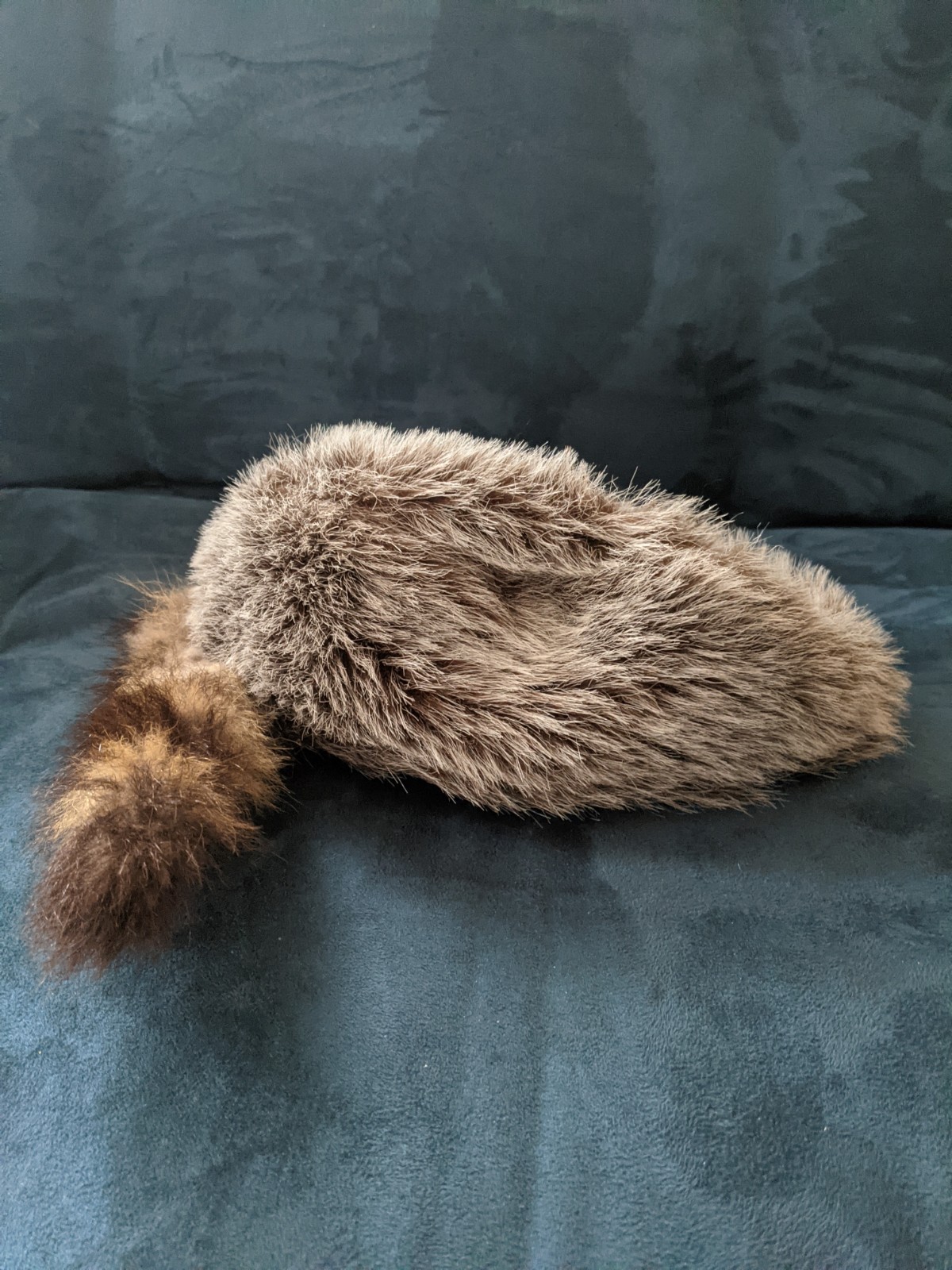
Anyway, everybody knew Davy Crockett wore a coonskin cap and I had to have one. Mom refused to buy me one. A friend of hers was willing to buy the hat for me and Mom refused to accept the gift. Another frustration in my young life. Apparently, decades later, I might have complained about it to my sons: Peter, Matthew, and Michael, in the course of some abject “disappointment” lesson.

Years later, the boys had returned from a trip to Disneyland with their Mother. At our next meeting, second son Matthew very proudly presented me with a Davy Crockett coonskin cap, which he bought for me at Disneyland. I was very touched and grateful. I treasure that faux fur and real raccoon tail cap. I will bequeath it to Matthew’s eldest son, and my eldest grandson, Anthony.

An Inspirational Mother

Adeline Denaro DiSantis

Everyone loves their mother, usually. I have been inspired by mine.

After my father’s death in 1987, Mom was not alone. Janet (my only sibling) and her family lived in the duplex unit upstairs. Obviously, for Mom, life was going to change very dramatically. (I know Janet can add more about that time in Mom’s life, because I was not around, living Washington.)

There were three things at that time Mom did which inspired me and proved you are never too old to change, never too old to learn new tricks and never too old to start over. Yet it was not the first time Mom impressed me.

It didn’t take me 40 years to appreciate my mother. Embarrassingly and too late, it started in 1965. As I was preparing to enter college at Pratt Institute, in Brooklyn, I had little savings to pay for my own education. Mom, who had been a “stay at home Mom” for 18 years, decided to find a job and it was for my benefit. Realizing she didn’t want to work retail, the next biggest company within walking distance from home, was the Dollar Savings Bank on Grand Concourse near Fordham Road. It was a huge marble columns and floors majestic bank.

With few marketable clerical skills (read none), she marched into the personal office of the bank for an interview. I’m not sure how the interview started, I just know it ended well. At sometime during the interview the bank’s VP of Personnel stuck his head into the interview room. He asked my mother one question, “Can you cook?” CAN YOU COOK? In a bank? What kind of a crazy question was that? Was he patronizing her? No. Actually, in fact, he was recruiting to fill a position in the executive dining room.

I’m sure Mom lit up the room with that question as she recanted the size of our extended family and the many meals she prepared or helped to prepare for them. The VP took Mom on a tour of the dining room on the top floor of the bank and she met her soon to be co-worker, Gisella, the head cook. I think she was hired on the spot. In so doing, she began her second career after marriage. There she remained as the second in command (there were no others) at the Dollar Savings Bank Executive Dining Room for over 20 years.

Fast forward about 22 years, my father died. My Mom’s sister, Doris, came up from Mexico to stay with her for a while. One of the things Aunt Doris did was to motivate Mom to learn to drive. As a young teenager, I remember Dad trying to teach Mom to drive. It didn’t go well and I thought I could do a better job driving. The subject was dropped for a long time. Mom had always depended on Dad for a lift anywhere she wanted to go. After moving away from The Bronx, Dad would take her to work at the bank and bring her home daily. (Janet could verify that.)

After studying her New York Drivers License Manual, and passing the learner’s permit test, she was ready to go. But who would teach her to drive? Good question. Mom, eventually signed up to learn to drive from the Sears Driving School. It may sound like a joke, but it was a real thing then. She, eventually got her license and she was 65. I remember arranging for her to buy a retiring company car from Airborne Express, which she drove for many more years. The driver’s license was the first step in rebuilding her life. New York State Driver’s License, CHECK.

With all this new found freedom and mobility, the second step was high school. She never graduated in the 1940’s. So, Mom enrolled in a GED program for adults, she attended classes to brush up on some academics, took her test and got her GED. (Again Janet could add more depth to this story.) G.E.D., CHECK.

Proudly with her GED in hand Mom had more skills for her third step forward which was a new job! She was retired, getting her Social Security, widows benefits and a pension from the bank, yet she wanted to work. After all, she was young, maybe 66. (Once again I would turn to Janet to fill in the details to this part.) Mom worked for a local community newspaper doing subscriptions or advertising. That’s all I know. I’m not even sure I got that right, but something like that. Thus, her third career. Career in journalism, CHECK.

Currently at this writing, Mom turned 98 last December and is living her life out in a nursing home in Danbury, CT.

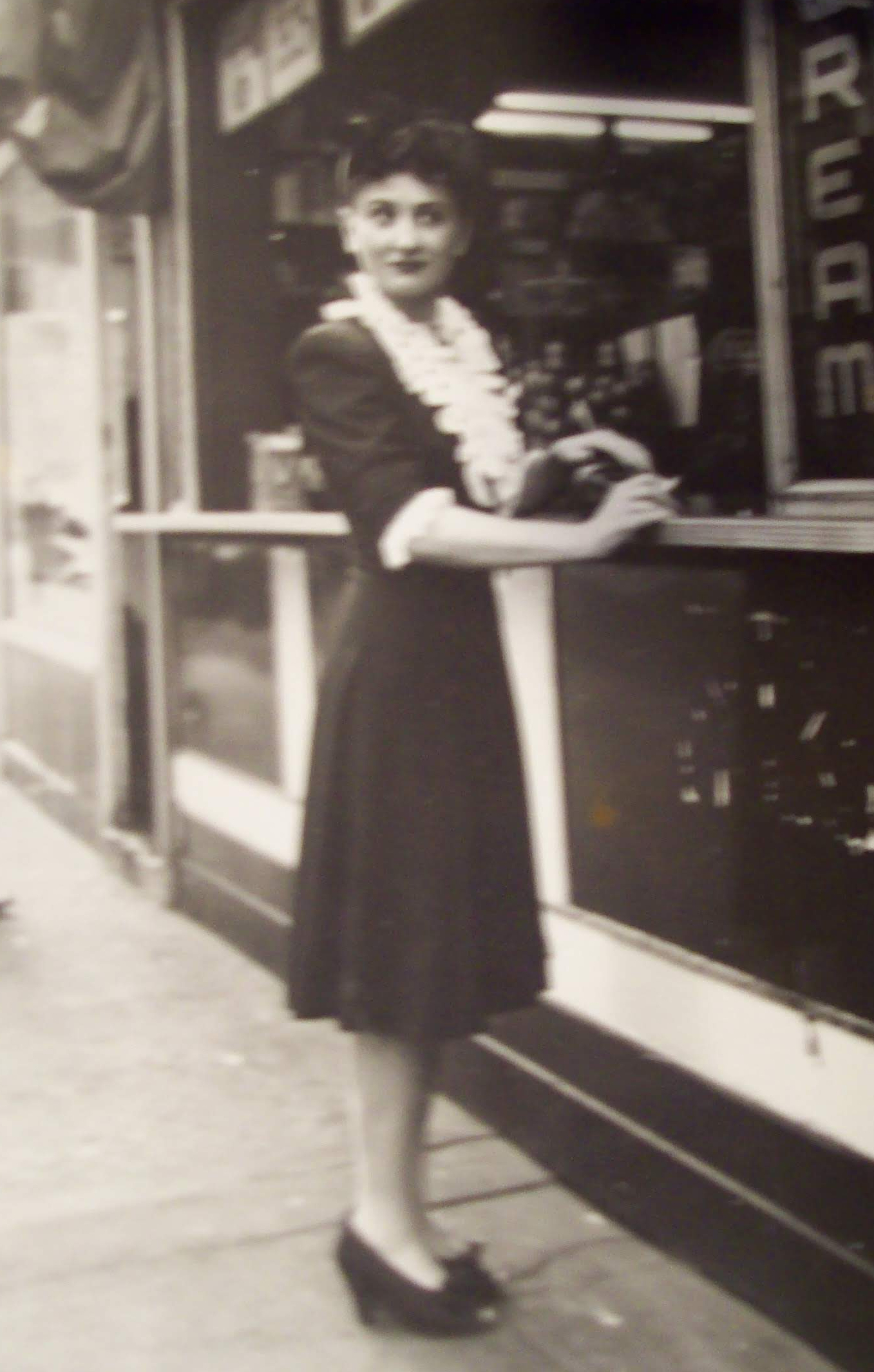
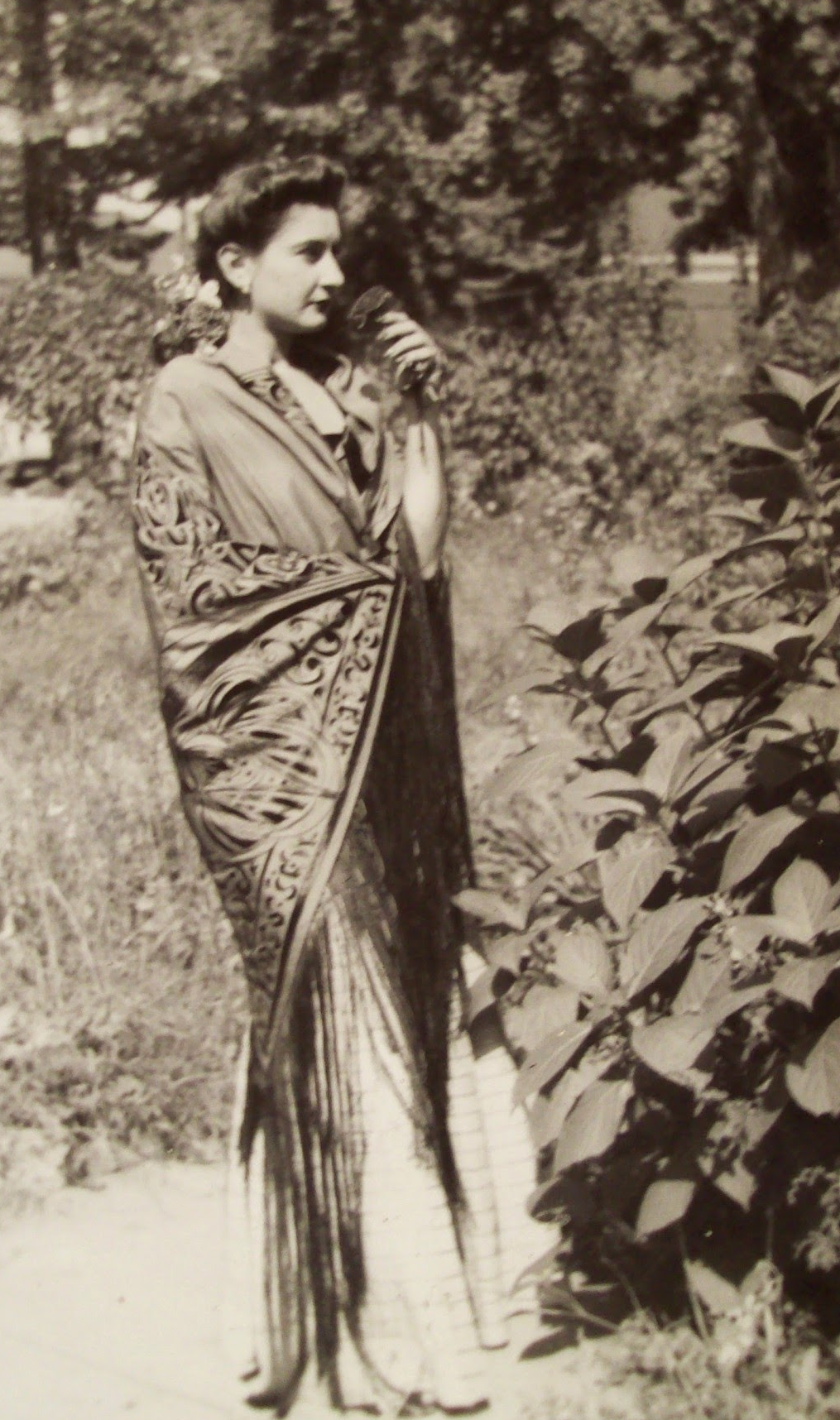
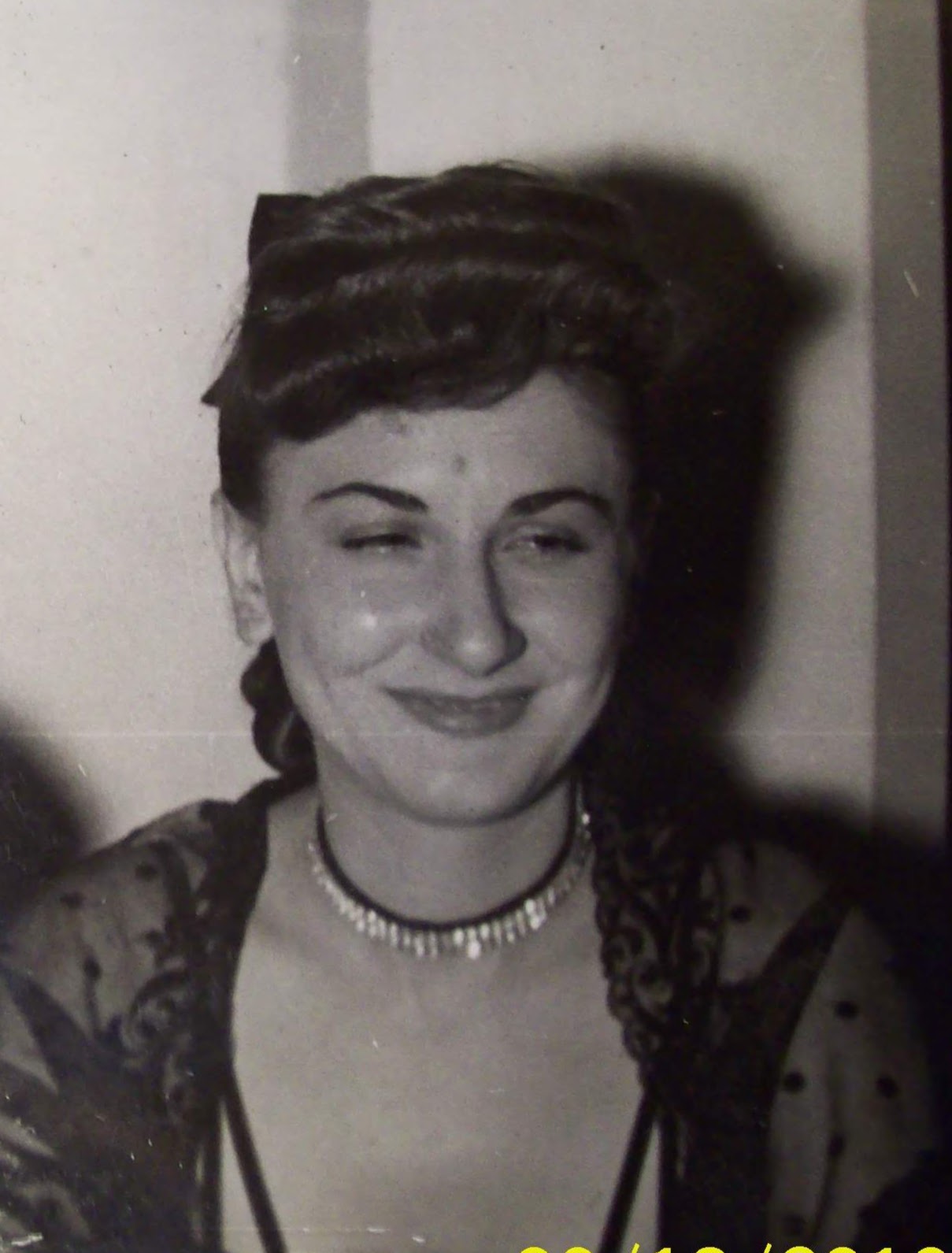
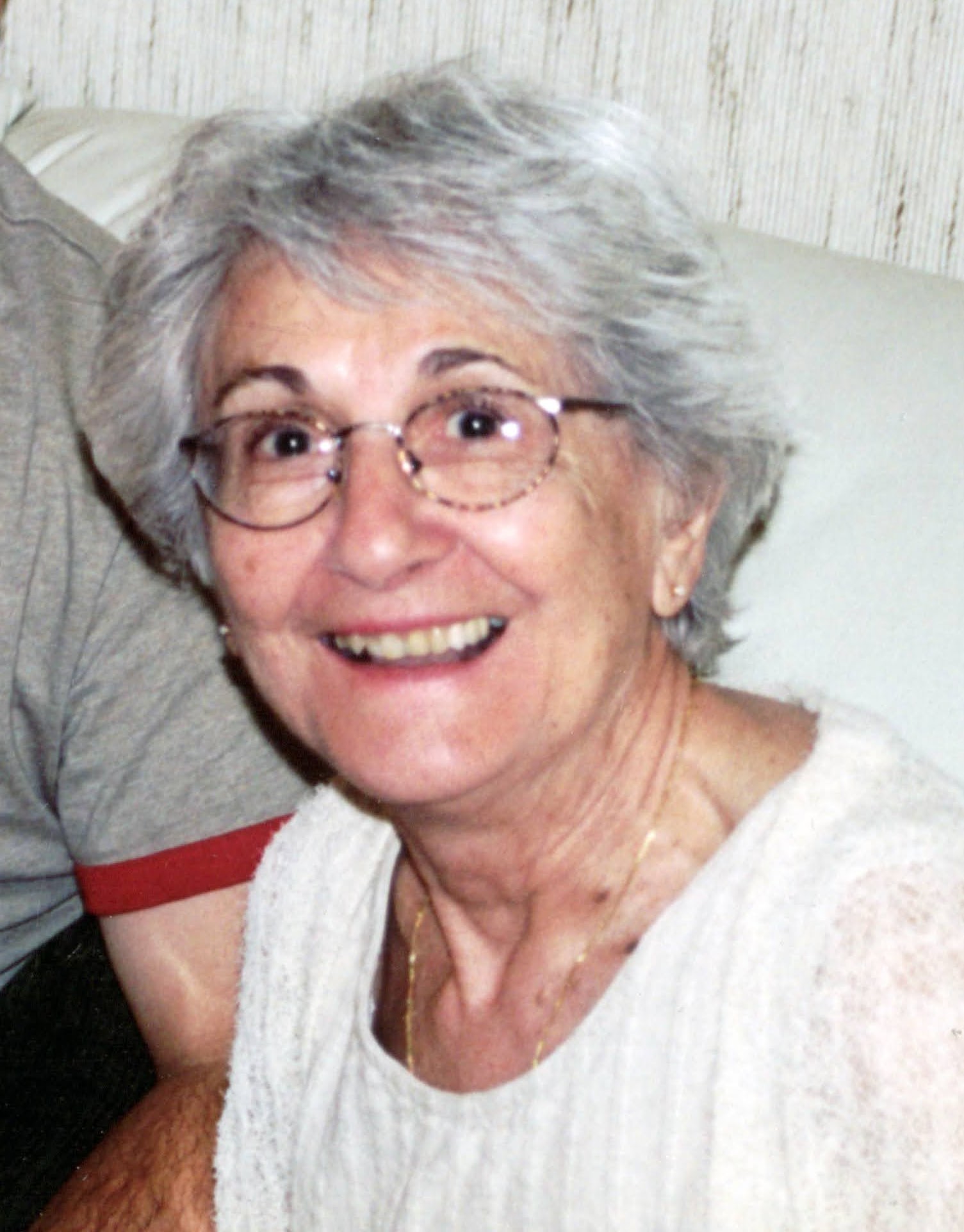
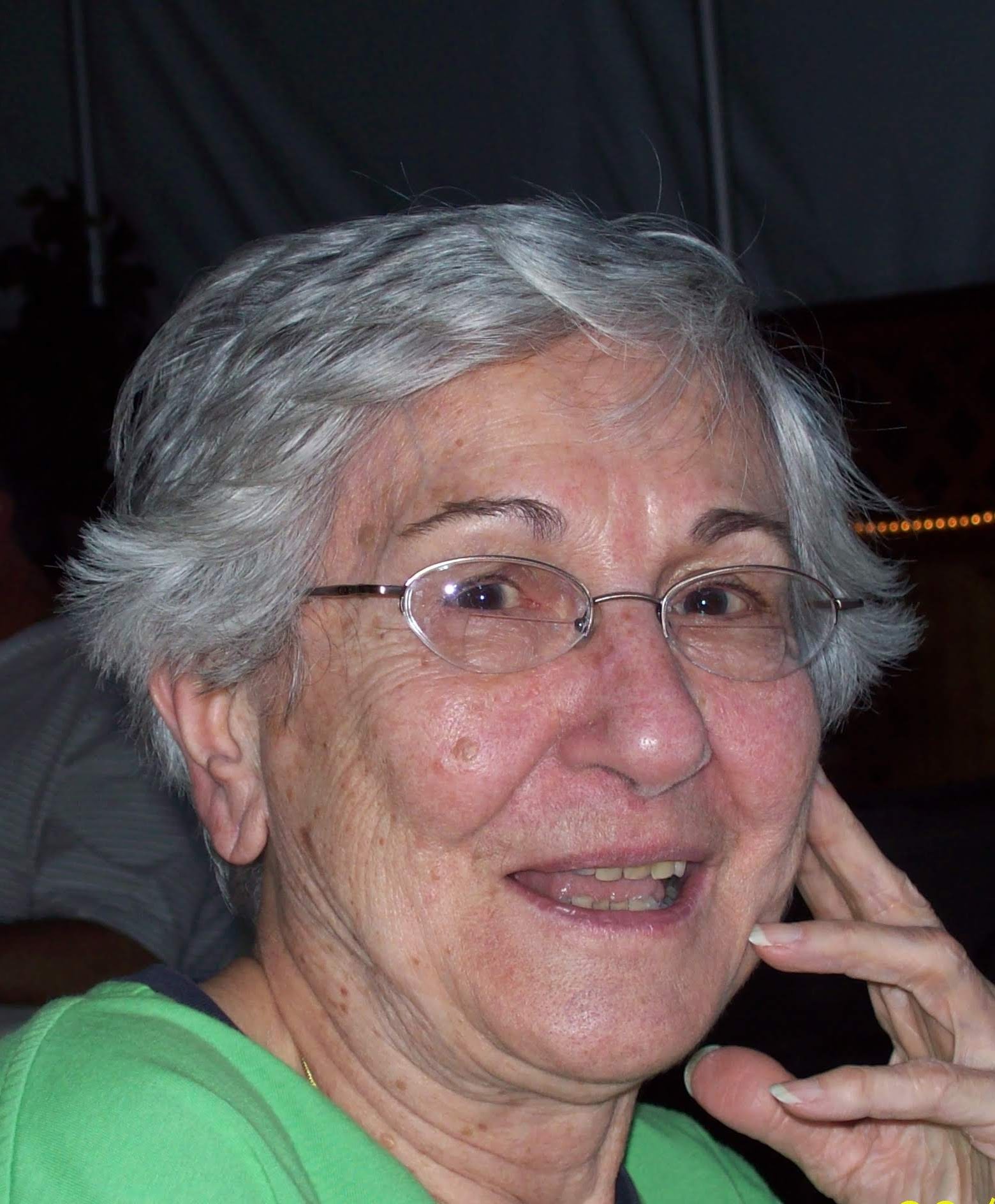
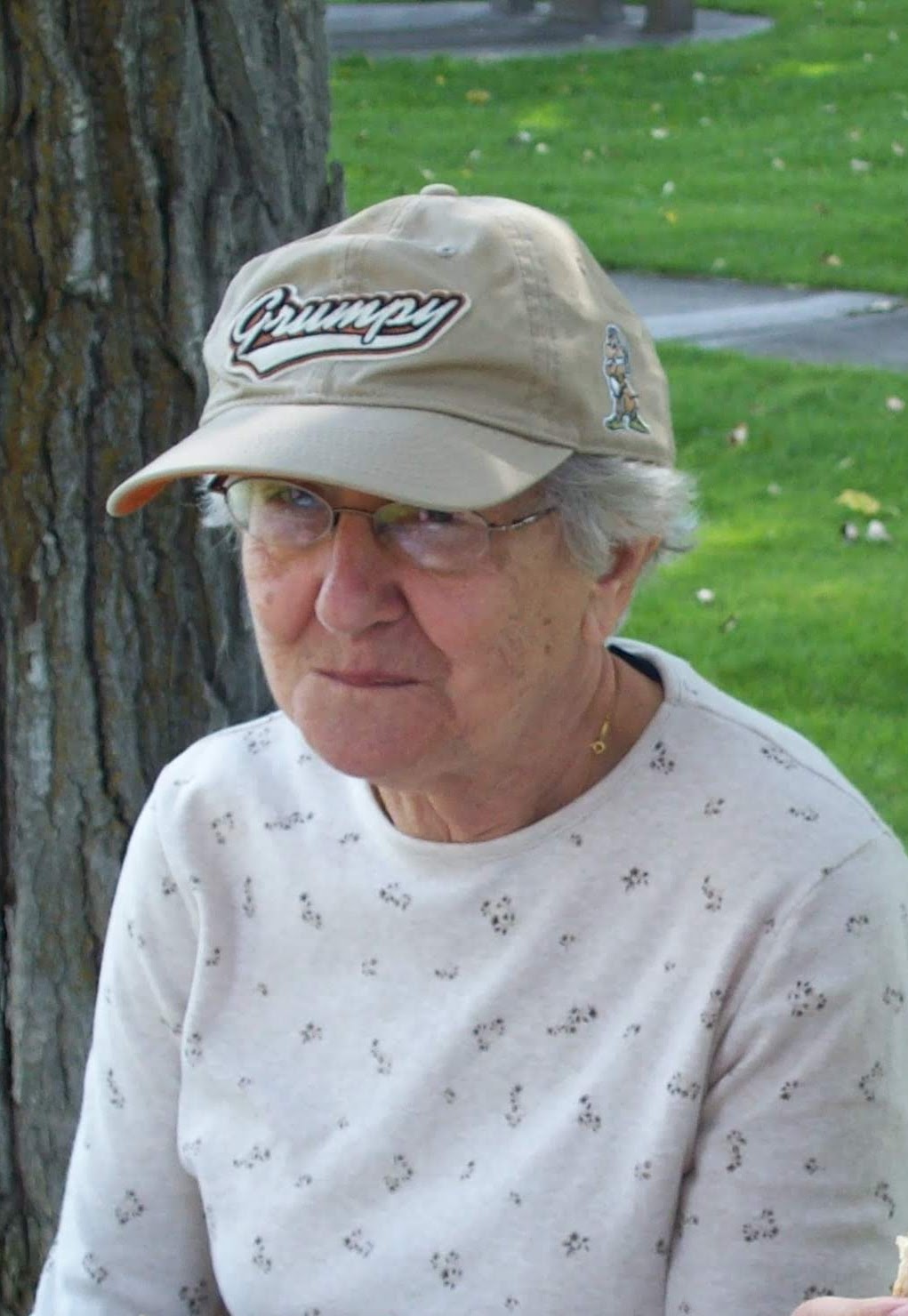
Photo Notes: Top row, l to r – Teenage girl, young woman, young married lady and unknown (Sorry, I liked the smile.) . Bottom row, both were from our RV road trip to Yellowstone in 2007. She is wearing MY hat!

Denaro Sisters

I have never, in my entire life, been exposed to a great relationship between two sisters, except the one connecting my mother, Adeline, and Aunt Doris. There were other Denaro sisters but I was most familiar with this beautiful pair. If I have never seen a great relationship between sisters, how would I know this one was great? I felt it, like I hope you have, if you have ever seen them together.

Slide your cursor over the middle of the photo to view 1950’s vs. 1997

They were not together much, which was ironically part of the connection. Because we did not have a phone in our Bronx apartment in the 1950’s, I remember my mother and I carrying fists full, no pounds, of quarters to the public phone booth at the local candy store to call Aunt Doris. Later, they hardly ever called each other because it was so expensive. So they wrote to each other. Well, they tried to write to each other. They tried very hard to stay connected over the many miles and many years they were apart.

Mom was with Aunt Doris in Mexico after her husband, Dan, passed away suddenly. And just as devoted, Aunt Doris was here in the States with Mom when Dad died, also very suddenly. At that time, Doris motivated Mom to get a driver’s license. (That is another story.)

But when Adie and Doris (born Matilda) got together, they were very funny. The way they talked and reminisced was wonderful to hear and watch. When they began to laugh, they would screech and cackle and howl; it would tickle your heart, if you were nearby. They loved and fought like sisters, I guess. Even that was amusing and interesting to watch.

I had the great opportunity to be alone with the “Sisters” several times. The last time was several years ago when they stayed at my home for a few weeks. Their heartfelt love for each other was obvious and it had sustained, if not been nourished by, the thousands of miles and years they were away from each other.

Driving. Many wonderful things also come to mind, but driving comes to mind when I think of Aunt Doris. Driving with Aunt Doris in Mexico City was impressive. Actually, at age 14, on my first trip to Mexico, anyone who drove was impressive. But in Mexico City, the congested traffic, the furious traffic circles and the bowling ball sized speed bumps, put anyone driving there in another class.

Aunt Doris is always fond of reminding me about the day she made a wrong turn into a stock car race. I don’t remember where we were going, but she turned onto this road which was lined with bales of hay. Cars with numbers on their doors were whizzing by us at an incredible speed. She did not stop immediately.

As I remember it, we had to be waved off the road by race officials. Well, there goes all the fun. Not so. We stood on the side of the road, on the other side of the bales of hay from the “normal” spectators and enjoyed the rest of the race. And I had the photographs to prove it! When it was all over, and the last car past our position, we got back in Aunt Doris’s car and drove by the bales of hay and spectators for our victory lap. The drive home was anti-climatic.

For my 50th birthday I took my mother to visit her sister in Mexico. After a few days, I got up enough nerve to ask Aunt Doris if I could drive her car in town. We had to wait a day. Local gas rationing dictated only even number license plates were allowed on the road that day. So the next day was the first time Aunt Doris and I collaborated as the “Mexican Driving Machine”. It was exciting as I drove and she navigated, with Mom in the back seat, in Mexico City (Grand Prix). Actually, we were just going to her daughter, Jacqueline’s for dinner. However, it was a very impressive and exciting drive for all.

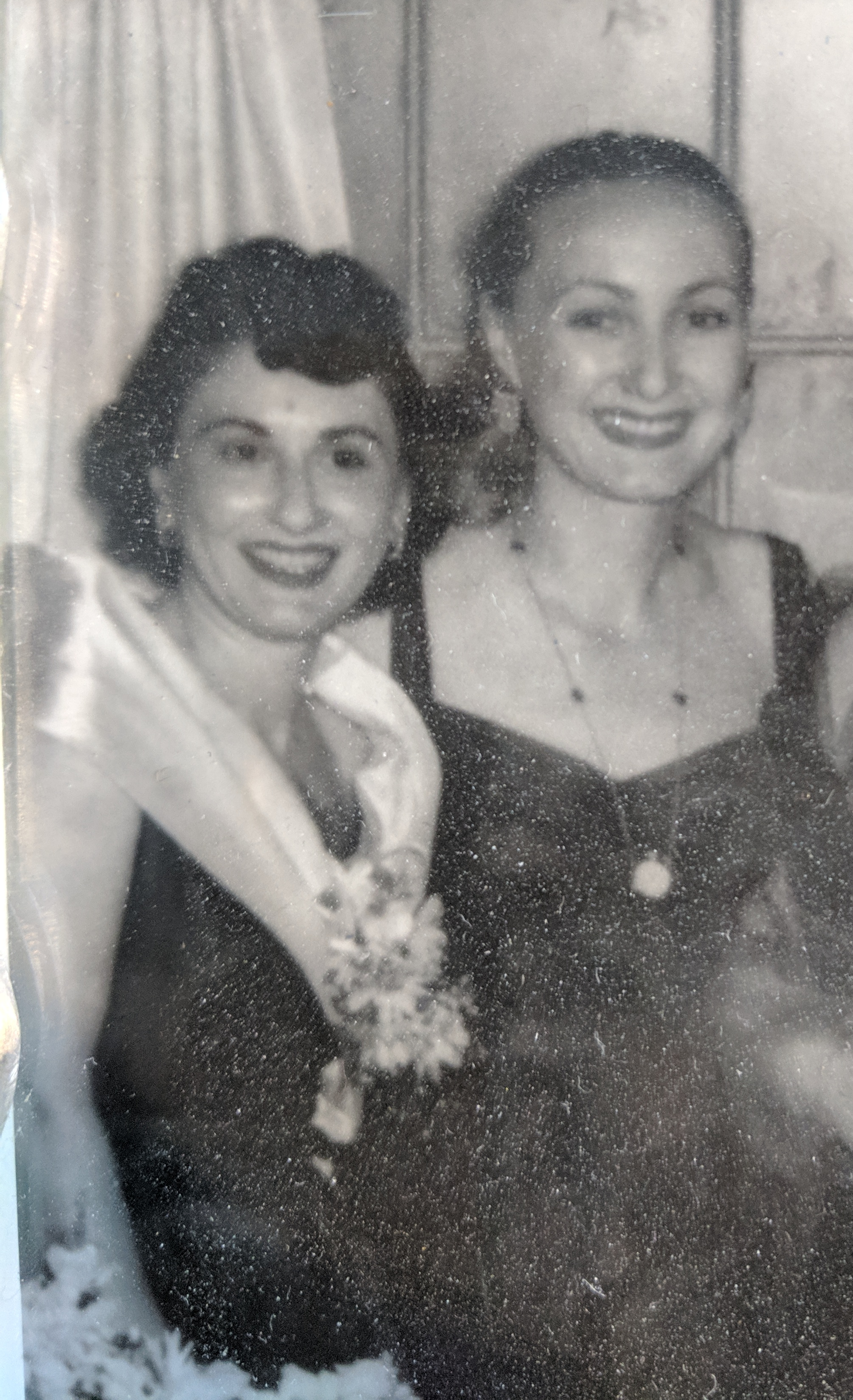
Photo Notes: The one on the left is from a Denaro family group shot at my grandparents 50th wedding anniversary party. I’m assuming it was in the 1950’s. The photo on the right was from our trip to Mexico City after my 50th birthday. I cropped myself out of the photo yet we were standing in front of a cactus fence around the home of the famous Mexican mural artist Diego Rivera, who Aunt Doris knew, back in the day.

Friday the 13th

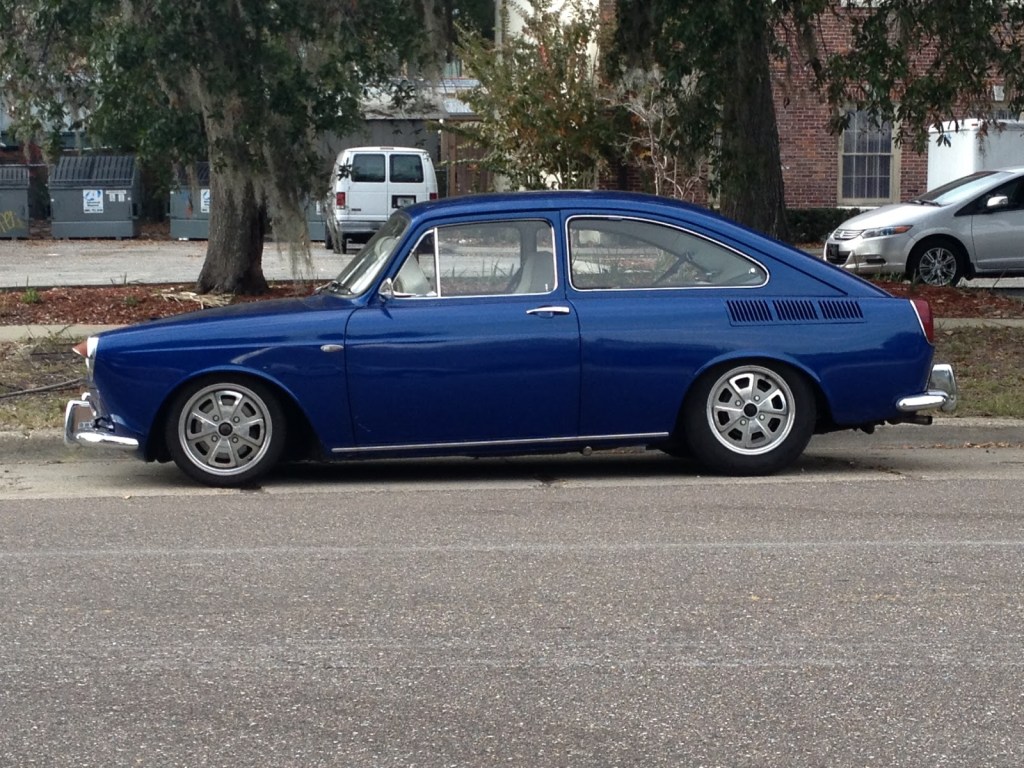
This one is not mine but very similar

This will not be a scary story. Promise.

It was 1971 or 1972, I was in the U.S. Army in Germany and in the market for a new car. My current car a 1963 VW Bug, which I bought for $600 was better known as “Invincible” yet was breaking down too often. I had already fixed the broken clutch cable and that was the extent of my mechanical skills. Also, the engine was very noisy but very soothing for my infant son who was colicky. Invincible always lulled him to sleep when nothing else worked. Nevertheless, I needed a new car.

I shopped around, of course. In our small town was a BMW dealer and I was looking at the 1600 or 2002 coupes. My eye was really on the 2002, but it was too expensive. If I recall it was $3600 US. Too much for a soldier. So then, I drove 10.5 miles south to Nuremburg to the VW dealer to order a brand new (’71 or ’72) Volkwagen Fastback. I loved the style and the color had to be the dark metallic blue.

Weeks later it was Friday the 13th, I don’t recall the month, VW from Nuremburg called to say pick up your car. Invincible was on her last legs and we hobbled in to pick up my brand-new blue VW fastback. We sat down to do all the paperwork and they wanted money, only $2400 US. Cool. I didn’t have it. I forgot all about it. What do I do?

In the Nuremburg PX was a credit union, so I went there immediately and filled out a loan application. Within a matter of hours, I was approved and I had the certified check for the car and all the fees. Back to VW. Great. Now you need plates. Oh! How do I do that? Go to the Military Police (MP) office down the block from the PX. I’m really stressing Invincible at this point. She is not well and may give out at any time.

I made it to the MP office and filled out all the forms for a car registration. It’s now about 2:45 pm (1445 military time) and there is a big sign on the wall that the office doors close at 3pm (1500). I got on the long line which did not seem to move for the first 5 minutes. Slowly, ever so slowly, I inched my way up to the counter. At 1500 hours the doors closed . . . behind me. I was inside and about 4 people away from success. I finally got up to the counter, filed my application, paid the fees and got my license plates.

COME ON INVINCIBLE! One more short trip to the VW dealer. I made it.

In the course of four hours, I drove 10.5 miles to pick up a car I had NO money for, applied for a loan, got the money, paid for the car, applied for a vehicle registration, stood in a long line, got the license plates and put them on my brand-new metallic blue, Volkswagen Fastback.

Friday the 13th has been a very lucky day for me ever since.

Featured

The Journey Begins

Good company in a journey makes the way seem shorter. — Izaak Walton

Thanks for joining me! This blog is my journey.

This is where I grew up until I was 12 years old. At the beginning of eighth grade, the family moved to an adjacent neighborhood. I finished grade school in this old neighborhood and returned frequently to visit friends and family.

I thought about a family group or blog (before I knew what a blog was) years ago. I set up a group on Yahoo! long before MySpace and Facebook. I never did anything with it. Here I go again. My purpose is to share family stories, random thoughts, Italian traditions and delicious recipes, just as they would be shared around the Sunday dinner table.

Those were fun times. Most weekends, we were at one grandparent’s home or the other. They were close. Many in the DiSantis family lived in Little Italy in the Bronx. My maternal grandparents lived in Northern New Jersey and so did most of their children.

With each family visit there were plenty of hugs and kisses, delicious food and hours of conversation around the table. We never left the table, except for the hugs and kisses. The conversations ranged from stories to advice, from historical to fanciful. All great and food for thought.

Then, I did a lot of listening to Uncle Angelo, Uncle Ralph and my dad on the DiSantis side. Also Uncle Charlie, Uncle Dominic, Uncle Joey and mostly Uncle Teddy on the Denaro side. I was around conversations with “da boys”. Not much with the women of the family. Gender bias in the ’60s, I guess.

Anyway, my kids missed all that. I moved 2500 miles from the neighborhood above and never had a Sunday dinner with the “whole” family again. At this writing, only my dad’s sister, Yolanda and my mom have survived the two large immigrant Italian families.

My hope is this blog will bring the family together. We may only gather around a table once in a while, but hopefully, we can share stories around this virtual table. I’ll start. And I am calling out my sister, Janet, my 54 first cousins (on both sides), my 5 children (with their spouses) and my 8 (so far) grandchildren to bring stories to share.

The blog menu outlines a few main topics. I’m sure it will expand. Ask me questions. I’ll answer to the best of my recollection. This will be fun for me to write. I hope you will enjoy it, too. Let’s sit and chat. Eating is optional.