How Mr Coyote and Process Improvement Can Help Your Business.
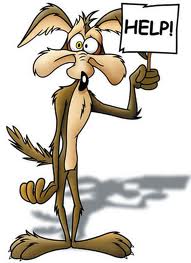
Of all the heroes and superheroes I have known, Wile E. Coyote has never been on that list. I only recently discovered an ardent admiration for Mr Coyote. Why? Because he is a tenacious problem solver and he is an avid proponent of a process improvement methodology: Plan-Do-Check-Act. Mr Coyote may not realize he has a fan club. At this writing, there are five fan pages on Facebook regarding Wile E. Coyote with a grand total of over 19,000 likes/members. Mr Coyote may not even realize his problem-solving process is a classic scientific method which dates back centuries. Nevertheless, here is what Mr Coyote does that is so amazing.
PLAN: The planning of a project is a very detailed process. The better the plan; the better the execution.
“Failing to plan is planning to fail” ~Proverb
The first step of planning is identifying the right problem. What is Mr Coyote’s problem? He’s hungry. He continues with the defining the problem before he jumps into solving it. He responds to the following questions instinctively: What is the primary reason for this project? Answer: Get food. What do you hope to achieve by solving the problem? Answer: A waistline. Why is it important to do something now? Answer: I may be too weak to hunt later on. What will happen if the current environment doesn’t change? Answer: I die. Why does it have to be done? Answer: Death hurts. The clearer and succinct the problem statement the clearer the responses for a solution.
“A problem well stated is a problem half solved.” ~Charles F. Kettering
More planning. Once the problem is clearly and specifically stated, Wile moves into the next phase of planning: analyze the problem and research causes of the problem. He does not use the 5 Whys process to determine the root cause but maybe we can. Mr Coyote is hungry. Why? He has not eaten in days. Why? The food source is scarce. Why? He lives in the desert. Why? It’s his natural habitat. Why? Ahhhh . . . Mother Nature put him there?
More planning. The next phase of planning is analyzing alternatives. This phase is very creative and will require input from various sources. Since he cannot change his location, we can go back and determine if there are alternative reasons why he has not eaten in days or why the food source is scarce. We can also analyze the various food sources available.
According to Wikipedia: “Coyotes are opportunistic, versatile carnivores with a 90% mammalian diet, depending on the season.” Discounting the sand, rocks, cactus and occasional motor vehicle, there are very few visual hints of a food source for Mr Coyote. The roadrunner seems like the only viable alternative.
Even more planning. Designing a solution is the next phase of planning. If the roadrunner is the best alternative then designing a solution to catch the roadrunner is our next step. This is where Mr Coyote is his most creative. With his Acme Products catalogue, his possibilities are practically unlimited. Once again this process is very creative and participation from multiple resources would be beneficial. What could you do with an Acme Products catalogue?
Once the solution is designed, the next step in the Plan-Do-Check-Act (PDCA) process is Do.
DO: Implement your plan. Wile E. Coyote does this very well. If you recall, Mr Coyote’s execution of his plan is precise. Through no fault of his own, the products he uses are unfortunately defective.
“Do is half of done.” ~Peter DiSantis
After implementation, the next step is Check.
CHECK: How did you plan work? What went well and what did not? For Mr Coyote, never well. It’s usually some canyon floor, rock wall or overhang, a nearby explosive, a large truck (with a beep-beep horn), or some other out of control device. He never catches the roadrunner and he is still very hungry.
“Trust, but verify.” ~Ronald Reagan
The next step in the Plan-Do-Check-Act process is Act.
ACT: What are your next steps? If your solution and implementation worked, how do you leverage it or expand it or improve upon it? If your solution hadn’t worked, what do you need to change to make it work? Here again, Mr Coyote is brilliant. He does not continue doing what does not work. He evaluates the new problem and looks for another solution.
And then once again Mr Coyote exhibits his extraordinary and admirable qualities. He is tenacious, relentless, resolute, persistent, insistent, determined, single-minded, focused, unremitting, inexorable, unstoppable, unwavering, tireless, adamant, persevering, indomitable, driven and motivated about his problem-solving. He picks himself up, dusts himself off and begins to plan again.
“Plans are nothing; planning is everything.” ~Dwight D. Eisenhower
Mr Coyote is still hungry. Why? He has not eaten in days. Why? He cannot catch the roadrunner. Why? He doesn’t have the right equipment. Why? They are defective. Why? Acme Products suck.
And the Plan-Do-Check-Act (or PDCA) cycle begins again. This is why Wile E. Coyote is my hero.
Plan-Do-Check-Act (or PDCA) is a four-step iterative process that continues until the issue is resolved or used to incrementally improve processes.