Precious Metals Management

Photo by Pixabay on Pexels.com

Would you work for you, if you were your boss? Let’s take a closer look. Do you show up on time, ready, willing and able to work? Do you meet your commitments, on time and on budget?

  • Do you keep your team informed as well as you are informed?
  • Do you meet your expectations?
  • Do you write and speak clearly?
  • Are you giving 100%?
  • Are you the model employee?
  • How is your work/life balance?

Do you manage your people like they were widgets? Or do you lead your people like they were . . . ah . . . people?

Do you “Do unto others as you would have them do unto you”?

Dozens of philosophies have discussed or professed their own variation on this Law of Reciprocity for at least four thousand years. It sounds great. Is it just a Sunday morning thing? Or can you use it all week?

“Do unto others . . .” is not a passive statement. It is a very active obligation. Almost a command. “Do It!” It requires your action, not reaction. Which means you have to look for and find things to do unto others.

Decades ago, the saying was MBWA. “Management by walking around.” Not behind your desk. Walking around. Look at stuff. Look at people. Talk to people.

Years ago while in Corporate America, the executives of a certain company joked about MBWA. They thought that the only thing between their reserved parking spaces in the basement and their executive offices on the top floor of the building was the floor that had the lunchroom.

They needed a building map and usually a guide to get them to all the departments they were to visit.

Recently, a popular book expounds the Platinum Rule is more applicable for work or for life in general. “Do unto others as they’d like done unto them.” This rule is also great. It requires just a little more work.

What do “they” want done unto them?

It requires research and communicating with your team. More walking around and talking. While I was in the service, decades ago, all the front-line leaders were required to keep a small wire-bound notebook and pen with them at all times.

We were required to keep notes on our platoon members. Not take notes in front of the troops, but once out of sight, record the casual and brief discussions, what we heard and what we saw. It was just a memory jogger and not for any formal documentation. It was a very formal process to ensure we actually MBWA.

Both rules are valid. Both rules are valuable. I would just like to see more use of them at work. The bare minimum would be the Golden Rule, with aspirations toward the Platinum Rule.

Do you see any evidence of precious metals in your organization?

Clean Water and Sanitation

Photo by rawpixel.com on Pexels.com

It occurs to me, in the grand spectrum of enterprise from the solo-preneur to the multi-national Fortune 50 companies, that some of the smaller entrepreneurs are like underdeveloped countries. I’m not trying to be unkind or judgmental. It’s just that our small businesses do not have or use the tools and expertise like the “big boys.” Why not? Why don’t you have clean water and sanitation? No society can flourish without these essentials.

I realize this is an oversimplification. Yet maybe it’s just the E-Myth: You’re an expert with a narrow area of focus in what you do. You do not have the wider range of experience in all areas of business. I know I don’t. And, I don’t think that is expected of us. Right now you are CEO, COO, CFO, CIO, CMO. But, can you do them all well? I don’t think so. I have “Jack of all trades, master of none” ringing in my ears. You have defined your business by defining a niche. You don’t have the time or the talent to do everything, nor should you. If you look at your competencies for business as a sphere or automobile tire, you will probably find that you are NOT well-rounded. Most of us have a flat side. In my case, I have a few flat sides.

So,. . . What do you need? Where or what are your flat sides? Where could you be better “rounded” in business? What do you need to succeed? More revenue would be nice. But if you had all the revenue you wanted, could or would you run the business alone? No. You would most likely hire help or buy expertise. So, again . . . What do you need? If you know, that’s great. If you don’t know, that’s great, too. What a great opportunity to pursue an answer. “What do you need (besides revenue) to succeed?”

Until you quadruple your revenue and hire those extraordinary VP’s, what do you need regarding business education? Consultants host events all the time, providing information that they want to provide. But no one has asked you what you want. I am. What information do you need? What do you really need in an event? Do you need a primer on MS–Word or MS-Excel or QuickBooks? Do you need a business plan? A marketing plan? A hiring plan? An operating plan? Do you want to learn how to develop these plans? I’m sure with all the consultants in Seattle, I could muster up a cadre of experienced trusted advisors and host an event, based on what you want and need.

In my wildest dreams (and frankly, is there any other way to dream?) I would create a spectacular “Carnival of Consultants”. I could see the first event defining “your” issues. Defining what you need the most. I see a room encircled with kiosks, tables or “kissing booths” staffed by consultants from various business disciplines: Marketing, Sales, Finance, Operations, International, Branding, Web Presence, Legal, HR, etc. You name it. I’ll find them. Or maybe, from this article, they will find me. (Wouldn’t that be wild?) Step up to a booth, wait your turn, and then fire away. Ask your question. Each consultant will help you to find and define the issues holding you back from greater success. You might even get some free advice. But PLEASE, don’t kiss the help. I don’t want any harassment entanglements. Your questions will help define a curriculum of events for what entrepreneurs need and want to help their business succeed.

I think this is a very cool idea. After all, it IS my dream. I’m out to save the world or at least provide clean water and sanitation. Then we can move on to safeguarding the children, educating the illiterate, horticultural education, wells and irrigation for the farmers, vaccinating

Swim with the Sharks

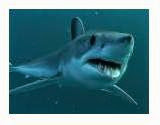
I met a guy, who swims with sharks. Not dolphins! SHARKS!

A friend and I were chatting over coffee and the conversation drifted over to sharks. She has an affinity for and curiosity about sharks. I was on the other side of that point of view. This guy butts in and says he’s been bitten by a shark. My friend claimed that once bitten, you will get bitten again. Hey. I would never go back in the water again. EVER! She presumed it was human pheromones. Apparently, sharks have a great sense of smell. They can hone in on your stank you can’t smell.

He pipes up again to say he’s been bitten more than once. “What? Are you bragging?” He’s a diver and would chum the reef to bring the sharks in closer. I thought this guy was mad!

He and his pals would mount the sharks and ride them like cowboys until they, the sharks, were exhausted.

What fun!

I said, “Yea? But?”

His experience, which outweighs mine, was that the shark is only aggressive when they are hungry and provoked.

I guess I would be aggressive under the same circumstances.

Hollywood has demonized sharks. (Thank you, Steven Spielberg and the Nature Channel.) Sharks can be bad, of course, they can. Cute kittens and puppies can be bad, too, in their own way.

I’m not saying sharks are cute. But maybe we can give them a break. I changed my point of view about sharks.

When was the last time you changed your point of view? Are you open to new ideas? New evidence?

I plan to swim with sharks right after I jump out of a perfectly good airplane. If you want to swim with sharks, my diver pal says, “Go to Fiji.”

Have a nice trip. Write me about your experience. I’ll be in the baby pool.

Get over your FEAR (False Evidence Appearing Real).

“To the Moon, Alice”

The famous last words of bus driver Ralph Crandon, when he’s been outsmarted by his wife, Alice, on the “Honeymooners”.

Photo by Bruno Scramgnon on Pexels.com

Everyone talks about team when it is most needed, and it doesn’t happen as often as it should. Some Lone Rangers think they can do it by themselves and they don’t want to be on a team. The Lone Rangers may think their problem is unique and no one can help. They may also want to be secretive and not want to expose their great idea. The Lone Ranger wants to be the “star” and not share the glory. Phooey!

Too bad for them and too bad for us. They miss out and so do we. Why? We miss that synergistic energy, which is key to creativity and productivity. Artistic and literary endeavours aside, I can’t imagine any innovation of consequence that was created and produced completely and utterly by a single person.

I have often used tools and games to make the case for embracing /adopting teamwork. For years, I have used the NASA Moon Problem. Here is the scenario:

YOU are a space crew originally scheduled to rendezvous with a mother ship on the lighted surface of the moon. Due to mechanical difficulties, however, your ship was forced to land at a spot some 200 miles from the rendezvous point. During re-entry and landing, much of the equipment aboard was damaged and since survival depends on reaching the mother ship, the most critical items available must be chosen for the 200-mile trip. Below are listed the 15 items left intact and undamaged after landing. Your task is to rank order them in terms of their importance in allowing your crew to reach the rendezvous point. Place the number 1 by the most important item, number 2 by the second most important, and so on through number 15, the least important.

Working individually, everyone has their own rationale for the items they choose as the highest priority. Working in groups, teams are asked to use group consensus to determine their group priority list. When compared to the “official” answer sheet, the team’s responses are better than the average score of the individuals in that group. The synergy of the group brings their response closer to the best solution.

There are other instruments like the NASA Moon Problem for evaluation teamwork, like the Cascade Survival Problem. Essentially the same premise, cooler environment. I have also facilitated Mastermind groups, which tap into the collective unconscious for solutions and ideas. Brainstorming is yet another technique to crowdsource alternative solutions.

With my Junior Achievement class at Franklin High School in Seattle, I recently used a great game called “The Helium Stick” from Wilderdom.com. It’s a deceptively simple teamwork activity. Form two lines facing each other. Lay a long, thin rod on the group’s extended index fingers at shoulder level. Goal: Lower the pole to the ground. It is a fun exercise but the pole must rest on the fingertips of each and every team member, the whole way down. Not as easy as it sounds. Trust me. Since everyone must be touching the stick, most of the force is up. Reality: The stick goes up! In order to lower the stick from shoulder high to the ground, it requires a lot of cooperation and communication (and time). Imagine that.

There is another great game where two long strips of duct tape are laid parallel on the floor, sticky side up, shoulder width apart. Pretending you are stepping into a set of skis, the first team member steps on the tape, at one end, so both heel and toe of the right foot are taped to the tape on the right side. Then they do the same with the left heel and toe on the tape on the left side. The second team member steps behind the first and places her right toe on the tape behind the first heel. Same on the left side. All team members are facing the same way, heel to toe, shoes stuck to the duct tape, on the right and left foot. Imagine a centipede on skis. Now race an opposing team across the room. There is a lot of falling down and laughter and no alcohol is involved.

There are many great reasons for teamwork, least of which is showcasing the Superstar! The Superstar may win the game, but not the championship. There are many cases in sports where the Superstar leaves the team which goes on, shortly thereafter, to win a championship. It’s not the Lone Ranger; it’s the collective vision and effort that wins overall.

So for the long haul get a team or at least a partner. It doesn’t have to be a business partner; just someone to bounce ideas off of. Years ago, a friend and I met, weekly, for a cigar and a beer. (I know smoking a cigar is a disgusting habit, but someone has to do it. No comment on the beer.) We discussed our work, goals, plans and results. He sold medical instruments. I didn’t. We shared the love of our businesses. And we encouraged and supported each other along the way.

Who is on your team? Who can you count on? Who can count on you? Hook up with someone. I don’t care if it is over a cigar, a beer, lunch, dinner, coffee, tea or knitting; just hook up.  What is your technique to tap into the resourceful synergistic creative and productive energy?

Remember, the Lone Ranger had Tonto; Robinson Crusoe had Friday; Tarzan had Jane and Ralph had Alice.

And the Anchorman has the Weathergirl!

I Have a Small Tribe

http://www.peterdisantis.com/images/stories/PDCA/Blog/tribe2.jpg

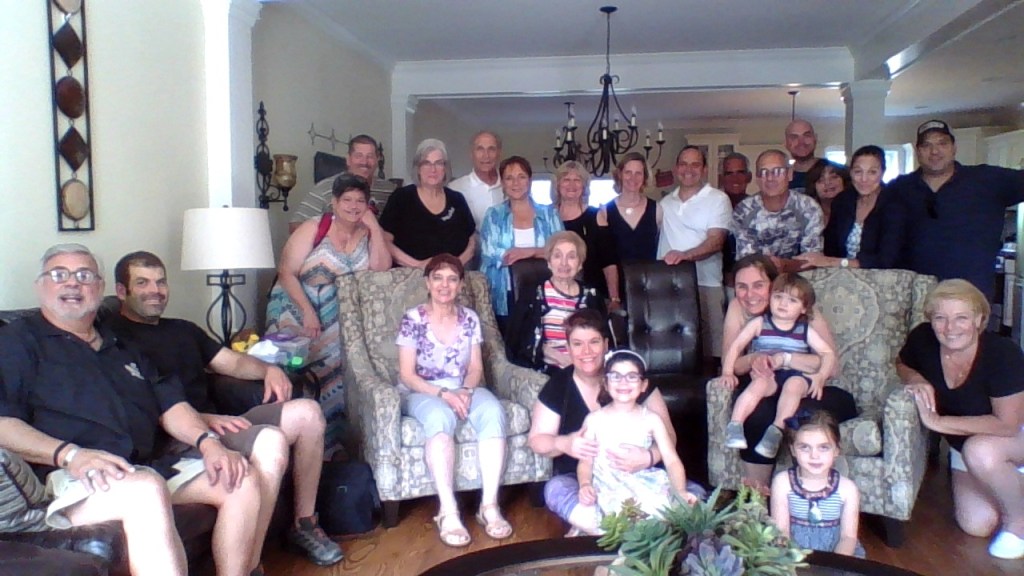
I have a small tribe.  Five children, four of them married with wonderful spouses and eight grandchildren, so far.  My Mom came from a family of eleven and my Dad from a smaller family, only nine.  That’s eighteen aunts and uncles, then their spouses and then cousins.  Every Sunday we were at one grandmother’s or the other.  A small home jam-packed with people and a table piled high with food.  Forget about it!  A good Italian tribe spawned in New York City and now spread all over the country.  However, most members are still within 100 miles of the Big Apple.  So what, you say.   

A Small Cousins Party in 2018

You don’t need a genealogy lesson on my family.  You’re right.  My point is maybe life was simpler then.  Maybe the 1920s and 30’s, when my parents were growing up, was not so easy.  But they were not alone.  They had tribe.  Even before the turn of the last century, farmers and their neighboring communities had tribe.  The industrial revolution has accomplished many great things, but I think it departmentalized people into specific jobs and there was little or no interaction in the workplace.

There was no tribe at work.  Then the tribe at home began to break up.  The younger warriors and their squaws moved across the country in search of better hunting grounds.  It became more difficult to connect with the tribe of origin, so new connections were made, new tribes formed.  At work, cubicles took over the interior work-scape and if you succeeded in your quest, the young warrior was rewarded with four walls and a door.  More isolation.  No tribe at work.  At least, the tribe was not interactive.

During the first quality revolution in the1970-80’s, some companies found value in bringing employees together to discuss issues and solve problems.  Quality Circles, brainstorming and Total Quality Management relied on tribe, the wisdom of the elders and the young working together.  But it did not last.  It did not catch on, like wildfire, like I thought it would.  Many companies dropped their tribal programs and many other companies have never adopted them.

Is it any wonder why social media is catching on?  People want tribe.  Deprived of it at work, they strive to establish virtual tribes, globally, for either economic or social purposes.  Tribe is in our DNA, not recluse!  So why do we fail to recognize that and continue to work alone when we do not have to.  Socializing could be scary and there is certainly safety in the anonymity of a virtual avatar.  But I believe we NEED socializing to grow.  Grow personally and within the tribe and for growth throughout the tribal nation.  We need to work together and hunt together.  We need to be together for economic, social, physical, emotional and spiritual support.

I want tribe!  I want more tribe! And I’m going on the peace-path to find more tribe.  How about you “Kimosabee?”

Was Darwin Right?

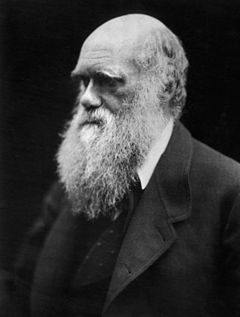
What I remember about Darwin, not being an avid student, was he said something about the “survival of the fittest.”  Whilst I was an avid student of rock and roll, this kind of sounded like “Only the Strong Survive” a 1969 song by Jerry Butler.  Is that what Darwin meant?  Do you have to be strong . . . tough . . . to survive?  Do you have to be a “bully”, intimidating, oppressive or domineering? “Fittest” in Darwin’s terms was not physical fitness.

The quote, “survival of the fittest” has been taken totally out of context. This is what Darwin said, “In the struggle for survival, the fittest win out at the expense of their rivals . . .” (wait, there’s more) “because they succeed in adapting themselves best to their environment.” “Adapting” in this case is not a passive, becoming accustomed to or getting used to your surroundings. Instead, this “adapting” is very active, like the verbs, change, modify, revise and rework. Adapting, that’s a mental fitness, capable of self-reflective sentient beings, a.k.a. Humans. 

Darwin also said, similarly, “It is not the strongest of the species that survives, nor the most intelligent that survives. It is the one that is the most adaptable to change.” A friend of mine, Larry Dennis, has been in the leadership training business for many years and he has said, “The ability to learn/change faster than your competitors may be the only sustainable competitive advantage.” You know that’s true. You want to be the first-est with the most-est to market. Your competitors can get the same capital, resources and ideas you have. You need to adapt to your environment well and quickly. You need to be ninja nimble and lightning fast.  

Most large corporations miss this opportunity. They say you can’t turn a supertanker on a dime. It just ain’t gonna happen. So if you are a large enterprise or want to get large, practice your ninja moves. See where the red tape gets in the way and tangles your ninja warrior. Learn to cut through the red tape now. Build the systems and processes now that will allow you to be nimble, become more adaptive to change now. Build for the future now.

You Are Skilled

You are a skilled specialist. You know more about your company than the customer does, And you know more about the customer than anyone else in the company. The most valuable thing you bring to work every day is your helpful attitude. You are either part of the problem or part of the solution. Being part of the problem will not satisfy the customer. So, you always want to be part of the solution, if you don’t want to lose business.

Being a skilled specialist means you strive to achieve excellence on the road. Whether or not you wear a uniform, you can shine even when you don’t necessarily feel up to it. The greatest opportunities for growth happen when you face everyday challenges with a smile and determination to do your best. A skilled specialist will:

  • Present a professional image
  • Demonstrate a sense of urgency
  • Be proactive

Represent yourself and your company with professional pride by wearing clean and presentable clothing, fit for the job you do. If you wear a uniform, ensure it is in top condition—without stains, tears, etc. Tuck your shirt in and wear hats as designed. You are a representative of the company when you are on the job, whether or not you are in uniform.

  1. Demonstrate a sense of urgency as you perform various tasks throughout the work day. Work with a sense of purpose. Have friendly conversations but avoid spending too much time chatting with staff. Your primary focus is to complete the work assigned to you each day, in an efficient and effective manner.
  2. Think ahead and be proactive when you encounter issues that affect your customers. Be solution focused and reach out to your team members if you need help to resolve a problem. Your customers will be impressed when you go the extra mile to share how much you care about the work you do.

You have the skill and you are already specialized. Put it together and demonstrate your skill throughout the day for every customer.

Wile E. Coyote Is My Hero

How Mr Coyote and Process Improvement Can Help Your Business.

Of all the heroes and superheroes I have known, Wile E. Coyote has never been on that list. I only recently discovered an ardent admiration for Mr Coyote. Why? Because he is a tenacious problem solver and he is an avid proponent of a process improvement methodology: Plan-Do-Check-Act. Mr Coyote may not realize he has a fan club. At this writing, there are five fan pages on Facebook regarding Wile E. Coyote with a grand total of over 19,000 likes/members. Mr Coyote may not even realize his problem-solving process is a classic scientific method which dates back centuries. Nevertheless, here is what Mr Coyote does that is so amazing.

PLAN: The planning of a project is a very detailed process. The better the plan; the better the execution.

“Failing to plan is planning to fail” ~Proverb

The first step of planning is identifying the right problem. What is Mr Coyote’s problem? He’s hungry. He continues with the defining the problem before he jumps into solving it. He responds to the following questions instinctively: What is the primary reason for this project? Answer: Get food. What do you hope to achieve by solving the problem? Answer: A waistline. Why is it important to do something now? Answer: I may be too weak to hunt later on. What will happen if the current environment doesn’t change? Answer: I die. Why does it have to be done? Answer: Death hurts. The clearer and succinct the problem statement the clearer the responses for a solution.

“A problem well stated is a problem half solved. ~Charles F. Kettering

More planning. Once the problem is clearly and specifically stated, Wile moves into the next phase of planning: analyze the problem and research causes of the problem. He does not use the 5 Whys process to determine the root cause but maybe we can. Mr Coyote is hungry. Why? He has not eaten in days. Why? The food source is scarce. Why? He lives in the desert. Why? It’s his natural habitat. Why? Ahhhh . . . Mother Nature put him there?

More planning. The next phase of planning is analyzing alternatives. This phase is very creative and will require input from various sources. Since he cannot change his location, we can go back and determine if there are alternative reasons why he has not eaten in days or why the food source is scarce. We can also analyze the various food sources available.

According to Wikipedia: “Coyotes are opportunistic, versatile carnivores with a 90% mammalian diet, depending on the season.” Discounting the sand, rocks, cactus and occasional motor vehicle, there are very few visual hints of a food source for Mr Coyote. The roadrunner seems like the only viable alternative.

Even more planning. Designing a solution is the next phase of planning. If the roadrunner is the best alternative then designing a solution to catch the roadrunner is our next step. This is where Mr Coyote is his most creative. With his Acme Products catalogue, his possibilities are practically unlimited. Once again this process is very creative and participation from multiple resources would be beneficial. What could you do with an Acme Products catalogue?

Once the solution is designed, the next step in the Plan-Do-Check-Act (PDCA) process is Do.

DO: Implement your plan. Wile E. Coyote does this very well. If you recall, Mr Coyote’s execution of his plan is precise. Through no fault of his own, the products he uses are unfortunately defective.

“Do is half of done.” ~Peter DiSantis

After implementation, the next step is Check.

CHECK: How did you plan work? What went well and what did not? For Mr Coyote, never well. It’s usually some canyon floor, rock wall or overhang, a nearby explosive, a large truck (with a beep-beep horn), or some other out of control device. He never catches the roadrunner and he is still very hungry.

“Trust, but verify.” ~Ronald Reagan

The next step in the Plan-Do-Check-Act process is Act.

ACT: What are your next steps? If your solution and implementation worked, how do you leverage it or expand it or improve upon it? If your solution hadn’t worked, what do you need to change to make it work? Here again, Mr Coyote is brilliant. He does not continue doing what does not work. He evaluates the new problem and looks for another solution.

And then once again Mr Coyote exhibits his extraordinary and admirable qualities. He is tenacious, relentless, resolute, persistent, insistent, determined, single-minded, focused, unremitting, inexorable, unstoppable, unwavering, tireless, adamant, persevering, indomitable, driven and motivated about his problem-solving. He picks himself up, dusts himself off and begins to plan again.

“Plans are nothing; planning is everything.” ~Dwight D. Eisenhower

Mr Coyote is still hungry. Why? He has not eaten in days. Why? He cannot catch the roadrunner. Why? He doesn’t have the right equipment. Why? They are defective. Why? Acme Products suck.

And the Plan-Do-Check-Act (or PDCA) cycle begins again. This is why Wile E. Coyote is my hero.

Plan-Do-Check-Act (or PDCA) is a four-step iterative process that continues until the issue is resolved or used to incrementally improve processes.


The Journey Begins

Good company in a journey makes the way seem shorter. — Izaak Walton

Thanks for joining me! This blog is my journey.

This is where I grew up until I was 12 years old. At the beginning of eighth grade, the family moved to an adjacent neighborhood. I finished grade school in this old neighborhood and returned frequently to visit friends and family.

I thought about a family group or blog (before I knew what a blog was) years ago. I set up a group on Yahoo! long before MySpace and Facebook. I never did anything with it. Here I go again. My purpose is to share family stories, random thoughts, Italian traditions and delicious recipes, just as they would be shared around the Sunday dinner table.

Those were fun times. Most weekends, we were at one grandparent’s home or the other. They were close. Many in the DiSantis family lived in Little Italy in the Bronx. My maternal grandparents lived in Northern New Jersey and so did most of their children.

With each family visit there were plenty of hugs and kisses, delicious food and hours of conversation around the table. We never left the table, except for the hugs and kisses. The conversations ranged from stories to advice, from historical to fanciful. All great and food for thought.

Then, I did a lot of listening to Uncle Angelo, Uncle Ralph and my dad on the DiSantis side. Also Uncle Charlie, Uncle Dominic, Uncle Joey and mostly Uncle Teddy on the Denaro side. I was around conversations with “da boys”. Not much with the women of the family. Gender bias in the ’60s, I guess.

Anyway, my kids missed all that. I moved 2500 miles from the neighborhood above and never had a Sunday dinner with the “whole” family again. At this writing, only my dad’s sister, Yolanda and my mom have survived the two large immigrant Italian families.

My hope is this blog will bring the family together. We may only gather around a table once in a while, but hopefully, we can share stories around this virtual table. I’ll start. And I am calling out my sister, Janet, my 54 first cousins (on both sides), my 5 children (with their spouses) and my 8 (so far) grandchildren to bring stories to share.

The blog menu outlines a few main topics. I’m sure it will expand. Ask me questions. I’ll answer to the best of my recollection. This will be fun for me to write. I hope you will enjoy it, too. Let’s sit and chat. Eating is optional.